
 Get Guardian on Google
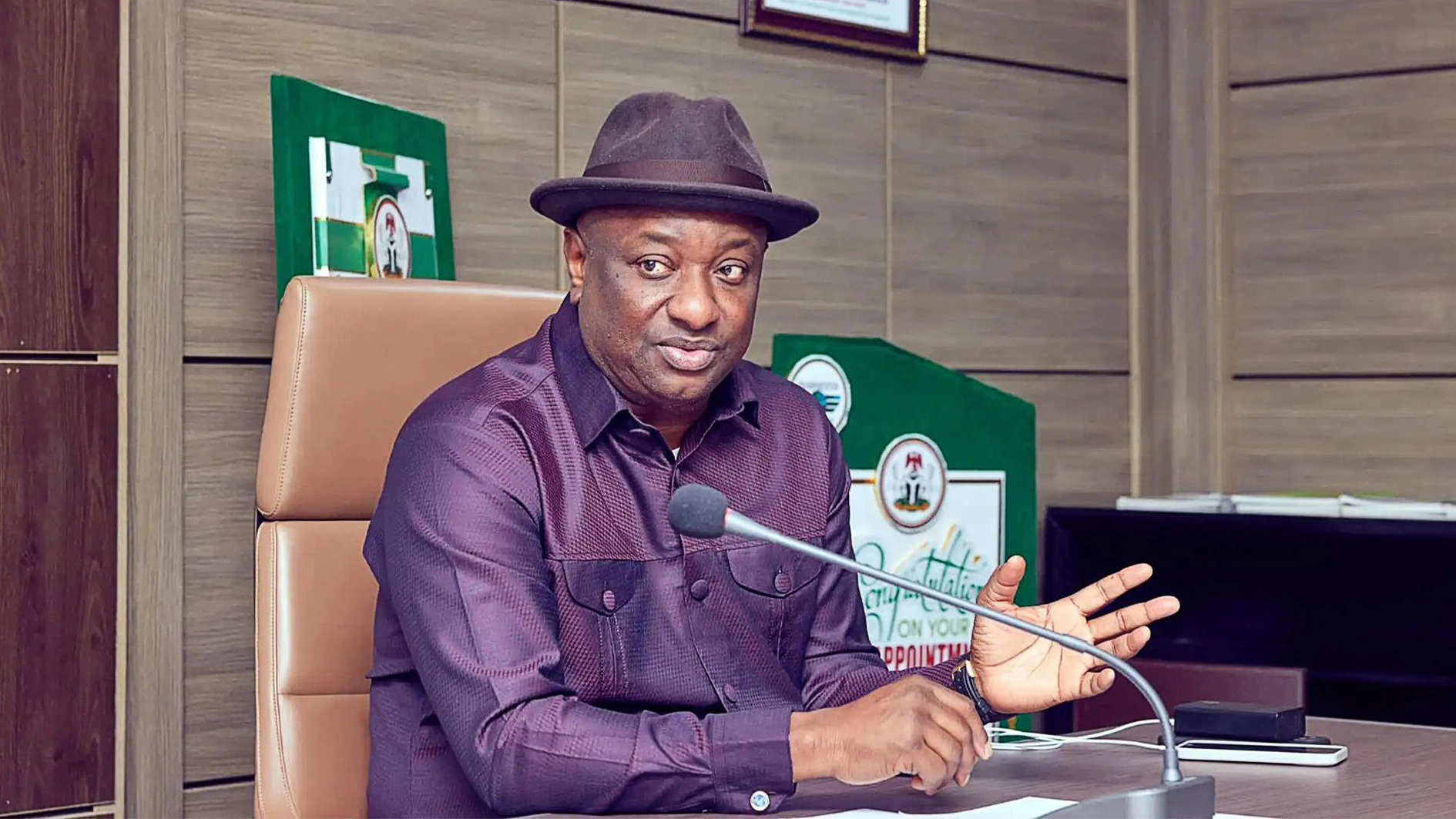
The Minister of Aviation and Aerospace Development, Festus Keyamo, has said that the Federal government’s aviation reforms are expected to unlock more than $1 billion in aircraft financing capacity for Nigerian airlines through the establishment of the Nigeria Aircraft Leasing Company.
Keyamo said the initiative, approved by the Federal Executive Council (FEC) in April 2026, was designed to address the longstanding difficulties faced by indigenous airlines in accessing aircraft on competitive leasing terms.
Keyamo, who disclosed this in a scorecard of the achievements of President Bola Tinubu’s administration in the aviation sector as of November 2026 in a chat with The Guardian over the weekend, said that the proposed company would operate as a locally based Special Purpose Vehicle (SPV).
He, however, said that the company would have sovereign backing, which would enable domestic carriers to acquire or lease aircraft from international manufacturers and lessors under more favourable conditions.
According to him, the company would be fully privately funded, with no obligation for direct Federal government investment, while the government’s role would be limited to providing sovereign guarantees relating to aircraft repossession and safety.
He added that the government would also hold equity in the company through the Ministry of Finance Incorporated (MoFI).

He explained that the initiative would reduce the financial burden on local airlines and improve their competitiveness.
The minister noted that Nigerian carriers had in the past paid significantly higher aircraft lease rates than their international counterparts, largely because of regulatory uncertainties, insurance challenges and the country’s previous poor standing among international aircraft lessors.
He emphasised that the establishment of the leasing company was part of a wider package of reforms aimed at restoring international confidence in Nigeria’s aviation industry and improving access to aircraft financing.
Keyamo said the reforms had already produced tangible benefits, citing the delivery of a Boeing 737-700 NG to Air Peace on dry lease from AerCap, one of the world’s leading aircraft lessors.
He added: “In all safety compliance assessments conducted by the International Civil Aviation Organisation (ICAO) on Nigeria before 2026, the country’s performance had generally remained around 70 per cent. This was not an encouraging score considering that it was a matter of safety.
“However, in April 2026, after ICAO’s Coordinated Validation Mission, Nigeria recorded its highest ever score of 91.45 per cent in Safety Compliance Audit, which is above both the global average of 70.4 per cent and the West African average of 61.1 per cent.
“Also, Nigeria achieved full aerodrome certification of its five international airports for the first time in its history (Lagos, Abuja, Kano, Port Harcourt and Enugu).
The Federal Airports Authority of Nigeria (FAAN) also attained dual international certifications: ISO 9001:2015 for Quality Management Systems and ISO 14001:2015 for Environmental Management Systems, issued by MSECB Canada.
“The Nigerian Airspace Management Agency (NAMA) also achieved ISO 9001:2015 certification. NAMA also deployed the Advanced Airspace Management Systems and Automatic Dependent Surveillance Broadcast. These investments in Communication, Navigation and Surveillance infrastructure were essential to the aerodrome certification process and the safety score improvement.”
Besides, the minister also mentioned the government’s decision to abandon the proposed Ethiopian Airlines national carrier partnership inherited from the previous administration, stressing that the arrangement could have affected the survival and growth of indigenous airlines.
Instead, he said, the Tinubu administration had concentrated on strengthening existing Nigerian carriers, citing the government’s support for Air Peace’s entry into the Lagos-London route in March 2024 and its subsequent expansion to Abuja-London operations.
He also mentioned the approval of a 30 per cent discount on outstanding debts owed by domestic airlines to aviation agencies, including FAAN, NAMA and NCAA, as part of measures to ease the financial pressures on operators.
Also, Keyamo mentioned the reconstruction of Terminal One at the Murtala Muhammed International Airport, Lagos, at the cost of N712.3 billion, the upgrade of several airports, the resolution of the nearly two-decade dispute over the Murtala Muhammed Airport Terminal Two and the clearance of foreign airlines’ trapped funds among the administration’s major achievements.
He further stated that the government had committed N46 billion to the resurfacing of the runway at the Mallam Aminu Kano International Airport (MAKIA), while the domestic terminal had been remodelled and a new hajj terminal commissioned in July 2026.
The minister said these interventions had collectively repositioned Nigeria’s aviation industry for improved investment, operational efficiency and international competitiveness.