 Follow Us on Google News



 Follow Us on Google Discover
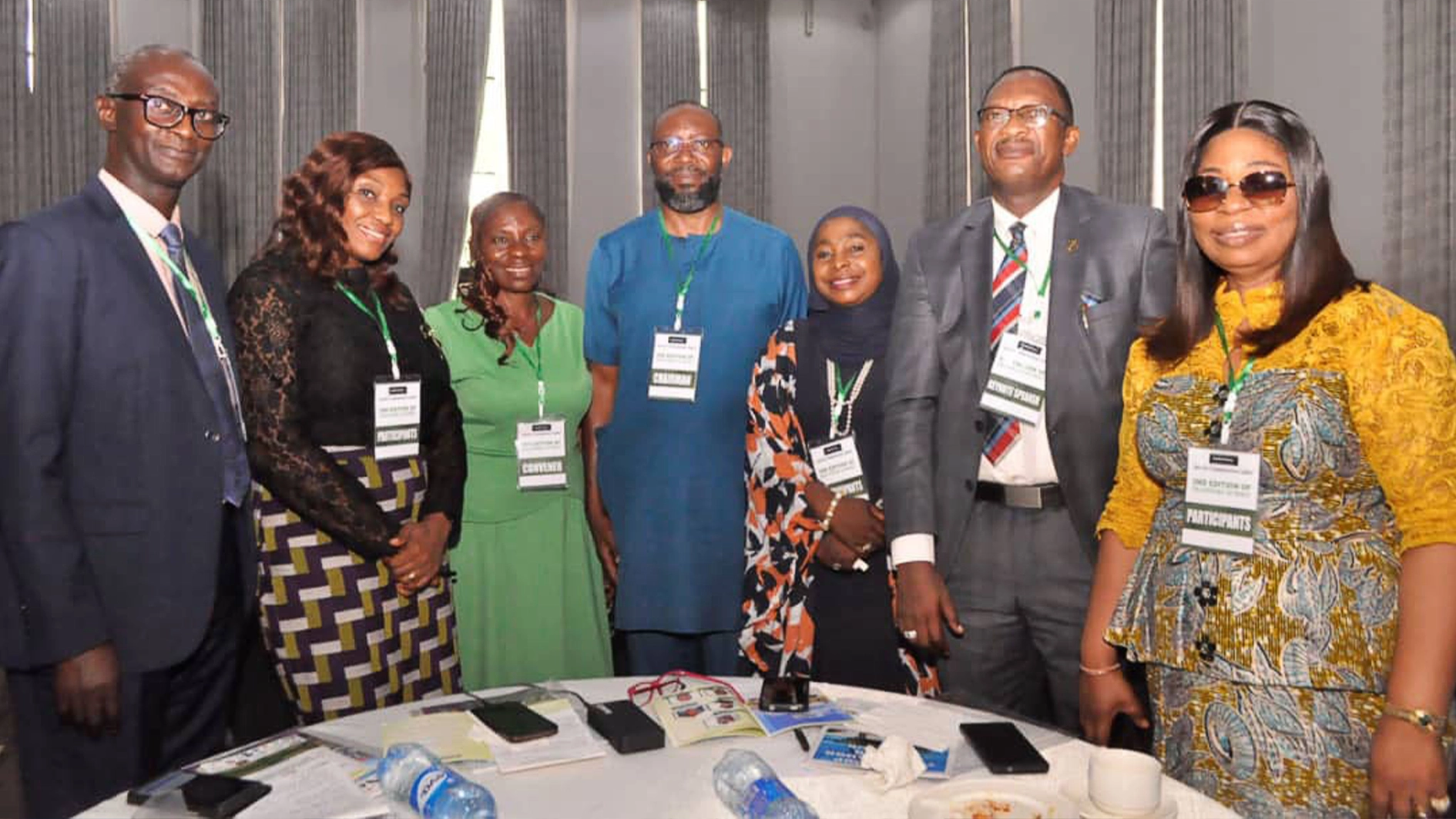
After nearly 18 years of legal tussle, the Federal Government and Bi-Courtney Aviation Services Limited (BASL), operators of Murtala Muhammed Airport Two (MMA2), have finally reached a resolution. Yet industry experts harp on the need to learn important lessons from the episode to avert a recurrence, OLUSEGUN KOIKI reports.
The resolution of the protracted dispute between the Federal Government (FG) and Bi-Courtney Aviation Services Limited (BASL) over the concession of Murtala Muhammed Airport Terminal Two (MMA2), Lagos, has opened a new vista in the country’s aviation industry with renewed hope for investment, infrastructure development and improved airport operations.
However, outside the applause that has greeted the settlement of the nearly two-decade-long disagreement, aviation stakeholders said the crisis had also exposed fundamental weaknesses in Nigeria’s management of Public-Private Partnerships (PPPs), particularly in the drafting, interpretation, enforcement, and continuity of concession agreements.
For an industry that requires substantial capital investment, consistent regulations and long-term planning, the dispute raises concerns about the capacity of the country’s institutions to protect contractual commitments across successive administrations.
Recall that the Federal Government and Bi-Courtney last week signed a settlement agreement to end the dispute, which had generated years of litigation and competing claims over the operation and development of facilities at Lagos Airport under the 36-year agreement.
The agreement, approved by the Federal Executive Council (FEC) on April 30, 2026, provided for reciprocal concessions, the resumption of concession-fee payments to the Federal Airports Authority of Nigeria (FAAN), clarification of the status of the General Aviation Terminal (GAT) and the expansion of MMA2’s apron to accommodate regional flights, subject to operational capacity and regulatory requirements.

It also provided a framework for Bi-Courtney to complete its planned four-star hotel and conference centre through separate lease arrangements.
Speaking at the signing ceremony in Abuja, the Chairman of Bi-Courtney Aviation Services Limited, Dr Wale Babalakin, said the settlement represented more than a commercial breakthrough for the warring parties; it was a victory for Nigeria.
Babalakin also commendedPresident Bola Tinubu for approving the final settlement framework, which facilitated the resolution through the Minister of Aviation and Aerospace Development, Festus Keyamo.
He added that the signing ceremony should not be interpreted as a victory for the company alone, but as an opportunity for the country to move beyond a prolonged disagreement that had affected the parties’ relationship.
He also pledged that Bi-Courtney would honour its obligations under the settlement and work with the relevant authorities to translate the agreement into tangible benefits for the aviation industry and the entire economy.
However, aviation experts said that the ultimate value of the agreement would be determined not by the ceremony or the goodwill expressed by the parties, but by how effectively the settlement was implemented and whether the country learnt from the circumstances that allowed the dispute to persist for over 18 years.
In his comment, the Chief Executive Officer (CEO), Transmeridien Agency International Limited, Peter Adenihun, said that the resolution of the over 18-year impasse was an important development for Nigeria’s aviation industry.
He, however, said that, apart from the settlement, the country should learn lessons from the crisis and devise ways to prevent similar disputes in the future.
To prevent recurrence, Adenihun suggested that contracts must be clear and bankable by clearly defining responsibilities, investment obligations, revenue arrangements, timelines and dispute-resolution procedures.
He also opined that, irrespective of changes in government, there must be continuity in policies or agreements reached with private investors, adding that disputes must be resolved early.
Adenihun regretted that over 18 years of disagreement represented lost time, uncertainty and potentially forgone investment, noting that accountability must be mutual, while public interest must come first in all agreements.
The CEO added that the impact of the settlement on the aviation industry could not be underestimated.
He declared that the agreement would boost investor confidence, enhance airport development, improvethe interests of airlines and passengers, and increase Nigeria’s aviation reputation in the comity of nations, among other benefits.
He, however, declared that these benefits were not automatic, stressing that they depended on the agreement’s actual terms, implementation and measurable results.
He said: “Nigeria needs a stronger framework for aviation PPP, and to conduct thorough legal, financial, technical and commercial due diligence before awarding concessions.
“Establish independent performance monitoring and regular compliance reviews, introduce early-warning systems and time-bound mediation mechanisms and maintain transparent records of agreements, amendments and performance.”
Besides, the CEO of Flight and Logistics Solutions Limited, Amos Akpan, identified poorly defined concession terms as one of the major lessons from the dispute.
Akpan maintained that agreements must establish clear provisions for revenue-sharing arrangements, adjustments, investment commitments and measurable performance indicators from the outset.
Akpan decried that FAAN had gone without concession revenue from MMA2 for an extended period, while the uncertainty surrounding the relationship between the terminal and other airport facilities complicated the commercial environment.
According to Akpan, the dispute also demonstrated the need for government to distinguish its regulatory responsibilities from its commercial and operational interests.
He pointed out that where public authorities are responsible for regulating an industry while also operating facilities that may compete with privately financed infrastructure, clearly defined institutional boundaries were essential.
Akpan said that the overlapping claims involving GAT and MMA2 had contributed to uncertainty over the allocation of traffic and airport business.
He was optimistic that the agreement offered an opportunity to restore confidence in aviation PPPs, adding that FAAN’s resumption of concession-fee collection would provide a revenue benefit to the authority, while the prospect of completing the hotel and conference centre and expanding MMA2’s apron could support additional commercial activity.
He cautioned that the private sector must draw lessons from the episode, noting that litigation was not a business strategy.
Akpan added: “Concession agreement must have a performance review clause of three to five years. Consideration should be given to subjects such as indexation and capex obligations, as with the hotel.
“Federal Executive Council approval for such concession should include cross-administration binding, with penalties for unilateral breach, to prevent a new administration from relitigating.
“Airlines, cargo agents, ground handlers, should be consulted at concession design because they are the investors that suffered from the uncertainty of the tussles.”
Also commenting, a retired pilot with the defunct national carrier, Mohammed Badamasi, said the dispute indicated that contractual disagreements could be resolved when both parties are willing to make sacrifices in the interest of progress.
He, however, queried the economic cost of allowing the disagreement to continue for over 18 years, stressing that the losses associated with years of uncertainty could not simply be recovered through a settlement.
Badamasi further said that contractual agreements must be respected irrespective of the individuals or political administrations in power, while the parties involved must understand the contents and consequences of contracts before signing them.
He also drew attention to the implications of the protracted dispute for Bi-Courtney’s investment, particularly the concession period.
Badamasi emphasised that, to prevent such occurrences, the government must ensure that qualified personnel are engaged to sign legal documents, stressing that everyone involved in such agreements must respect the terms and obey court judgments.
He noted that if court judgmentshad been respected, the issue would have been resolved, and both parties would have avoided losing revenue running into billions of naira over the years.
Besides, the Chairman of Hawaz International Dynamics Limited, Hassan Ejibunu, said it was necessary for the Federal government to protect infrastructure concession agreements from political interference and to strengthen contractual enforcement mechanisms to prevent a recurrence of the crisis.
Ejibunu maintained that the resolution of the prolonged disagreement offered important lessons for government, private investors and other stakeholders in Nigeria’s aviation industry.
Ejibunu, urged successive administrations to recognise existing contracts as binding legal commitments that should not be abandoned, arbitrarily altered or reinterpreted whenever political leadership changes.
He also emphasised that while government must honour its contractual obligations, private investors must also demonstrate the financial strength, technical competence and managerial capacity required to deliver on their commitments.
Ejibunu added: “The lessons from the MMA2 dispute should inform the management of future PPP projects, particularly in a capital-intensive sector such as aviation, where investors require long-term certainty to recover their investments.”
He called for a shift away from prolonged litigation as the primary means of resolving commercial disagreements, noting that the MMA2 experience had demonstrated the limitations of allowing contractual disputes to persist through successive court proceedings.
The controversies between the Federal government and Bi-Courtney dates back to the concession arrangement for the design, construction, operation and eventual transfer of MMA2, following the fire that destroyed the old domestic terminal at Lagos airport in 2000.
The concession was initially agreed for a 12-year period, commencing in May 2007, but was subsequently extended to 36 years as the project expanded.
Disagreements over the interpretation and implementation of the contractual arrangements, the scope of the parties’ obligations and the control of related airport facilities contributed to the protracted conflict.

