
 Get Guardian on Google
Nigeria’s economic reforms may be restoring fiscal stability, attracting investment and reshaping the economy, but for millions of workers grappling with rising living costs, declining purchasing power and uncertain retirement prospects, the benefits of recovery remain largely out of reach Gloria Nwafor writes.
From a minimum wage that struggles to meet basic household needs to pensioners waiting for entitlements recognised by the courts, the country’s economic transition is exposing a fundamental contradiction: an economy pursuing growth while the workers whose labour sustains it face increasing economic insecurity.
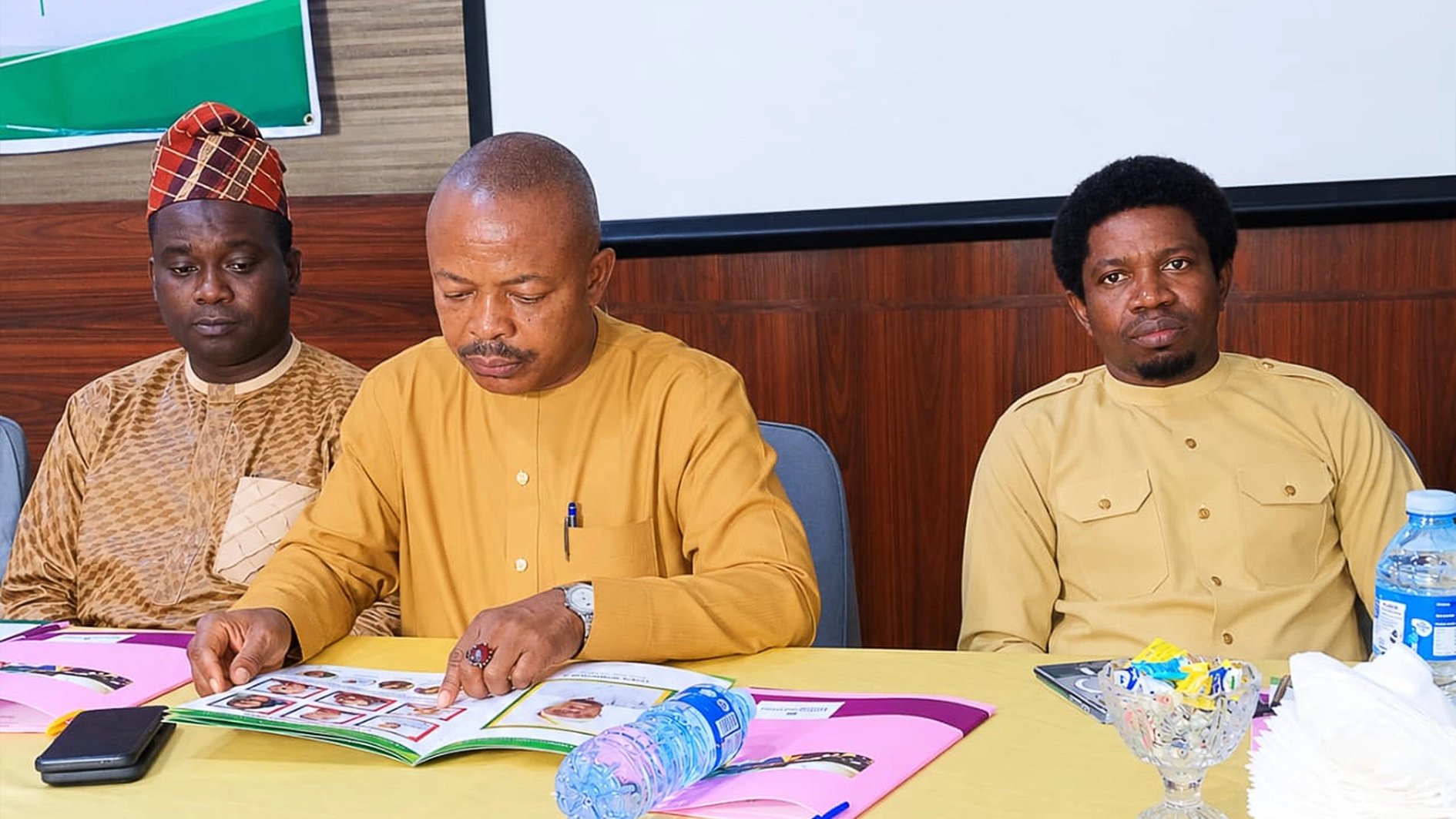
This concern dominated discussions at the 2026 yearly workshop of the Labour Writers Association of Nigeria (LAWAN), where academics, labour leaders and social security administrators called for a more inclusive approach to economic reforms, with workers’ welfare, employment security and social protection placed at the centre of national development.
Under the theme: “Workers at the Centre of Nigeria’s Political Transition: Defending Rights, Advancing Welfare and Building Economic Justice”, participants argued that macroeconomic stability and investment growth would have limited social value if they failed to translate into improved living conditions and greater economic security for ordinary Nigerians.
Professor Tunde Akanni of Lagos State University (LASU), who examined the relationship between economic reforms, workers’ welfare and inclusive governance, said the fundamental weakness of Nigeria’s reform programme was the inadequate attention paid to its social consequences.
In a presentation titled “Economic Reforms in Nigeria, Workers’ Welfare and the Imperative of Inclusive Governance”, Akanni acknowledged the economic rationale behind petrol subsidy removal, foreign exchange liberalisation and efforts to improve public revenue mobilisation. However, he cautioned that the justification for these policies did not absolve the government of responsibility for the hardship associated with their implementation.

He argued that the success of economic reforms should not be determined solely by improved government revenue, investor confidence, foreign exchange operations or access to external financing, but by their impact on citizens’ quality of life.
According to him, the government could record improved fiscal performance while workers struggled to feed their families and pensioners waited for their entitlements. Consequently, economic stability should be accompanied by policies that guarantee dignity, security and opportunities for citizens.
Akanni maintained that resources released through subsidy removal and other economic adjustments should produce visible improvements in infrastructure, healthcare, education and social investment.
He also called for a comprehensive social protection framework covering unemployment, healthcare, affordable education, food assistance, disability support, maternity protection and pension administration, warning that temporary cash transfers and other relief measures could not substitute for sustainable social security institutions.
On pensions, he stressed the need to enforce regulations and statutory obligations more strongly, particularly employers’ contributions and the transparent administration of retirement benefits. He maintained that introducing new pension arrangements could not extinguish legitimate liabilities inherited from previous schemes, which should be identified and discharged in accordance with applicable laws and judicial decisions.
The inadequacy of workers’ earnings featured prominently in the presentation by the President of the Precision, Electrical and Related Equipment Senior Staff Association (PERESSA), Rufus Olusesan, who questioned the relevance of a minimum wage that could no longer guarantee access to necessities.
“You cannot talk of economic justice when minimum wage cannot buy a bag of rice. You cannot talk of transition when workers’ rights are violated with impunity,” he said.
Olusesan identified subsidy removal, foreign exchange liberalisation, inflation and the energy crisis as developments that had intensified the pressure on workers’ living conditions.
He argued that economic justice would remain elusive if the benefits of economic reforms accrued disproportionately to a small section of the population while millions of workers struggled to meet essential household expenses.
The labour leader also expressed concern over the growing use of casualisation, outsourcing and algorithmic management. He warned that these practices could weaken employment security and undermine workers’ rights.
He maintained that decent living conditions should be treated as an entitlement, insisting that employees unable to feed their families adequately, access healthcare or educate their children would find it increasingly difficult to remain productive.
Another LASU lecturer, Ganiu Okunnu, examined the potential consequences of government restructuring for public sector employees and warned against pursuing administrative efficiency primarily through workforce reductions and expenditure cuts.
In a presentation, ‘Public Sector Reform and Workers’ Rights: Balancing Efficiency and Social Justice’,Okunnu acknowledged the need to address fiscal deficits, public debt, administrative waste and institutional inefficiencies.
However, he argued that such objectives should not compromise employment security, fair remuneration and fundamental labour rights.
He identified mass retrenchment, voluntary retirement schemes, short-term employment contracts and wage restrictions amid rising inflation as some of the challenges confronting public sector workers.
According to him, adopting digital technologies, outsourcing, and private-sector management practices could modernise public administration, but without adequate safeguards, these changes might increase job losses and casualisation.
He warned that excessive austerity could erode institutional memory, weaken administrative capacity and make it difficult for the government to retain experienced personnel.
Okunnu advocated greater involvement of trade unions in designing and implementing restructuring policies. He also recommended retraining, skills development, fair severance payments and pension guarantees for employees affected by administrative changes.
He maintained that government modernisation should focus on strengthening institutional capacity rather than simply reducing personnel costs, which could create staffing shortages, increase workloads and undermine public service delivery.
The workshop also highlighted the changing nature of employment and the challenges of extending social protection beyond conventional workplaces.
Managing Director and Chief Executive of the Nigeria Social Insurance Trust Fund (NSITF), Oluwaseun Faleye, represented by the Deputy General Manager and Head of Corporate Affairs, Alexandra Mede, described social security as an investment in human dignity, economic resilience and social stability.
In a presentation, ‘Social Security and Workers’ Welfare in Nigeria’s Political Transition: Closing the Protection Gaps and Building a Sustainable Safety Net’, Faleye said social security was fundamentally about protecting people against circumstances beyond their control, including occupational injuries, disabilities and other risks threatening their livelihoods.
He identified artificial intelligence, automation, remote work and the expansion of the gig economy as developments creating new challenges for workers’ protection.
He questioned how social security coverage could be extended to digital-platform workers and others operating outside traditional employment arrangements, stressing the need for improved awareness, employer compliance, reliable data and accessible services.
The Nigeria Union of Petroleum and Natural Gas Workers (NUPENG) also called for deliberate measures to protect employees as the energy industry undergoes structural changes.
Its Assistant General Secretary, Research and Public Affairs, Suleiman Pema, speaking on behalf of the National President, Salimon Oladiti, said petroleum workers deserved fair remuneration, secure working conditions and effective protection of their labour rights.
The union advocated structured living-wage reviews that reflected prevailing economic realities, arguing that temporary palliatives could not adequately address the erosion of workers’ purchasing power.
It also called for investment in reskilling and workforce development to prepare employees for emerging opportunities in the energy transition, while emphasising the importance of freedom of association and collective bargaining.
The speakers underscored the need to reconcile Nigeria’s pursuit of economic growth with the welfare of its workforce while maintaining that reforms involving public finances, employment structures and technological advancement must incorporate adequate safeguards for workers.