
 Get Guardian on Google
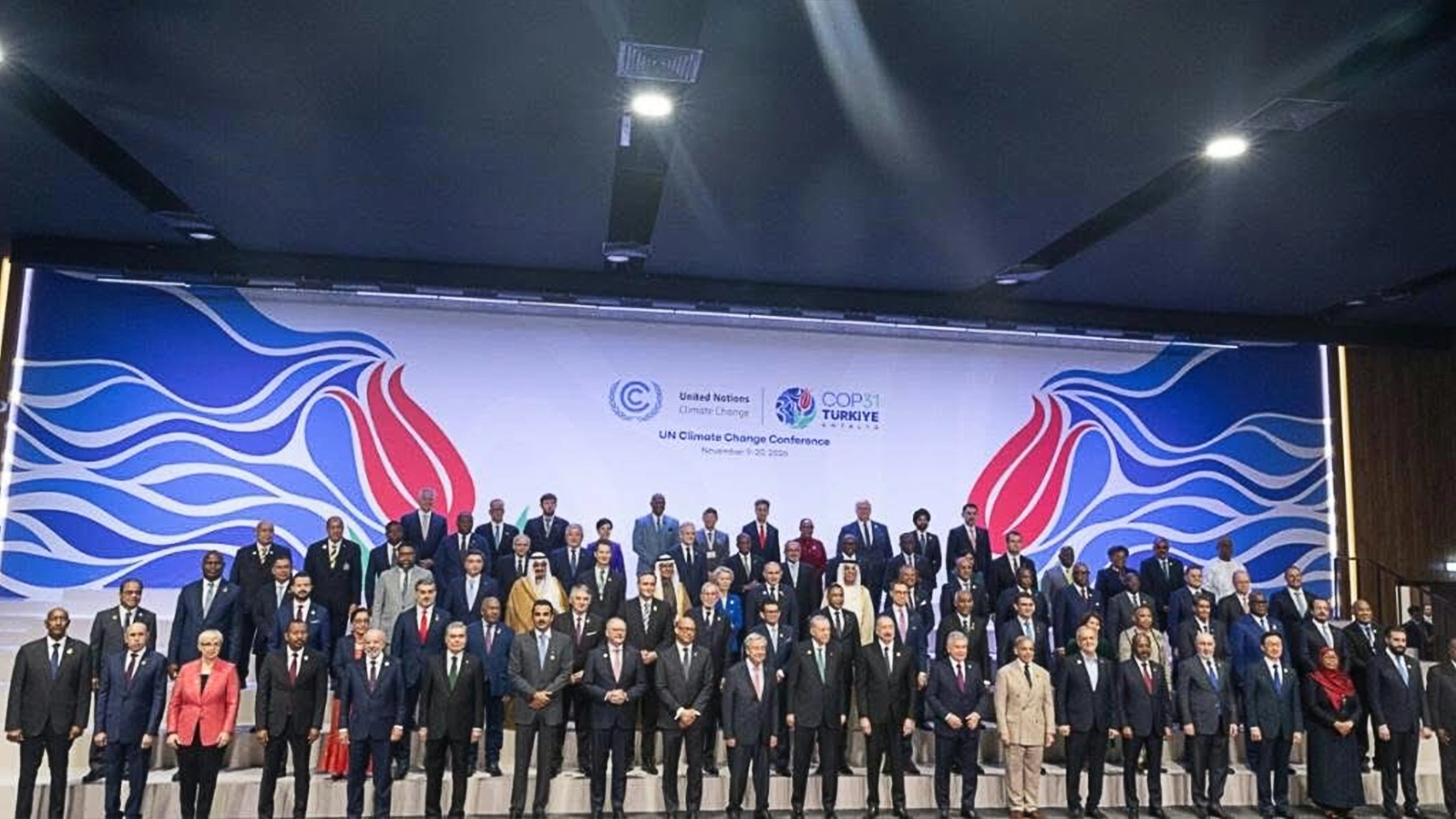
President Bola Tinubu has missed the World Leaders’ Summit of the 31st United Nations Climate Change Conference (COP31) in Antalya, Turkey, for the third consecutive year, raising fresh questions about his administration’s commitment to high-level climate diplomacy.
The two-day leaders’ summit, scheduled for November 11 and 12, brings together presidents, prime ministers and heads of government to present national climate priorities, announce commitments and provide political direction for international climate negotiations.
The gathering is considered one of the most significant political engagements of the annual climate conference, providing world leaders with an opportunity to shape discussions on climate finance, adaptation, energy transition and support for climate-vulnerable countries.
However, Tinubu was among several prominent world leaders who did not attend this year’s high-level gathering.
His absence continues a pattern that began at COP29 in Baku, Azerbaijan, in 2024. The Nigerian president had attended COP28 in Dubai, United Arab Emirates, in 2023.
At COP28, Tinubu participated physically in the World Climate Action Summit but did not deliver his scheduled national statement. He, however, addressed a high-level meeting on methane and other non-carbon dioxide greenhouse gases, where he reaffirmed Nigeria’s commitment to reducing methane emissions.

At COP29, Nigeria’s national statement was delivered on his behalf by Balarabe Lawal, the then Minister of Environment and Ecological Management.
The pattern continued at COP30 in Belém, Brazil, in 2025, where Vice-President Kashim Shettima represented Nigeria, while Tinubu did not personally participate in the leaders’ engagements.
At COP31, Nigeria was also absent from the list of countries scheduled to deliver national statements during the opening segment on November 11 and 12.
However, countries whose leaders do not deliver statements during the first segment will have another opportunity when the high-level segment resumes on November 17 and 18.
Tinubu’s repeated absence comes amid longstanding questions about his position on climate action, particularly following remarks he made during his presidential campaign.
In October 2022, while responding to a question on climate change at an interactive session organised by the Arewa Joint Committee in Kaduna, the then presidential candidate questioned Nigeria’s ability to meet international climate obligations without adequate financial support from developed countries.
“We need to tell the West; if you don’t guarantee our finances and work with us to stop this, we are not going to comply with your climate change,” he said.
The remarks attracted criticism from some quarters, with questions raised about his understanding of the climate crisis and his reference to “your climate change.”
However, his supporters defended the position, arguing that developing countries such as Nigeria should not be expected to shoulder the financial burden of meeting global climate commitments without adequate support from wealthier nations.
Since assuming office in May 2023, Tinubu’s administration has made several climate-related commitments, including advancing Nigeria’s energy transition and advocating increased international climate finance.
Nevertheless, his repeated absence from the high-level engagements has renewed questions about the level of personal presidential attention given to climate diplomacy and the implementation of Nigeria’s climate commitments.
The development comes as Nigeria prepares for its January 2027 general election, with climate change increasingly posing challenges to agriculture, food security, livelihoods and economic development.
Tinubu is not the only prominent world leader missing from the COP31 summit.
United States President Donald Trump, Chinese President Xi Jinping and Indian Prime Minister Narendra Modi are also absent from the gathering.
Other notable absentees include French President Emmanuel Macron, German Chancellor Friedrich Merz, Italian Prime Minister Giorgia Meloni, Canadian Prime Minister Mark Carney and Japanese Prime Minister Sanae Takaichi.
China is, however, represented by Vice-President Han Zheng, while European Commission President Ursula von der Leyen is attending the summit.
Trump’s absence has attracted particular attention given his administration’s position on climate change. The US president has repeatedly dismissed climate science, describing climate change as a hoax, and initiated the country’s second withdrawal from the Paris Agreement, which took effect in January 2026.
The United States remains one of the world’s largest greenhouse gas emitters and the biggest historical contributor to cumulative carbon dioxide emissions, making its climate policies significant to global efforts to limit temperature increases.
Reacting to the absence of influential political leaders, the founder and Executive Director of the Global Initiative for Food Security and Ecosystem Preservation (GIFSEP), Michael David, said their non-attendance raised questions about the seriousness with which governments were treating the climate crisis.
David expressed particular concern about the absence of African leaders, including Tinubu, given the continent’s vulnerability to the effects of climate change.
“At a time when the world is experiencing escalating climate emergencies, from devastating floods and prolonged droughts to extreme heat, food insecurity and biodiversity loss, the world needs stronger political leadership, not diminished representation,” he said.
He described climate diplomacy as more than an environmental engagement, noting that it also involved economic development, food security and national security.
“Africa cannot afford to be a passive observer while decisions affecting its future are being negotiated,” he said.
David urged African governments to push for predictable and accessible adaptation finance, increased investment in renewable energy, stronger support for climate-resilient agriculture and adequate funding to address loss and damage.
He also called for technology transfer, local manufacturing, skills development and green job creation, stressing the need for Nigeria to demonstrate stronger presidential leadership and translate its climate commitments into concrete national action.
The environmental expert, however, cautioned against measuring climate leadership solely by the physical attendance of presidents at international summits.
According to him, countries whose leaders are absent must ensure their delegations are adequately empowered to defend national interests and secure meaningful outcomes from the negotiations.
“The climate crisis will not wait for political convenience. Neither should our leaders,” he said.
The absence of African leaders has drawn particular attention because the continent remains highly vulnerable to climate change despite contributing relatively little to historical global greenhouse gas emissions.
Nigeria, Kenya and Egypt are among the African countries whose presidents are missing from the opening high-level engagements.
For Nigeria, the consequences of climate change are increasingly evident in recurrent flooding, desertification, drought, extreme heat, declining agricultural productivity and threats to livelihoods.
The country also faces growing climate-related risks associated with changing rainfall and temperature patterns, with implications for food production, water availability and economic activities.
In August 2026, the Nigerian Meteorological Agency (NiMet) confirmed the onset of a strong El Niño event, warning of its potential influence on global climate patterns.
The World Meteorological Organisation (WMO) subsequently projected that the event could persist through February 2027, with significant implications for rainfall and temperature patterns and increased risks of extreme weather.