 Get Guardian on Google
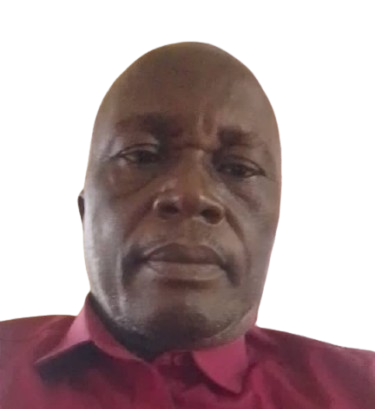
The proposed N22.8 billion rehabilitation of Jalingo Airport has sparked a fresh debate over development priorities in Taraba state, with Professor Jerome Nyameh, the Accord Party governorship candidate, questioning whether the massive investment reflects the most pressing needs of the people.
At the centre of the debate is a fundamental question: should a state struggling with inadequate electricity, limited access to advanced healthcare and persistent water supply challenges commit such a substantial amount to airport rehabilitation while other essential services remain in need of attention?
Professor Nyameh raised the concerns in a statement following the circulation of a video in which the Commissioner for Transportation reportedly disclosed that N22.8 billion had been approved for the airport rehabilitation project.
While acknowledging the importance of infrastructure development, the Accord candidate argued that the timing, scale and financial implications of the proposed project deserve careful public scrutiny, particularly against the backdrop of Taraba’s developmental challenges.
For Nyameh, the issue goes beyond the rehabilitation of an airport. It touches on the broader question of how government determines which projects receive priority when public resources are limited and citizens continue to face difficulties accessing basic amenities.
In making his case, the Accord candidate pointed to three critical sectors where he believes the proposed N22.8 billion could make a significant difference if redirected towards targeted interventions.
He identified underserved communities in Kurmi, Gashaka, Sardauna, Bali, Karim Lamido and parts of Gassol, among other areas, as beneficiaries of a possible expansion and improvement of electricity infrastructure.
According to him, reliable electricity would go beyond providing illumination to households. It would support small businesses, stimulate economic activities, improve productivity and enhance the general quality of life in communities that continue to experience power supply challenges.
His argument reflects a wider development concern: the relationship between access to basic infrastructure and the economic opportunities available to rural and underserved communities.
Professor Nyameh While identifying healthcare as another sector requiring urgent investment, Professor Nyameh,
proposed equipping Specialist Hospital, Jalingo; General Hospital, Takum; and First Referral Hospital, Mutum-Biyu, in Gassol Local Government Area, with modern diagnostic equipment, particularly Magnetic Resonance Imaging (MRI) and Computerised Tomography (CT) scan machines.
The proposal, he argued, would strengthen the diagnostic capacity of the selected health facilities and improve access to specialised medical investigations.
For many residents, access to advanced medical diagnosis can mean travelling considerable distances to seek services unavailable in nearby public hospitals. Such journeys often come with additional financial and logistical burdens.
Nyameh believes that investing in modern diagnostic facilities at strategic hospitals across the state could help address some of these challenges and strengthen the healthcare delivery system.
He advocated the development of functional and sustainable water supply systems across Taraba State, arguing that reliable access to potable water would reduce the daily hardship experienced by thousands of households.
Water remains fundamental to public health, sanitation and household welfare. For communities without dependable water infrastructure, the responsibility of sourcing water often consumes valuable time and resources.
Nyameh’s position is that investments in sustainable water projects could deliver direct benefits to households and communities across the state.
He further suggested that the three sectors—electricity, healthcare and water supply—could receive significant attention within six months if the proposed airport rehabilitation funds were considered for alternative development interventions.
Professor Nyameh who was careful to distinguish his criticism of the proposed expenditure from outright opposition to airport development, maintained that he was not against the rehabilitation of Jalingo Airport, but questioned whether the timing and scale of the investment had been adequately considered in relation to other urgent needs.
The distinction is significant because the debate is not necessarily about choosing between infrastructure development and social services. Rather, it raises questions about how governments balance competing development demands and determine the sequence in which public projects should be implemented.
An airport may serve important transportation and economic purposes, just as electricity, healthcare and water infrastructure contribute to the welfare and productivity of residents.
The central issue, therefore, is whether the proposed expenditure is supported by sufficient justification, transparent cost considerations and a clear assessment of its expected benefits to the state.
Beyond the immediate controversy surrounding the airport project, Professor Nyameh has called on residents of Taraba State to take a more active interest in how public funds are approved, allocated and utilised.
He described citizens’ scrutiny of government expenditure as a constitutional and civic responsibility, insisting that demanding accountability should not be interpreted as political hostility.
“Public funds belong to the people, and the people deserve transparency, accountability and value for every naira spent,” he stated.
His intervention has consequently placed public spending and development planning at the centre of renewed political and public discussion in Taraba State.
Ultimately, the debate surrounding the N22.8 billion Jalingo Airport rehabilitation proposal presents an opportunity to examine broader questions about governance, public investment and the responsibilities of government towards its citizens.
For the people of Taraba, the conversation extends beyond the airport runway. It is also about the availability of electricity in rural communities, access to modern medical facilities, dependable sources of clean water and the assurance that public resources are being deployed in ways that deliver measurable benefits.
As scrutiny of the reported approval continues, the demand for transparency, clear project justification and demonstrable value for public money remains central to the discussion.