 Get Guardian on Google
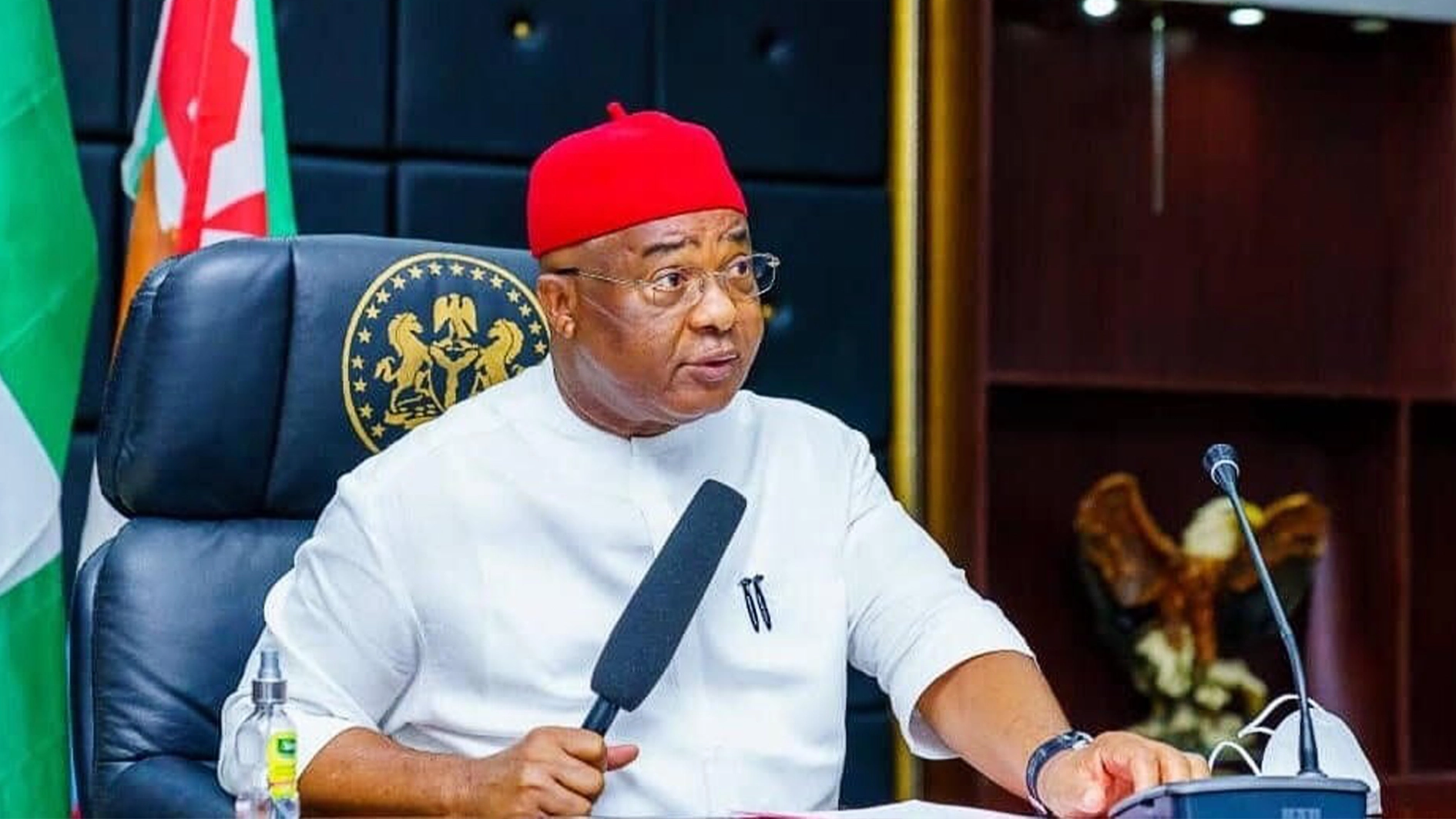
Nigeria’s economic growth will be sustainable only when it is built on stronger local economies, with government providing the foundations and private investors turning them into productive enterprises, jobs and prosperity, Imo State Governor, Sen. Hope Uzodimma, has said.
He cited a survey conducted by his research team in which 85 per cent of respondents did not believe Nigeria offered citizens equal opportunities to thrive, arguing that the country’s next phase of growth depended on developing communities beyond major commercial centres.
Uzodimma, who spoke on Friday at the inaugural Lagos Country Club Policy Dialogue with Government Leaders, held under the theme, “The Future Is Local: Stimulating Grassroots Economies for Inclusive Growth,” cited figures showing that 72 per cent of rural Nigerians were poor, compared with 42 per cent in urban areas, while rural communities accounted for 80 per cent of the country’s poor.
He said his administration had constructed more than 130 roads since taking office in 2020, connecting communities and improving trade between towns.
On electricity, he said the first phase of the Orashi Power Project was commissioned in February under the Light Up Imo programme. It includes a 15MVA injection substation and a new distribution network on the Owerri axis. According to him, a hotel in the state recently told journalists its operating expenses had fallen by more than 70 per cent because of the power supply.
Uzodimma said his administration was working towards extending fibre and 5G coverage across the state’s 27 local government areas.
On employment, he said more than 65,000 young people had been trained through Skill-Up Imo in software development, cybersecurity, artificial intelligence and related fields, with digital skills centres across the state.
He said Skill-Up Imo and wider digital economy programmes had created more than 80,000 jobs and income-earning opportunities, including salaried work, remote work, freelancing and businesses. More than 1,000 graduates had found work through the state’s freelance platform, while over 30 start-ups had emerged from the programme, he added.
“Our young people do not need to move to Lagos to earn a Lagos salary, and many no longer do,” he said.
He also said Imo’s internally generated revenue reached N43.6 billion in 2025, compared with an average of about N500 million monthly in 2019, with collections now exceeding N4.5 billion monthly.
The governor identified the Igbo apprenticeship system, Igba Boi, as a model for enterprise development. He said his administration launched the One Kindred, One Business Initiative (OKOBI) in 2022 to enable kindreds, social groups and student clubs to establish collectively owned businesses, with training, technical support and access to finance.
More than 600 businesses had been registered by the end of 2025, with close to 20,000 members across the state’s 27 local government areas, he said, adding that the Federal Government had approved its nationwide adoption.
However, Uzodimma acknowledged that the revival of Adapalm had been slower than expected, while the Orashi waterway, which would provide the region with access to the Atlantic, still awaited dredging. He said both projects remained open to investors.
Earlier, Chairman of the dialogue and former Managing Director and Chief Executive Officer of Grand Cereals Limited, Alex Goma, said the challenge was ensuring macroeconomic stability translated into better conditions for small businesses.
“Policy alone will not transform Nigeria’s economy,” he said.
Goma said inflation, which exceeded 30 per cent in 2024, had fallen to 14.6 per cent in September, external reserves had risen above $55 billion, and the economy grew by 4.4 per cent in the second quarter. The Central Bank of Nigeria had also reduced the monetary policy rate to 23 per cent, he added.
However, he said industrial growth had nearly halved in the second quarter, while small businesses still borrowed at over 30 per cent when they could access loans. Many also spent 40 per cent of their profits generating their own electricity.
He said close to 40 million micro, small and medium enterprises provided nearly nine in every 10 jobs, but most remained outside the reach of banks, the tax system and support schemes.
Goma called for education focused on capability rather than certificates, structures that allow small businesses to scale, measures to close the energy gap and the ranking of states and local governments on how easily they enable small businesses to operate. He also called for tax relief for small firms investing in alternative power and for banks to lend on cash-flow data, not collateral alone.
President of Lagos Country Club, Seyi Adewunmi, said small businesses carried nearly half of national output and the overwhelming majority of jobs, describing them as the economy’s “heartbeat”.
He said the dialogue was designed to bridge the gap between policy formulation and economic realities by bringing government, the private sector and citizens together. He urged participants to engage government as partners, saying Nigeria’s future would be built “street by street, market by market” through citizens and communities.