

 Get Guardian on Google
…Akpabio Warns Candidates Face Disqualification as Senate Probes Political Violence
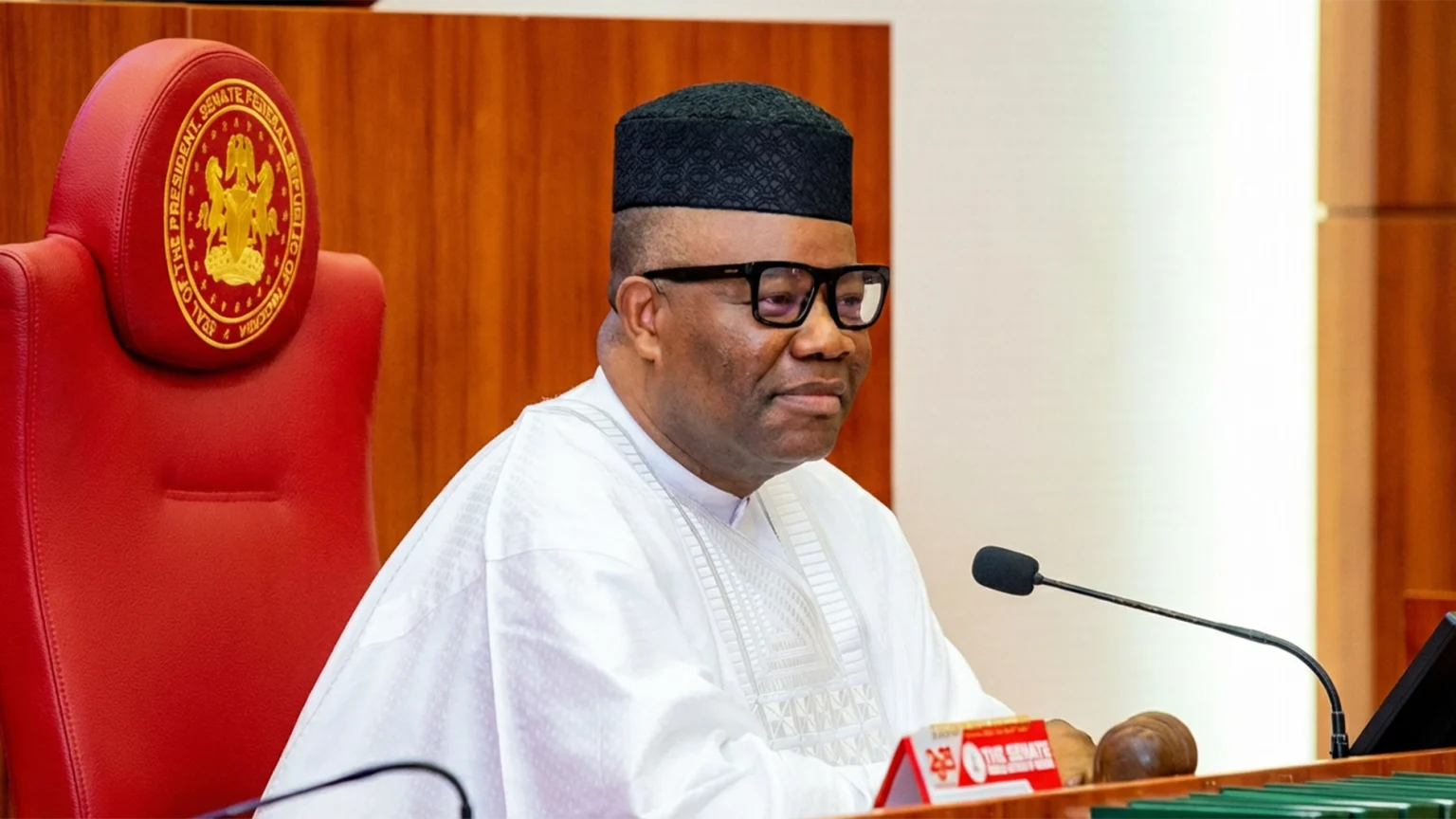
Political candidates who sponsor violence or deploy armed thugs against opponents could lose their eligibility to contest the 2027 general elections, Senate President Godswill Akpabio has warned.
Akpabio’s warning came as the Senate ordered a one-week investigation into reported attacks on President Bola Tinubu, former Vice-President Atiku Abubakar and Peter Obi, presidential candidate of the Nigerian Democratic Congress (NDC), among other political leaders.
The Senate also raised concerns over allegations that politicians were financing and equipping youths to disrupt political activities, suggesting that those behind the violence could be more consequential targets for security investigations than the immediate perpetrators.
During plenary on Tuesday, Akpabio drew attention to Sections 121 to 128 of the 2026 Electoral Act, warning that candidates whose agents incite violence could face disqualification where INEC establishes a prima facie case against them.
He said candidates who carry weapons or surround themselves with armed thugs should not expect to escape the consequences of the law.
The warning followed a motion of urgent public importance sponsored by Senator Abdul Ningi, which highlighted a series of reported attacks and disruptions involving political leaders and their supporters.
Among the incidents cited was the reported attack on Tinubu’s motorcade on November 13, shortly after he observed Jumat prayers at the Shehu Shagari Central Mosque in Garki, Abuja.
The lawmakers also recalled the reported attack on Obi and other political stakeholders in Benue State, the disruption of an NDC and Obidient Movement procession in Asaba, Delta State, on November 7, which reportedly left one person dead and five others injured, as well as the attack on Atiku’s convoy in Sokoto State.
The Senate described the incidents as signs of growing political intolerance capable of threatening peaceful participation in the 2027 elections.
But Senator Samaila Kawu argued that the problem went beyond street-level violence, accusing politicians of being the sponsors of attacks through the alleged distribution of weapons and drugs to young people.
“We are the sponsors of all what is going on,” Kawu declared.
He urged security agencies to investigate those financing political violence rather than concentrating exclusively on the youths recruited to carry out attacks.
Senator Mohammed Ndume also called for decisive action, describing the reported attack on Tinubu as an embarrassment to the country.
He urged the police to prevent people from carrying dangerous objects to political rallies and advocated swift prosecution of anyone found culpable.
The Minority Leader, Senator Abba Moro, warned that unchecked political violence could discourage citizens from voting and undermine the credibility of the electoral process.
Senator Babangida Hussaini, meanwhile, recalled recommendations of the Justice Mohammed Uwais-led Electoral Reform Committee, which proposed specialised institutions and courts to address electoral violence.
He lamented that the failure to implement such reforms had allowed the problem to persist.
Senator Sampson Ekong called for equal protection for candidates across political parties and urged the Federal Ministry of Information and the National Orientation Agency to intensify public enlightenment against political violence.
Following the debate, the Senate mandated its committees on National Security and Intelligence, Public Affairs, and INEC to engage relevant security and electoral institutions and submit a report within one week.
It also urged the Federal Government to strengthen security around political leaders, candidates, supporters and campaign gatherings while establishing early-warning and rapid-response mechanisms.
Akpabio further warned parents and guardians to caution their children against attacks on political leaders, noting that certain acts could attract charges bordering on treasonable felony.
The Senate’s intervention comes amid growing political activity ahead of the 2027 elections, with lawmakers warning that violence, intimidation and the alleged sponsorship of political thuggery could threaten the right of Nigerians to freely participate in the democratic process.







