
 Get Guardian on Google
Nigeria’s ability to translate rising government revenue into infrastructure development, economic growth and improved living standards is being undermined by weak fiscal controls, poor enforcement of financial regulations and persistent accountability gaps across federal government institutions.
The Fiscal Responsibility Commission (FRC) has warned that its capacity to enforce fiscal discipline across ministries, departments and agencies (MDAs) remains severely constrained by inadequate funding, staff shortages and limited enforcement powers, calling for an urgent amendment of the Fiscal Responsibility Act (FRA) 2007.
The Commission said strengthening its institutional and enforcement capacity was critical to ensuring that public resources were properly accounted for, government revenues fully remitted and expenditure efficiently deployed to address the country’s enormous development needs.
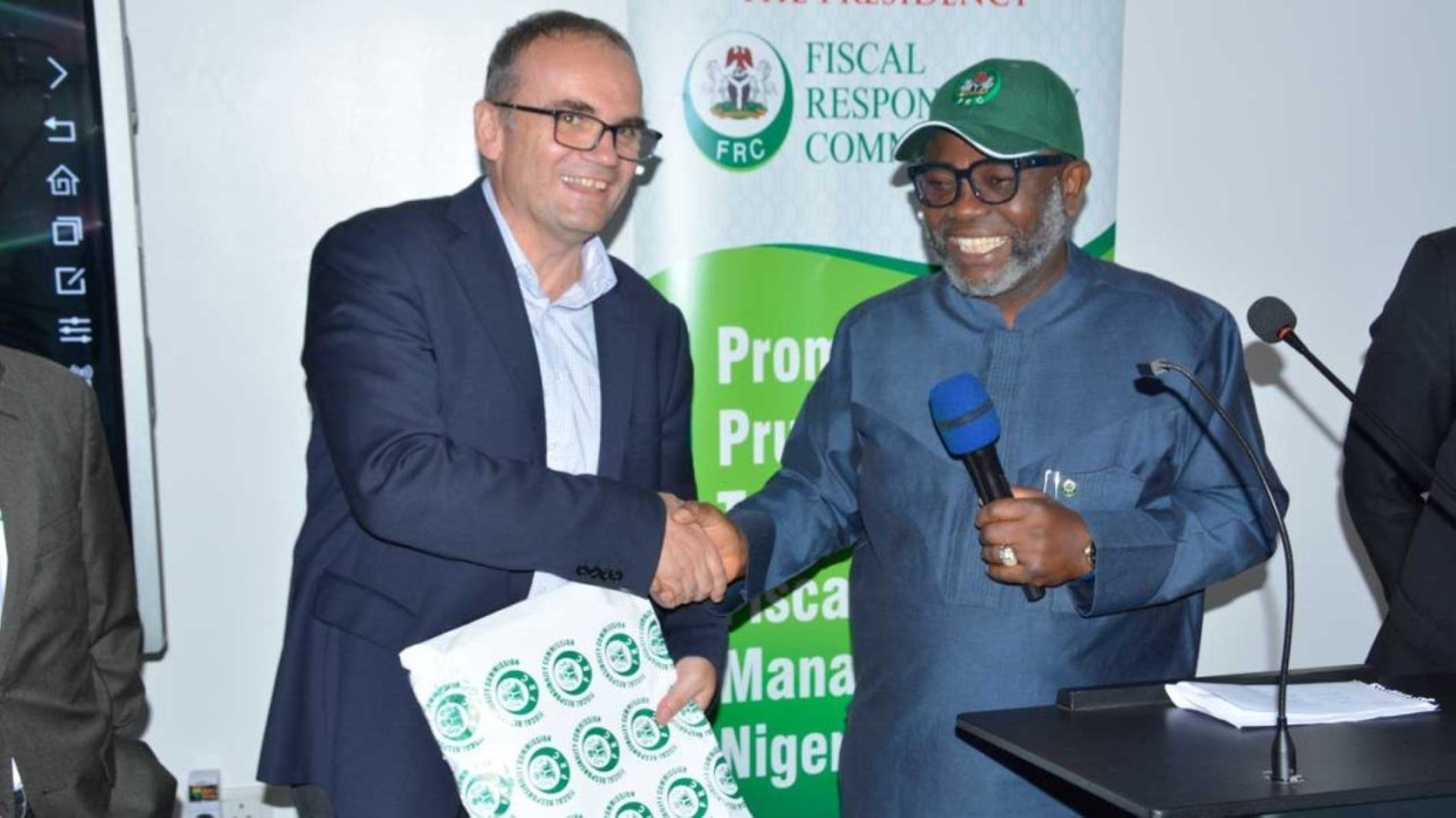
Acting Chairman of the Commission, Charles Chukwuemeka Abana, made the call in Abuja during the public presentation of the 2026 Fiscal Responsibility Index (FRI).
Abana disclosed that despite its operational constraints, the Commission had contributed to increasing independent revenue from about N300 million in 2010 to more than N2 trillion annually through the monitoring of operating surpluses and other internally generated revenue.
He, however, warned that the gains could be undermined without stronger institutional support to deepen fiscal accountability and ensure compliance with statutory financial management requirements across government institutions.
According to him, Nigeria’s development challenges cannot be addressed through revenue mobilisation alone without corresponding improvements in expenditure management, procurement transparency, budget implementation and institutional accountability.
“The growing demand for public infrastructure, social services, economic development and improved citizens’ welfare makes it imperative that every naira of public revenue is properly accounted for and efficiently deployed,” he said.
He identified inadequate enforcement powers, insufficient funding, staff shortages and the lack of suitable accommodation, despite more than 16 years of the Commission’s establishment, as major obstacles to the effective discharge of its responsibilities.
Abana urged the Federal Government to strengthen the Commission through increased funding, improved institutional capacity and amendments to the Fiscal Responsibility Act to expand its enforcement and monitoring powers.
The concerns highlight a major weakness in Nigeria’s public finance management system, where increased revenue mobilisation does not necessarily translate into better infrastructure or public services. Poor budget execution, weak procurement oversight and inadequate monitoring can undermine the impact of public spending, delay critical projects and leave development priorities unfunded.
The Fiscal Responsibility Index, developed through collaboration between the FRC and the Centre for Social Justice (CSJ), is designed to assess and rank federal MDAs based on their compliance with statutory fiscal responsibility requirements.
The assessment examines institutional performance in budgeting, procurement transparency, revenue remittance and other public financial management obligations under the Fiscal Responsibility Act.
Unlike previous single-year assessments, the 2026 edition examines compliance across three consecutive financial years, 2023, 2024 and 2025, providing a broader basis for identifying institutional weaknesses and tracking progress.
Abana described the Index as an accountability instrument designed to expose compliance gaps, encourage competition among government institutions and stimulate improvements in public resource management.
He said its success should not be measured merely by the positions occupied by MDAs on the ranking table but by the extent to which the findings trigger corrective actions and improve public financial management.