
 Get Guardian on Google
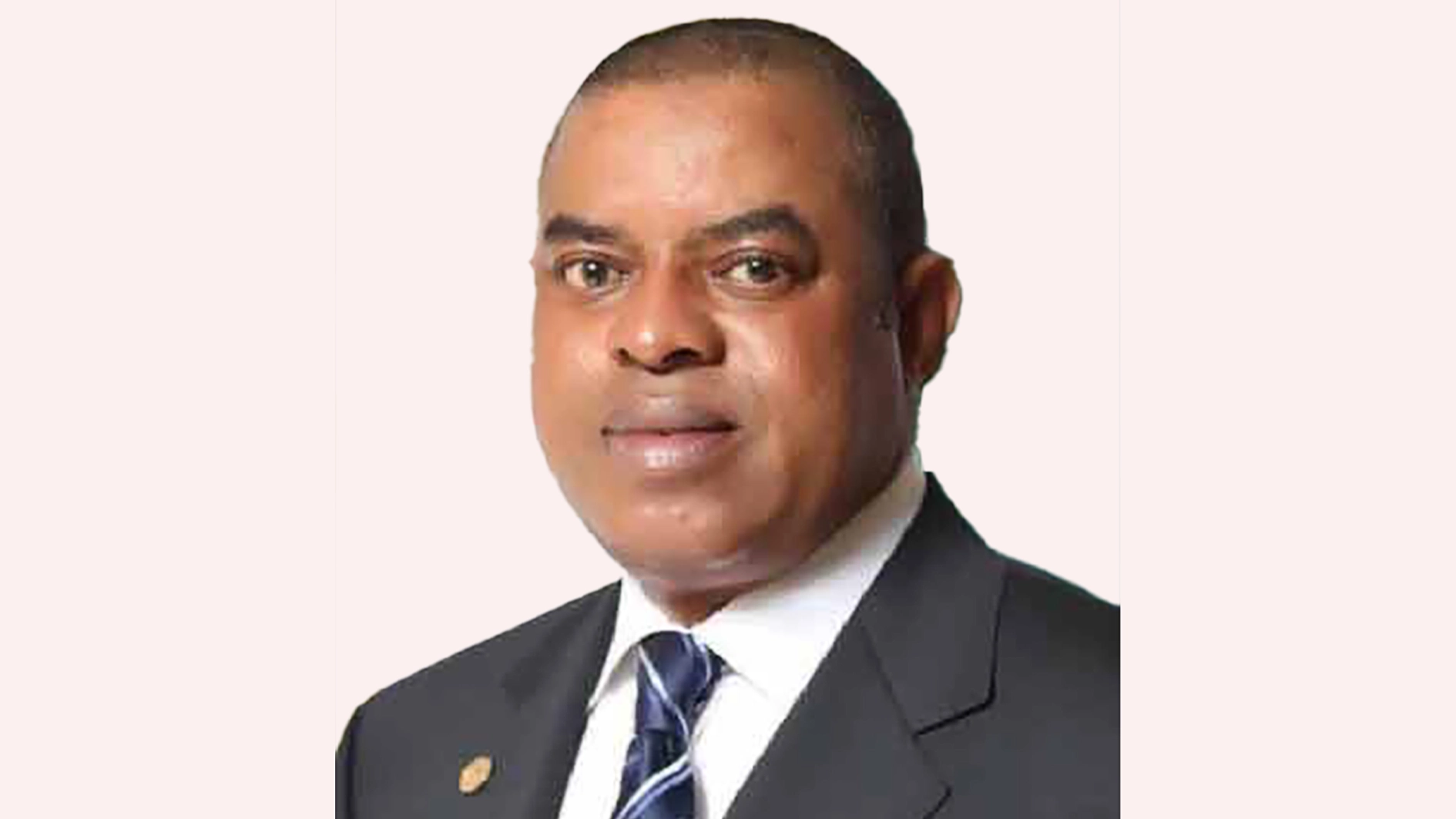
Senator Gbenga Ashafa represented Lagos East Senatorial District in the Senate from 2011 to 2019 before serving as Managing Director of the Federal Housing Authority (FHA). In this interview with SEYE OLUMIDE, he highlights the impact of President Bola Tinubu’s student loan scheme under the Nigerian Education Loan Fund (NELFUND), defends the administration’s economic reforms and explains why the President deserves re-election in 2027. Excerpts:
As a two-term senator and prominent member of the Lagos APC, what factors accounted for President Bola Tinubu’s defeat by Peter Obi in Lagos in the 2023 presidential election despite his longstanding political influence in the state?
In my assessment, one of our major strategic errors was complacency. Many party members assumed Lagos was secure for the APC and failed to appreciate that political support only counts when people come out to vote. Some believed victory was assured without recognising their individual responsibility to deliver it.
We learnt that lesson before the governorship election that same year. The party reorganised, mobilised its grassroots and impressed on stakeholders that nobody could afford to remain on the sidelines. Governor Babajide Sanwo-Olu subsequently secured 762,134 votes against the Labour Party’s 312,329.
The enduring lesson is that we must never take the electorate for granted or mistake popularity for votes already cast.
What concrete steps is the APC taking to prevent a repeat of the 2023 experience? There are concerns that many young people, particularly in the Southwest, feel disconnected from the party. How is it addressing this?
The major difference is that there is no room for complacency this time. Our emphasis is on grassroots mobilisation, door-to-door engagement, voter education and an effective Get-Out-The-Vote strategy.
We also recognise that young Nigerians cannot be engaged through political slogans alone. They want answers on jobs, technology, housing, education, transport, entrepreneurship, security and the cost of living.
Programmes such as NELFUND, the three million Technical Talent initiative and the Nigerian Consumer Credit Corporation provide opportunities to engage young people on practical issues. We must explain who qualifies, how to access these programmes and how they can improve people’s lives.
Our candidates at all levels must also campaign on their records and programmes. Ultimately, the task is to convert political support into actual participation.
Many Nigerians are struggling with economic hardship and rising living costs, yet some say they see no convincing alternative to the APC. Does this necessarily translate into support for the ruling party or could it lead to voter apathy? What is your message to disappointed Nigerians?
We must not assume that dissatisfaction with the alternatives automatically translates into support for the government. Economic hardship can equally lead to voter apathy. That is why the government must listen and communicate honestly.
The reforms of the past few years have been challenging. Families have faced high food prices, businesses have struggled with operating costs, and Nigerians have had to make difficult adjustments.
However, we must remember why the reforms became necessary. Nigeria was burdened by an unsustainable fuel subsidy regime, distortions in the foreign exchange market, weak revenues and structural economic weaknesses. President Tinubu chose to confront these problems rather than postpone them.
We are beginning to see measurable improvements. Real GDP grew by 4.43 per cent in the second quarter of 2026, while external reserves and inflation figures have also shown encouraging movements.
The reforms include fuel subsidy removal, foreign exchange restructuring, tax reforms, banking recapitalisation, domestic refining and efforts to improve the investment climate.
The administration has also raised the minimum wage to N70,000, introduced student loans, activated consumer credit initiatives and promoted CNG-powered transportation.
The critical task now is to translate macroeconomic gains into improvements at household level. Nigerians must see the benefits in affordable food, better-paying jobs, improved electricity, accessible credit, reliable infrastructure and rising real incomes.
There are growing concerns about the relationship between economic influence, demographic changes and political power in Lagos. Some believe the indigenous political and cultural identity of the Southwest could face increasing pressure. How should the region balance its identity with the constitutional rights of other Nigerians?
Lagos is home to millions of Nigerians from every part of the country, and I believe it will remain so. Its opportunities and cosmopolitan character are precisely what attract people to the state.
Every Nigerian has constitutional rights to live, work, own property and pursue legitimate aspirations anywhere in the federation. However, inclusiveness should not require a people to abandon their history, culture or identity. Indigenous Lagos communities have centuries of history, traditional institutions and cultural practices that deserve preservation.
The balance is neither exclusion nor historical erasure. Lagos can remain welcoming to everyone while proudly preserving its indigenous Yoruba heritage. These ideals have coexisted for generations.
How do you interpret the recurring description of Lagos as a ‘no man’s land’? Does it reflect the state’s cosmopolitan character or diminish the historical identity of its indigenous population?
There is simply no such place as a ‘no man’s land’. Every land has a history, a people and a heritage.
The Awori are recognised among the earliest known settlers of much of what constitutes modern Lagos. There are also longstanding Egun communities in the Badagry axis and indigenous Ijebu communities in Epe, Ibeju-Lekki and Ikorodu, alongside the historical influences of Benin, the Saro and Brazilian returnees.
Lagos is historically and geographically part of the Southwest, with a distinct Yoruba indigenous heritage. Acknowledging this does not diminish the enormous contributions of Nigerians from other parts of the country and people from across the world.
What I reject is the suggestion that the accommodating spirit of Lagosians should be used to erase the state’s history. Cosmopolitanism does not mean the absence of heritage. Both can comfortably coexist.
If you were asked to convince a sceptical Nigerian that President Tinubu’s administration deserves another four years, what specific achievements would you present? Beyond policy announcements and government figures, what tangible improvements can ordinary Nigerians identify in their daily lives?
I would begin with programmes that directly affect people’s lives.
In education, NELFUND has established a student-financing system to help eligible students meet tuition and upkeep costs. Its November 2026 disclosures put cumulative disbursements at N375.28 billion, covering approximately 1.675 million beneficiaries. For struggling families, this can make a significant difference. These are loans, and their eligibility and repayment conditions must be clearly understood.
For workers, the minimum wage has increased from N30,000 to N70,000, while the statutory review period has been reduced from five years to three. Although this does not resolve the cost-of-living crisis, it represents a concrete intervention.
The Nigerian Consumer Credit Corporation is another initiative. Access to responsibly priced credit can help working Nigerians acquire essential assets without paying the entire cost upfront.
For young people, the three million Technical Talent programme offers opportunities to develop digital and technical skills. Its success should ultimately be measured by how many participants secure employment, contracts or opportunities to establish businesses.
On transportation, the Presidential CNG Initiative has supported vehicle conversions and the development of refuelling infrastructure. The Presidency reported more than 120,000 converted vehicles, over 400 certified conversion centres and more than 90 refuelling stations in its September 2026 update. The challenge is to extend affordable and reliable transportation across the country.
Healthcare is another area receiving attention. Three of the six planned cancer treatment centres had been commissioned in Katsina, Benin and Enugu as of November 2026. Access, staffing and affordability will determine the ultimate impact of these investments.
The four tax reform laws signed in June 2025 also seek to simplify the tax system, improve administration and protect lower-income earners through exemptions. Their success will depend on effective implementation and fair treatment of taxpayers.
There are also encouraging macroeconomic indicators. Real GDP grew by 4.43 per cent in the second quarter of 2026, while external reserves reached $55.24 billion in October. Inflation has also moderated, although this does not mean that prices have returned to previous levels.
Infrastructure investment remains significant, including the Lagos-Calabar Coastal Highway, Sokoto-Badagry corridor, Bodo-Bonny Road and Bridges, and major road projects in the Southeast, including sections of the Enugu-Port Harcourt Expressway and the Enugu-Onitsha dual carriageway.
The welfare of the Armed Forces has also received attention, with presidential approval for salary increases of between 30 and 80 per cent, depending on rank, effective from September 2026.
Institutionally, the administration pursued the Supreme Court case on local government financial autonomy. State policing has also advanced through the reported approval of the constitutional alteration by all 36 State Houses of Assembly.
These are important interventions, but I would not suggest that every problem has been solved. The most important test is converting economic stability and government programmes into household prosperity, better services and improved living standards.
One criticism of the Tinubu administration is that some people around the President have failed to translate his vision into tangible results, while the political elite appear insulated from ordinary Nigerians’ economic difficulties. Does the President have the right people around him, and should he consider a major reassessment of his team?
Every administration must constantly assess its performance. Government cannot be static, and public appointments should never become entitlements.
The President has assembled people with different backgrounds and experience in government, politics, business and the professions. However, some areas of government will inevitably perform better than others.
My position is that there must be a strong culture of performance management. Ministers and heads of agencies must understand that public appointments are responsibilities to deliver measurable results.
Where targets are being achieved, officials should be supported. Where they are not, there should be no hesitation in making adjustments.
Nigerians ultimately hold the President accountable for the collective performance of his administration. That makes continuous evaluation indispensable.
As the 2027 election approaches, the debate appears to be shifting from the Muslim-Muslim ticket controversy of 2023 to broader North-South political calculations. With AtikuAbubakar and RotimiAmaechi associated with the ADC ticket, opposition figures are projecting a division of votes in the South and stronger opposition performance in the North. How will the APC navigate this political equation? And has religious concerns surrounding the 2023 ticket been addressed?
First, the legal status of the ADC ticket and the party’s leadership must be considered in the light of the latest court proceedings. Any definitive conclusion should be based on the current court record.
Beyond that, Nigeria’s political arithmetic is complex. Regional, religious, generational and economic considerations all matter. No serious national party should assume that any region permanently belongs to it.
What you must appreciate about the APC, particularly under Asiwaju Bola Ahmed Tinubu, is that the party campaigns with the determination of an underdog. From the presidential level to state and grassroots structures, we have demonstrated organisation and coordination in seeking the support of Nigerians.
President Tinubu has also been personally engaging voters across the country, presenting his record, programmes and vision for another four years. Our strategy does not depend on the weakness of any opponent.
The Muslim-Muslim ticket generated concerns in 2023 and those concerns cannot simply be dismissed. However, Nigerians will ultimately judge the administration by its performance, the inclusiveness of its appointments, respect for religious freedom and whether opportunities are fairly distributed.
By 2027, I expect the debate to focus increasingly on the economy, security, jobs, infrastructure, education and whether Nigerians believe their circumstances are improving.
Looking beyond the immediate electoral calculations, what should Nigerians realistically expect from a Tinubu second term? Would it be a continuation of existing economic reforms or more fundamental changes in state policing, resource control, fiscal federalism and regional development? What would be different from the first four years?
If the first four years have largely been about economic restructuring and rebuilding the foundations, the next phase should focus on consolidation and delivery.
The emphasis must shift increasingly towards jobs, food security, industrialisation, affordable housing, reliable energy, infrastructure, access to credit and rising household incomes. Nigerians must feel the recovery, not merely read about it. The Renewed Hope Agenda should be consolidated with gradual improvements in prosperity.
There is also an important institutional reform agenda. State policing has moved beyond political discussion, with all 36 State Houses of Assembly reportedly approving the constitutional alteration. However, the necessary legislative and operational arrangements must still be addressed. These include national standards, oversight, funding and the respective responsibilities of federal and state police services.
Fiscal federalism must also remain part of the national conversation. The Supreme Court judgment on local government financial autonomy represents an important step towards strengthening governance at the grassroots.
We must continue examining the distribution of responsibilities and revenues within the federation, strengthen the capacity of states to develop their comparative advantages and promote regional economic corridors connecting agriculture, manufacturing, transportation, ports and energy.
Regional development commissions should also drive projects that cut across state boundaries. The establishment of the South-West Development Commission, whose board was inaugurated in August 2025, is an important step. The priority should now be coordinated delivery, clear responsibilities and transparent spending.
A stronger federation does not require a weaker centre. It requires stronger constituent units operating within a clear constitutional framework.
The fundamental difference in a second term should therefore be a shift from emergency economic stabilisation to prosperity, security and efficient public services.
Finally, beyond the 2027 presidential election and your support for President Tinubu’s re-election, what political ambitions or responsibilities do you envisage for yourself? Do you see yourself returning to the Senate, seeking another office or playing a different role in the party and national politics?
I have been exceptionally fortunate in public service. My journey took me through the local, state and federal governments, with particular mention of the mentorship and opportunities provided by President Bola Ahmed Tinubu.
I was appointed Executive Secretary of the Land Use and Allocation Committee, Permanent Secretary of the Lands Bureau and later served as Managing Director and Chief Executive Officer of the Federal Housing Authority. I also served as Permanent Secretary in Lagos State under Governor Babatunde Fashola from 2005 to 2010 and represented Lagos East in the Senate for two terms.
At this stage, I do not believe public service should become a perpetual search for the next political office. There are many ways to serve, and experience creates a responsibility to support institutions and younger generations.
My immediate focus is to contribute my experience, relationships and institutional knowledge to the development of my hometown in Ibeju-Lekki, Lagos State, and to the responsibilities entrusted to me within my political family.
If, in the future, my people, the party or circumstances require me to take on another responsibility, that conversation can take place at the appropriate time.
For now, I remain focused on service. Public office comes and goes; service should endure.