
 Get Guardian on Google
By Ighodalo Clement Eromosele
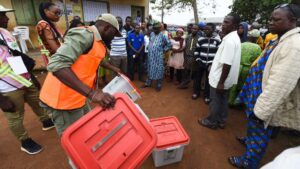
Ahead of 2027 general elections, in particular the presidential election, the Nigerian political landscape is frenetic as political actors are embroiled in strategic maneuvers to outwit one another in the power game, characterised by outpouring of vituperations and threats. There is palpable fear that 2027 elections may be marked by violence as politicians express loss of confidence in the electoral processes and more disturbingly, on the judiciary.
The disclosure by INEC of infiltration of voter register by some criminal elements in its rank and file raises questions about sanctity of records and its readiness to conduct credible elections in 2027. The overarching question arising from the conduct of politicians is: to what end and of what benefit to ordinary citizens who daily face existential challenges from a very hostile economy characterised by unaffordability of basic necessities of life?
Regrettably the citizen who, in the instance, have the powers to decide the fate of politicians in free, fair and credible elections, are largely uninformed about their inalienable rights and responsibilities and, the nature and dimensions of the problems of Nigeria and who is best suited to deal with them amongst those seeking endorsement for service. They also do not know that the desperation by many politicians for their endorsement is not altruistic but to be prebendal on the Nigerian State.
Many are poor, indeed multi-dimensionally so, but sadly, the weapons the politicians deploy in tokenistic palliatives to them, in cash and kind, to demonstrate empathy and concern for their wellbeing. In all of this, there is an uncanny feeling that Nigeria is not working, on the wrong trajectory, in governance and leadership, to arouse hope in the citizens.
It is instructive to continually interrogate Nigeria’s historical trajectory to appreciate the enormity of the headwinds confronting it and to evaluate the sincerity or otherwise of promises being bandied by politicians in their manifestoes and at rallies. The 1960 Independence Constitution and the 1963 Republican version were products of a settled agreement of the founding fathers to run a governance system anchored on the principle of federalism by which each region was autonomous to deal with subsidiary matters of local concern exclusive of the other regions cognizant of the plurality of its peoples in language, cultures, religions, values and idiosyncrasies.
The regional governments had tools to enforce laws in accordance with their status as government properly defined. The Independence National Anthem aptly captured the realities of Nigeria as a plural State. The regions were competitive in their development strides and priorities which were largely beneficial to citizens. However, not unexpected of a budding nation State, there were inter-party and intra-party conflicts exacerbated by underpinning domineering external influences and conspiracies evident in the Western region. Notwithstanding this development the verdict of history is that it could have been managed within the ambit of democratic principles and praxis without recourse to military intervention as it happened on January 15, 1966.
The series of military interregna, the 30-month civil war and the Constitutions – 1979 and 1999 – have combined to set Nigeria on a trajectory characterised by failure of leadership and of governance and attendant headwinds on the path of sustainable development amid huge resources, human and material.
Specifically, the Constitutions defined a new political order in centralized governance system with powers, resources and responsibility rolled to the Central government with very limited residual powers for the sub-nationals, the States. Even in matters on the concurrent legislative list of the Constitution, the Central government has an overriding power once it legislates on any of the items which de facto make it Unitary, in contradistinction to its declaratory provision in section 2(2), stating inter alia: “Nigeria shall be a Federation consisting of states and a Federal Capital Territory”.
As expected the Constitution is crafted with rigorous provisions to forestall frivolous amendment. But even for justifiable matters it has been largely futile especially where the Central government is ill-disposed to such amendments. The fact of several attempts to amend the 1999 Constitution is a testament to the inherent flaws in it and of its perception as an albatross on the wheel of progress. In the circumstance, the compelling question is: Nigeria, quo vadis? This question is compelling because the 1979 or 1999 Constitution as grundnorm is the foundational structure of extant governance system and the source of systemic challenges and a fuzzy political landscape. Thus, advocates for a new Constitution, nay a federalist Constitution, to restore the spirit of our national consensus at Independence in 1960 are justified a posteriori on this ground.
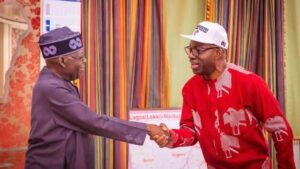
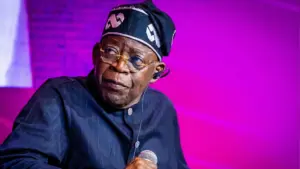
It is discernible that beyond the twin economic reform policies on fuel subsidy removal and unification of foreign exchange market, President Bola Ahmed Tinubu is attempting some political reforms which require amendment of the extant Constitution. Although perceived as immaterial, the restoration of the Independence National Anthem was a pointer to the workings of his mind on federalism.
It is against this backdrop that the Electricity Act now operational and the on-going processes for amendment of the Constitution for creation of State police with the imprimatur of President Bola Ahmed Tinubu should be appreciated as a step in the right direction, albeit modicum. It is gratifying that all the States have assented to a constitutional amendment to decentralize the system of policing in Nigeria in line with the principles of federalism. Decentralisation of electricity supply chains is salutary because at the moment Nigeria is literally in darkness distributing about 2% (4000 MW) for a population of about 200 million people requiring not less than 200,000 MW. When will this be achieved if the electricity sector is not decentralised? Sustainable development of the economy in all ramifications is unarguably dependent on access to uninterrupted adequate power supply.
Admittedly, much more needs to be done to re-set Nigeria on the path of fiscal federalism to allay the fears and reservations on creation of State police and this includes devolution of many of the powers, resources and responsibilities of the Central government enshrined in the Exclusive Legislative List to States to ensure their fiscal viability. Clearly this is near impossible through piece-meal amendment of the 1999 Constitution as mentioned supra in which case it is equally compelling to ask President Tinubu as pertaining to his political reforms: quo vadis? Confronting the headwinds of systemic corruption and vested interest, national and international, in the status quo, is unquestionably a herculean task demanding an unswerving political will and determination from the President. The National Conference 2014 whose 899-page report was set aside by the administration of President Muhammadu Buhari should be revisited as template to fashion out a new Constitution. In it is contained well considered recommendation on every subject matter – constitutional and administrative – to reset Nigeria on the path of fiscal federalism.
As concerning economic reform, it is glaring that notwithstanding the successes at the macro-economy, the attendant experience at the micro-economic level is not salutary. The bulk of Nigerians are suffering. I can appreciate the parlous state of the economy by the Q1 of 2023 which Tinubu’s administration inherited. Debt burden as at Q1 2023 was $108.30 billion (DMO) and net foreign reserve was about $4. The Buhari’s government was demonstrably a failure. But as at June 30, 2026 total debt was $120.93 billion (DMO) under the present administration. Unofficially the figure has increased significantly raising concerns on the future of Nigeria and its capacity for repayment in the absence of infrastructure to stimulate economic growth and employment of teeming youth. It is delusional to think that there will be another debt cancellation in the future. Of more concern is that the economic burden of reform is disproportionately hard on the ordinary Nigerians. It is a hard sell, on one hand, to demand austerity and sacrifices from ordinary Nigerians while on the other hand, the political class, across levels of government live in palpable opulence, displaying obscene affluence with impunity.
It is befuddling that amid economic hardship confronting Nigerians, members of the political class ride exotic cars and Suvs in long convoys at public expense. The costs of vehicles are beyond the means of many Nigerians and, I dare say, even beyond the legitimate earnings of those who use them and give them as gifts. Effective mobilisation of Nigerians for hardship as aftermath of economic reform must be anchored on the principle of shared burden by all.
This was demonstrated in 1976 when General Olusegun Obasanjo made Peugeot 504 as official state car. On his second coming as President in 1999, he again demonstrated austerity through monetisation policy which de facto abolished official cars even for Ministers and allocation of official houses. But because his policies in this regard were administrative, they were reversed by succeeding administrations and the attendant high costs of governance at all levels.
Political parties have begun campaigns articulating the high points in their manifestoes. For the electorate there is no doubt that economic consideration will be a matter of priority in their choices of candidates in a free and fair elections at all levels as it happened in the USA mid-term elections. But would there be free and fair elections? The algebraic equation comprising two variables – subsidy removal and flotation of the Naira – which President Tinubu has attempted to solve has yielded a stable macro-economy and a micro-economy in a state of flux. The ordinary citizen who is hungry is not impressed by the elementary economics.
Understandably the ruling party is not taking chances, seen as the source of an un-mitigating hunger in the land. The opposition parties have expectedly made hunger and insecurity the thrust of their campaigns but none so far has touched the kernel of underpinning governance dysfunction rooted in the Constitution which must be addressed to set Nigeria free. I am persuaded that President Tinubu, to the extent of some political reforms is on course in the right direction.
But given the uncertainties on the 2027 elections I am persuaded also to pray adopting excerpts from prayers of the Catholic Church as follows: “Almighty and eternal God, You are Lord of all nations and the fountain of justice.—— Raise up for us leaders after Your own heart, who will pursue justice, secure peace, and advance the welfare of all, especially the poor and forgotten.——-May your kingdom come and Your will be done in our land. We ask through Christ our Lord. Amen.”
Prof. Eromosele is former Deputy Vice-Chancellor (Academic), Federal University of Agriculture, Abeokuta.