 Follow Us on Google News


 Follow Us on Google Discover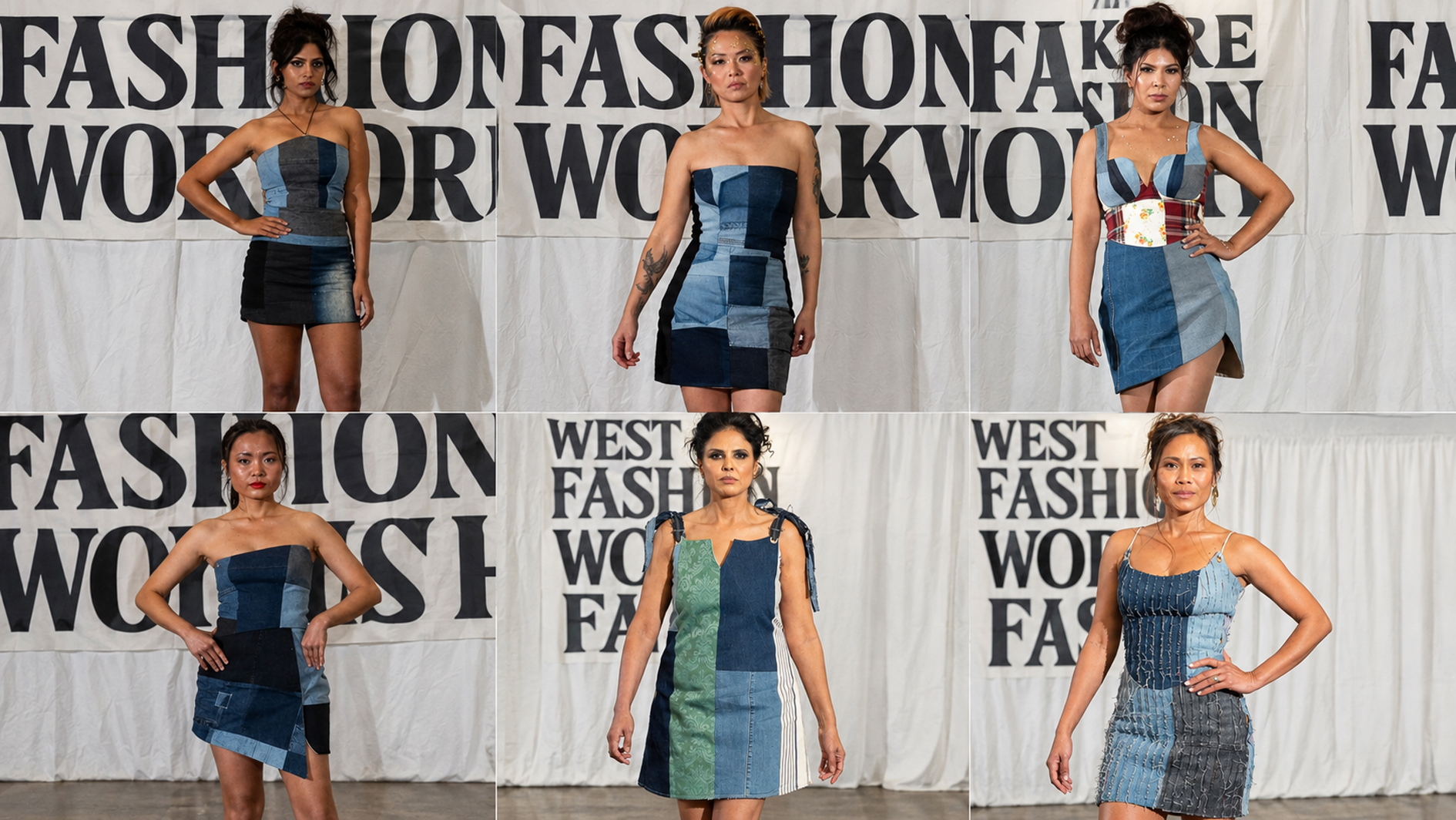
By Ayo Ojo
There is an appealing contradiction at the heart of A Common Thread, the latest collection by Best Idu-Osawe, designer behind the label BEST IDUOSAWE: garments that had effectively been discarded are reconstructed into clothes designed to command attention.
Presented at West Yorkshire Fashion Week, the six-look collection began with unsold clothing supplied by White Rose Pre-Loved Fashion, where the Nottingham-based designer volunteers as an upcycler. Rather than simply altering existing garments, Idu-Osawe dismantled them into flat sections of fabric, washed and pressed the recovered material, and rebuilt it into entirely new forms.
The result is a collection held together by denim but deliberately fragmented in appearance. Indigo, washed blue, charcoal and black are cut and reassembled across corseted tops, mini dresses and asymmetric skirts. Previous seams, fading, raw edges and contrasting washes are not disguised; they become part of the clothes.
One of the collection’s strongest pieces pushes this reconstruction further. Narrow vertical slashes and exposed threads give a fitted denim mini dress a rough, almost woven surface, while extensive lacing runs down the back. Elsewhere, cleaner blocks of contrasting denim are pieced together into more controlled, body-conscious silhouettes.
Corsetry emerges as Idu-Osawe’s most consistent design language, but here it also serves a practical purpose. Adjustable lacing gives the reconstructed garments greater flexibility in fit—an intelligent response to working with reclaimed material, where available fabric is finite.

The collection becomes more playful when denim is interrupted by patterned green cloth, stripes, tartan and floral fragments. These contrasts prevent A Common Thread from becoming an exercise in conventional denim patchwork. Instead, irregular hems, colliding panels, visible stitching and exposed construction give the collection its own visual rhythm.
Importantly, Idu-Osawe does not attempt to conceal the material’s previous life. Old seams, fading, fraying and mismatched surfaces remain visible. What might ordinarily be treated as imperfections become evidence of transformation.
That is ultimately where A Common Thread is most convincing. Sustainability is not simply attached to the collection as a message; it determines how the clothes are made and how they look.
Idu-Osawe does not ask discarded material to look new. He makes its history part of the design.

