 Follow Us on Google News


 Follow Us on Google Discover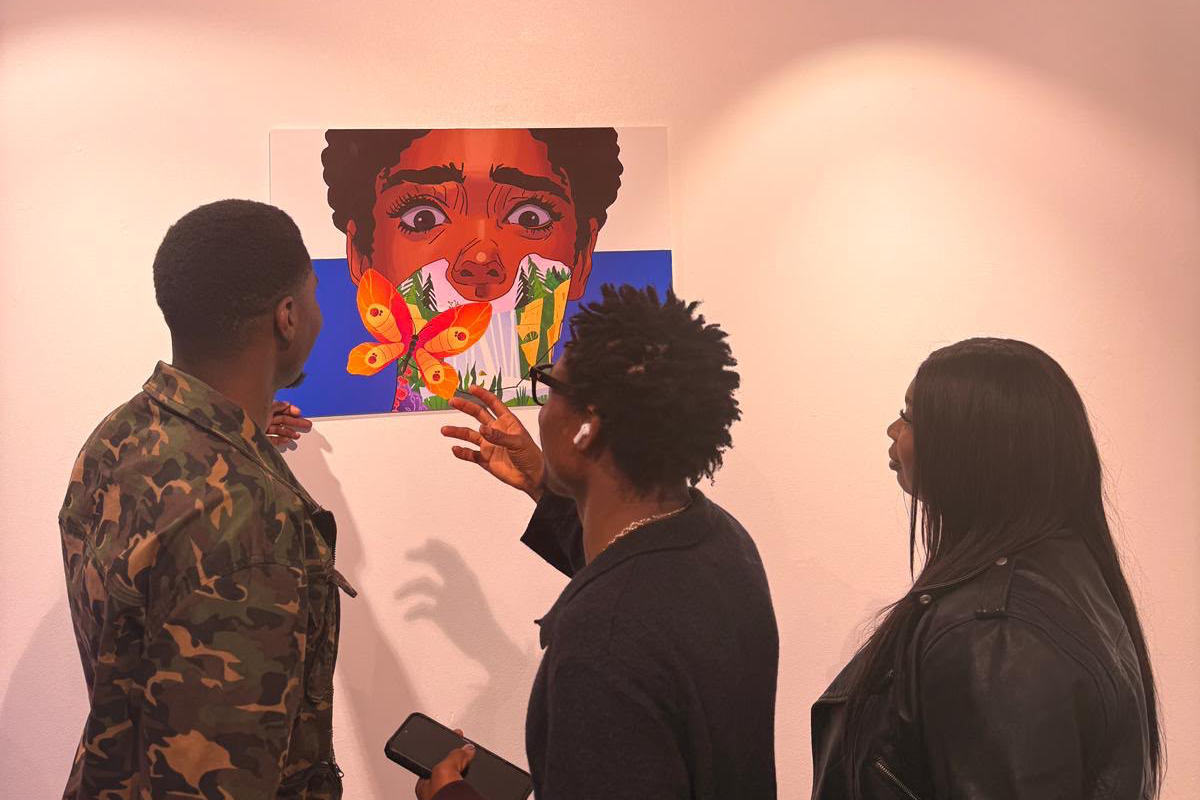
In her 2009 TedTalk, “The Danger of a Single Story”, Nigerian writer, Chimamanda Adichie, spoke passionately about the power of stories. She highlighted the importance of stories and encouraged people to tell theirs because “stories have been used to dispossess and to malign, but stories can also be used to empower and to humanise.” The latter was what Promise Amenkhienan and other artists did with their exhibition, “Itan: The Stories We Carry” on April 18.
Four artists from different backgrounds, united by the power of their art and their pursuit of further education at Arts University, Bournemouth, came together to share stories through art. With paintings and pictures rendered in various media, they formed an artistic choir and chorused melodious music from every hand life has dealt them. The exhibition, held at The Old Street Gallery, London, was curated to explore thoughts in contemporary culture, highlighting conversations that matter through colours and prints. The stories shared via the various artworks carried a significance that echoed the past, lingered in the present, and promised value for the future.
As I sauntered from one artwork to the other, I listened to the visually transmitted stories each piece told. Stories of growth, hope, love and togetherness; stories that truly matter. Of the many beautiful stories told that evening, the one that completely enthralled me was the story told by Promise Amenkhienan’s Cocoons — a collection of three paintings that discuss life’s adventures using different graphs of a beautiful bubbly butterfly.
The paintings, Cocoon I, Cocoon II, and Cocoon III, rendered digitally, drew viewers in with their burst of colours. Their allure, as they sat in canvases on the gallery’s walls, grasped the attention of viewers and pinned them to a halt till they listened to the stories told by the centre butterfly, half human faces, and the array of colors underneath the collections’ flamboyant first impression. Inspired by his life and career, Amenkhienan used these works to discuss the metamorphic nature of life and the hurdles that come with it at various stages. He combined colours and shapes in an allegorical manner to express his vision, bringing to life layers of light necessary in a time like this.
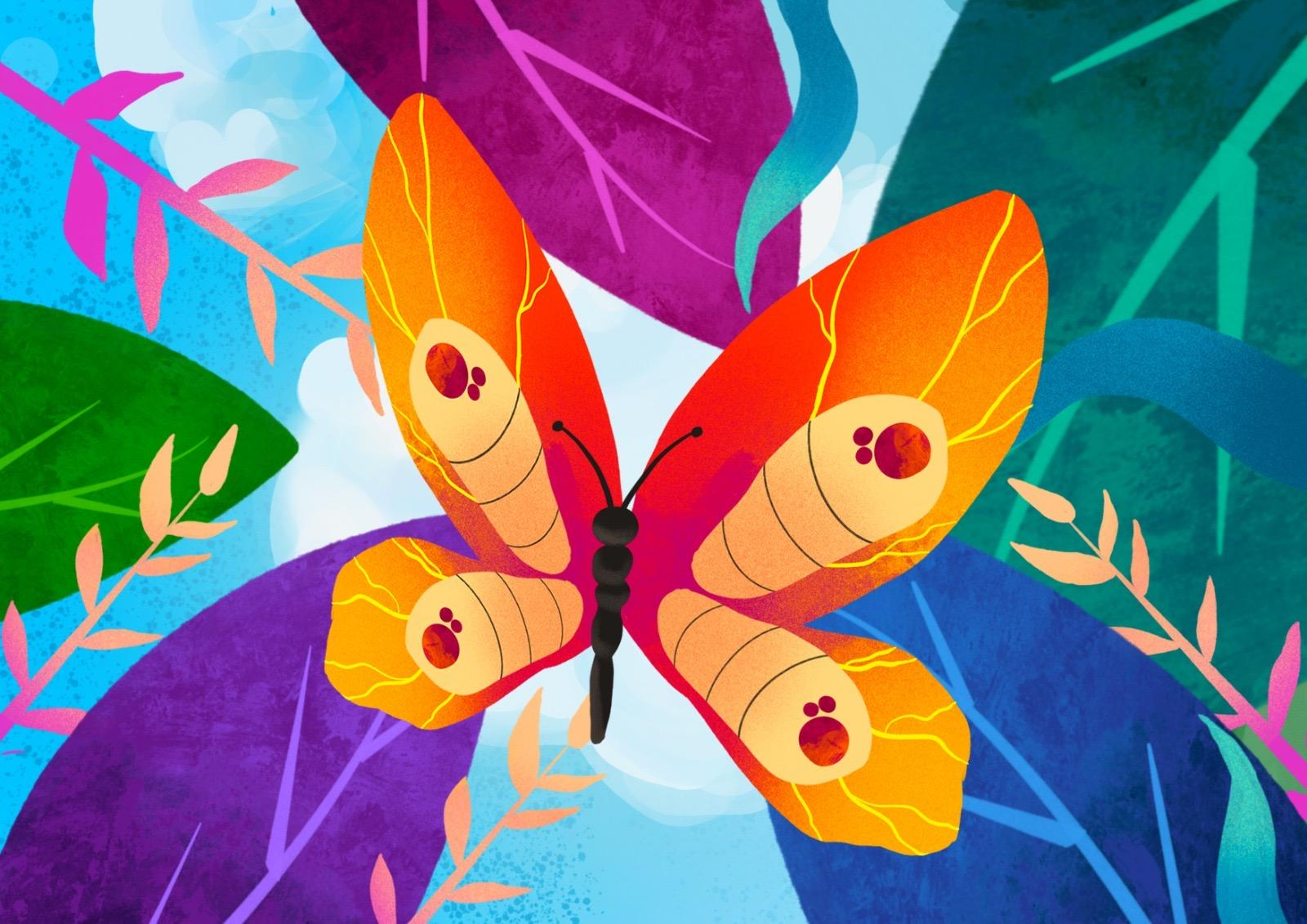
In Cocoon I, the star of the collection’s three paintings, an orange butterfly, is introduced. A symbol for human beings, it is seen draped over a large bed of multiple colors. In the butterfly, four pupa shaped feet are seen with toe prints reduced to clusters of red circles. As a precursor to the other Cocoons, it showed us the subject of the works and tells of its beginning. Like every human at birth, it is boisterous, hopeful, and celebrated. Everyone around it, as symbolised by the leafy colours underneath the butterfly, gravitated towards it with glee and love simply because it had just been born.

In the second piece, Cocoon II, as he continued the narrative, Amenkhienan introduced a brown skinned girl as both a symbol for growing humans and a representation of his people. This is no surprise as the artist and illustrator is known for his devotion to African people and his relentless desire to see them thrive and be adequately represented in the world. He has shown this devotion in many ways but the most famed of them is through his book, Ella and the Bag That Ran Away, a fantasy picture book for African children. Seeing the gap in books fashioned after them and those of other children globally, he took it upon himself to create a book that highlights black children and gives them an opportunity to dream in their colour.
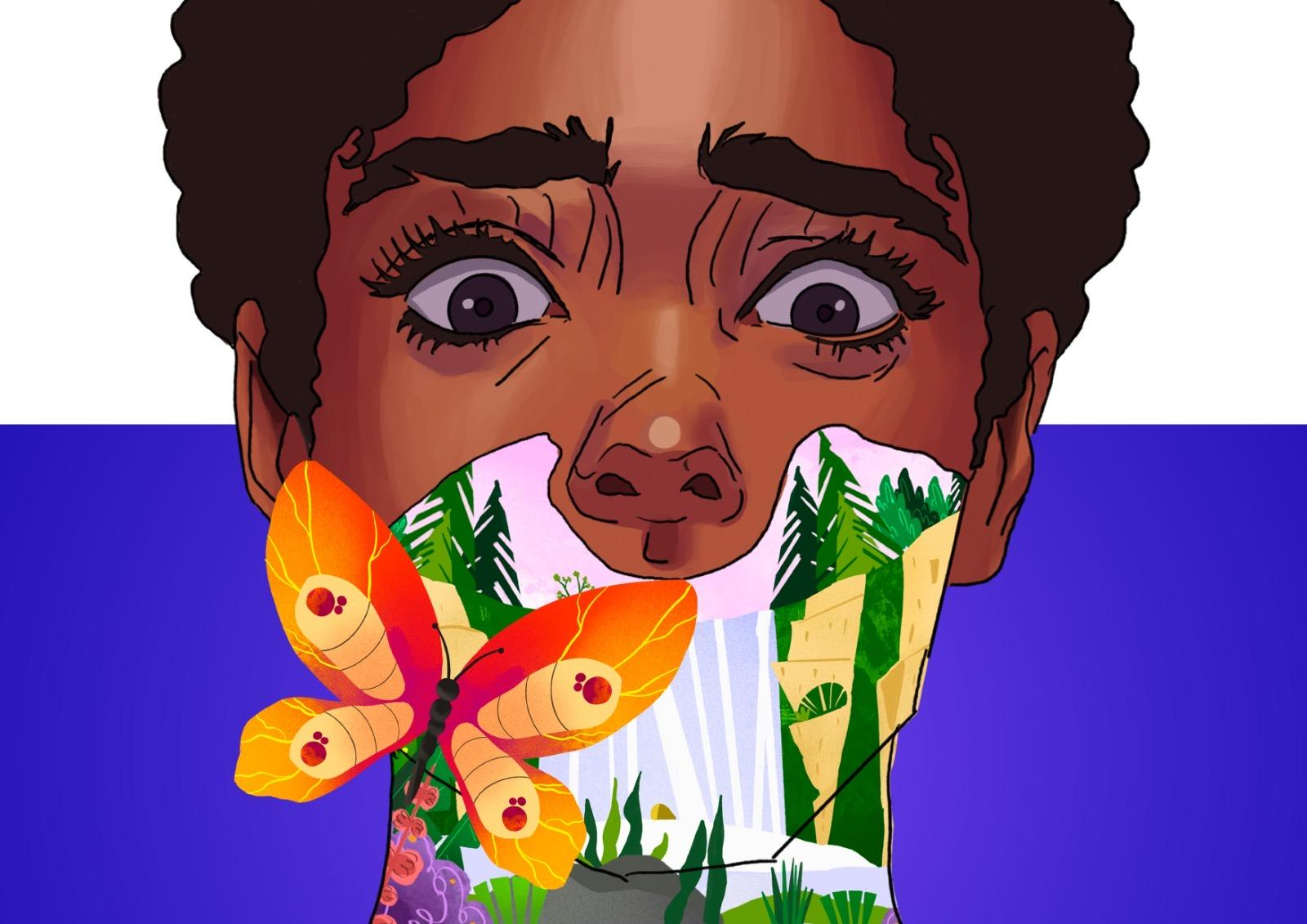
As he gives them room to dream, he also highlights their struggles. The demeanour of the girl in Cocoon II after her exposure to the world represents that of human beings generally and black people specifically. Her bubbly butterfly mode shrank to a corner as soon as she entered the ‘real’ world and was promptly replaced with fear, helplessness, and a silence that is forced upon her by the shocking reality of life. The once boisterous butterfly was shifted off the centre and replaced with a human being who sat neck deep in threatening waters, her freedom of speech stifled, her joy eroded, and her hope bleak. This is the reality of many people at diverse stages of life. Amenkhienan captured these feelings skilfully using people’s experiences of life as fuel for his imagination.
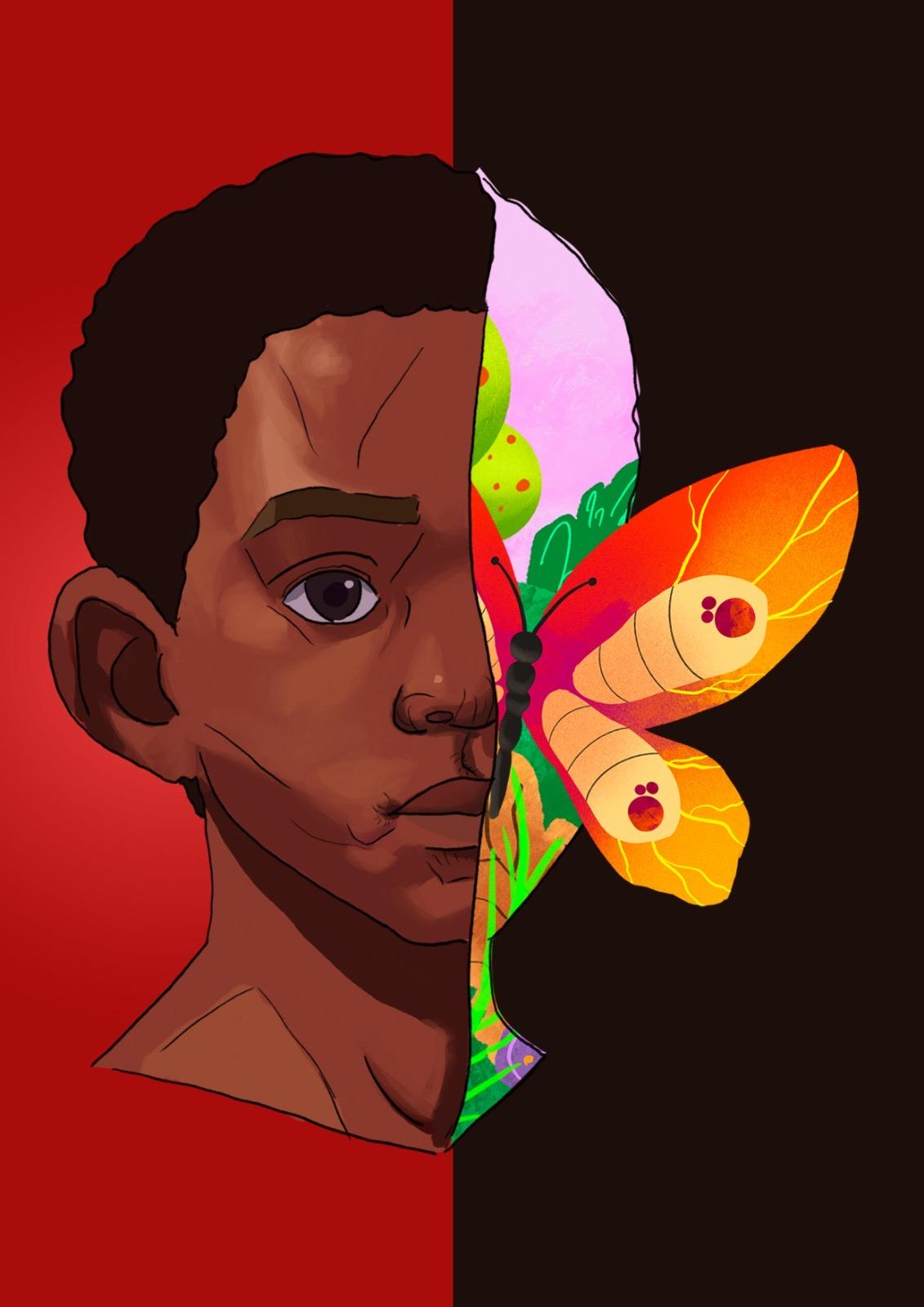
In Cocoon III, he continued the narrative with the introduction of a bolder, fear free young boy with his face halved. One half shows his face with eyes stark, devoid of any emotion, against a red backdrop and the other half shows a halved butterfly against a black backdrop. The partitioning of the boy’s face is symbolic of the ruins of the world’s wars. The joyful butterfly which was kept to one side in the previous painting is now slain, sitting besmirched in a sea of darkness and sorrows. This, too, is the reality of life. As humans get immersed into the world and struggle to find their footing, life’s woes threaten them. A battle ensues. You have the right weapons in your arsenal, you win. You lack the right weapons, you lose. It is a battle to the death. A battle to many types of death. Death of dreams, of relationships, of successes, of many things that matter. If you win, you live with scars. If you lose, you die with scars. His purposeful use of deep red and black colors amplified the fierce message that Amenkhienan sent in Cocoon III.
With these paintings, Amenkhienan opened the door to a timely and necessary conversation about the transformation that accompanies growth and success. He addressed the difficult demands of life and the arduous task of surviving but beyond that, he addressed the issue of identity. As a designer whose work in illustration is at the intersection of identity and survival for both people and brands, he begins his works with a curiosity for the deep thoughts and feelings of people in order to create a perfect identity. In many ways, he has transferred this skill that makes him an excellent designer to his art. As a result, whether or not he is asking questions or probing people for their honest opinions, his artworks force people into introspection.
Amenkhienan continues to create art that matters to people at any place and phase of life they find themselves. His works, and the stories they tell, matter. On August 23, 2026, he will be exhibiting a fresh set of works alongside other artists at The Old Street Gallery, London. The collection to be shown along with some of his previous works is titled “The Golden Hour”. It is a collection of paintings promised to move the heart of people towards the things that matter. The group exhibition, titled “Aye: The World We’ve Made” will have Promise Amenkhienan and other young creatives gracing viewers with masterpieces.

