The Federal Government has signed a strategic agreement with the Niger State government to develop integrated farming and housing estates, positioning the initiative as a new economic model designed to unlock rural capital, expand affordable housing supply, and strengthen Nigeria’s agricultural value chains.
The partnership, anchored by the Federal Ministry of Finance, represents a shift in housing and agricultural policy, linking home ownership directly to productive activity, income generation, and private capital mobilisation rather than conventional salary-based mortgage systems.
At the signing ceremony, the Minister of State for Finance, Dr Doris Uzoka-Anite, said the initiative aligns with President Bola Ahmed Tinubu’s economic reform agenda, which prioritises green growth, asset creation, and job-led development.
The Minister of Finance said the agreement sends a strong signal to investors about policy alignment between the federal and subnational governments.
“This is about creating bankable projects that combine housing, agriculture, and infrastructure in a way that delivers economic returns and social impact,” she said.
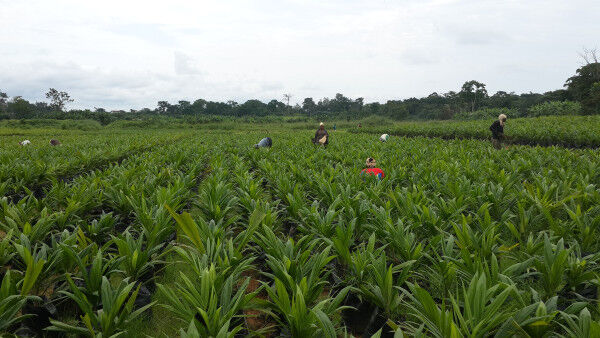
Under the framework, tagged ‘Sustainable Integrated Productive Communities (SIPC)’, housing development will be co-located with agricultural clusters, processing facilities, renewable energy infrastructure, and structured off-take arrangements, creating what is described as ‘productivity-backed housing.’
Unlike traditional real estate schemes driven by speculation, the programme ties housing affordability to farm income, enabling rural households to qualify for home ownership through agricultural productivity and value-chain participation.
Niger State, which has committed more than 100,000 hectares of land, will serve as the pilot.
The governor of the state, Mohammed Bago, said the project would help formalise rural settlements, improve land-use efficiency, and reduce rural–urban migration that has placed pressure on urban infrastructure and housing markets.
From a financing perspective, the project adopts a blended model that combines public land assets with private investment, reducing direct fiscal exposure while ensuring commercial viability.
Key institutions involved include MOFI, Family Homes Funds, the Federal Housing Authority, and the Rural Electrification Agency (REA), alongside World Bank–supported programmes.
The Chief Executive Officer (CEO) and Managing Director of Nigeria’s Ministry of Finance Incorporated (MOFI), Dr Armstrong Takang, said the structure allows the government to focus on policy coordination and oversight while leveraging private sector efficiency in construction, agro-processing, energy, and logistics.
On his part, the managing director of the Rural Electrification Agency (REA), Abba Yusuf, confirmed that renewable energy—particularly solar mini-grids—will be deployed across the estates to lower production costs, power processing facilities, and improve project bankability.
Previous interventions, the agency noted, have cut energy costs for agro-processors by over 80 per cent compared with diesel-powered operations.
“Economically, the programme is expected to generate significant employment across construction, agriculture, processing, and allied services. Estimates suggest each housing unit could support up to 12 direct jobs, with broader multiplier effects across cement, steel, transport, agro-inputs, and local services,” he explained.
Beyond job creation, the initiative is expected to deepen rural financial inclusion, expand internally generated revenue for states, and attract long-term institutional investors, including pension funds and agribusiness financiers.
Implementation is expected to commence immediately, with Niger State positioned as a scalable template for replication across other states as Nigeria seeks to address housing deficits, food security pressures, and inclusive growth challenges simultaneously.