 Follow Us on Google News


 Follow Us on Google Discover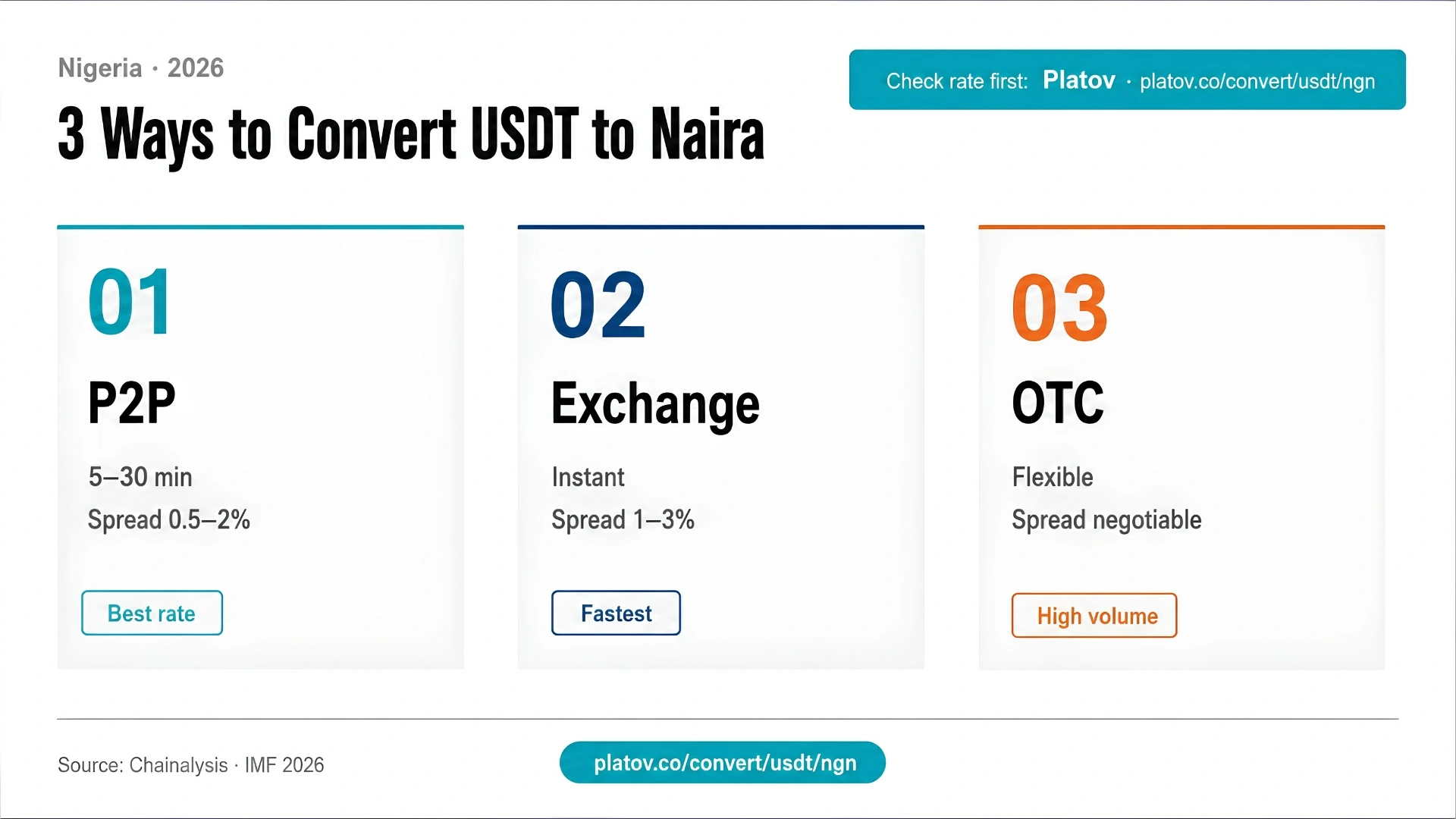
For Nigerians holding Tether, the conversion step — turning USDT into spendable naira — has become one of the most repeated financial actions in the country. Before executing any sale or transfer, most traders start with a usdt to naira converter on Platov to lock in the current rate before opening a P2P order or exchange window. The gap between the rate at the moment of checking and the rate at the moment of execution can cost real money — which is why the habit exists.
Why USDT Dominates Nigeria’s Crypto Economy
Nigeria is now the largest stablecoin economy outside the United States, with over $92 billion in on-chain transaction volume recorded between mid-2024 and mid-2025. Of that activity, USDT — Tether’s dollar-pegged token — accounts for approximately 88.5% of all stablecoin transactions in the country, according to Chainalysis data.
The reasons are structural. When the naira depreciated sharply following the CBN’s 2023 unification of exchange rate windows, Nigerians needed a digital instrument that held dollar value without introducing the additional volatility of Bitcoin or Ethereum. USDT provided exactly that: a dollar-denominated asset available on every major platform, with deep naira liquidity across P2P markets. A June 2026 IMF working paper specifically flagged Nigeria as a leading case of “digital dollarization” — the migration of savings and transactions into dollar-pegged digital assets under currency pressure.
Three Ways to Convert USDT to Naira
There is no single method that suits every user. The right choice depends on the amount, urgency, and how much spread the user is willing to accept.
| Method | Speed | Typical Spread | Best For |
| P2P platform | 5–30 minutes | 0.5–2% | Larger amounts, best rates |
| Centralised exchange | Instant–2 min | 1–3% | Speed, smaller amounts |
| OTC / informal broker | Variable | Negotiable | High volumes above ₦5M |
P2P trading remains dominant in Nigeria. It involves posting a sell order, matching with a verified buyer, and releasing USDT from escrow once naira payment is confirmed. Binance delisted its NGN P2P feature following a regulatory dispute in 2024, but platforms including Bybit and Bitget continue to offer active naira P2P markets.
Centralised exchanges that have completed SEC Nigeria’s VASP registration process allow instant conversion but at wider spreads, as the exchange acts as counterparty.

OTC desks are used by high-volume traders who prefer phone-based settlement — typically for amounts above ₦5 million equivalent.
How to Get the Best Rate Before Converting
The USDT/NGN rate moves throughout the day, influenced by both the global USDT/USD peg and the parallel naira FX market. A rate check that is 30 minutes old can be meaningfully off during periods of naira volatility.
The practical workflow:
- Check the live rate on a real-time cryptocurrency converter before opening any platform
- Open 2–3 P2P platforms and compare the best active sell offers against that benchmark
- If the platform spread exceeds 2%, consider waiting or switching platforms
- Confirm the naira payment method matches your bank — some buyers offer better rates for specific wallets (OPay, PalmPay, Moniepoint)
This benchmark check is especially important for amounts above $500 equivalent, where a 1% spread difference translates to over ₦7,000 at current rates.
The P2P Conversion Process, Step by Step
For users new to P2P, the process on most platforms follows the same sequence:
- Create and verify an account on a registered exchange
- Navigate to the P2P section and select “Sell USDT”
- Filter by payment method and sort by best rate
- Select a buyer with a high completion rate (above 95%) and positive feedback
- Enter the amount and confirm the order — USDT moves to escrow immediately
- Wait for the buyer to initiate naira payment to your bank account
- Confirm receipt and release USDT from escrow
The escrow mechanism protects sellers: USDT does not leave until naira payment is confirmed. Never release before the naira clears.
The Regulatory Context in 2026
Nigeria’s Securities and Exchange Commission launched its Accelerated Regulatory Incubation Program for Virtual Asset Service Providers in June 2024. The subsequent Investments and Securities Act 2025 formally recognised digital and virtual assets within the country’s capital market framework.
Platforms operating under SEC registration are considered significantly safer than unregistered OTC brokers. Before choosing a conversion platform, users should verify VASP registration status on the SEC Nigeria portal — a step that takes under a minute but eliminates significant counterparty risk. Users comparing multiple crypto assets alongside USDT — including checking the BTC to naira rate for portfolio context — can do so on multi-pair conversion tools without opening exchange accounts.
Common Mistakes When Converting USDT to Naira
Even experienced traders repeat these errors:
- Using a stale rate as reference— checking the rate 10+ minutes before placing an order in a moving market
- Ignoring the payment method premium— some buyers pay higher naira rates for specific wallets; filtering by bank transfer alone can mean leaving money on the table
- Releasing escrow early— never confirm USDT release before naira hits your account and clears
- Using unregistered platforms— the higher apparent rate on informal channels frequently disappears in disputes with no resolution path
- Forgetting network fees— USDT on Ethereum (ERC-20) carries higher gas fees than TRC-20; confirm the network before sending

