 Follow Us on Google News


 Follow Us on Google Discover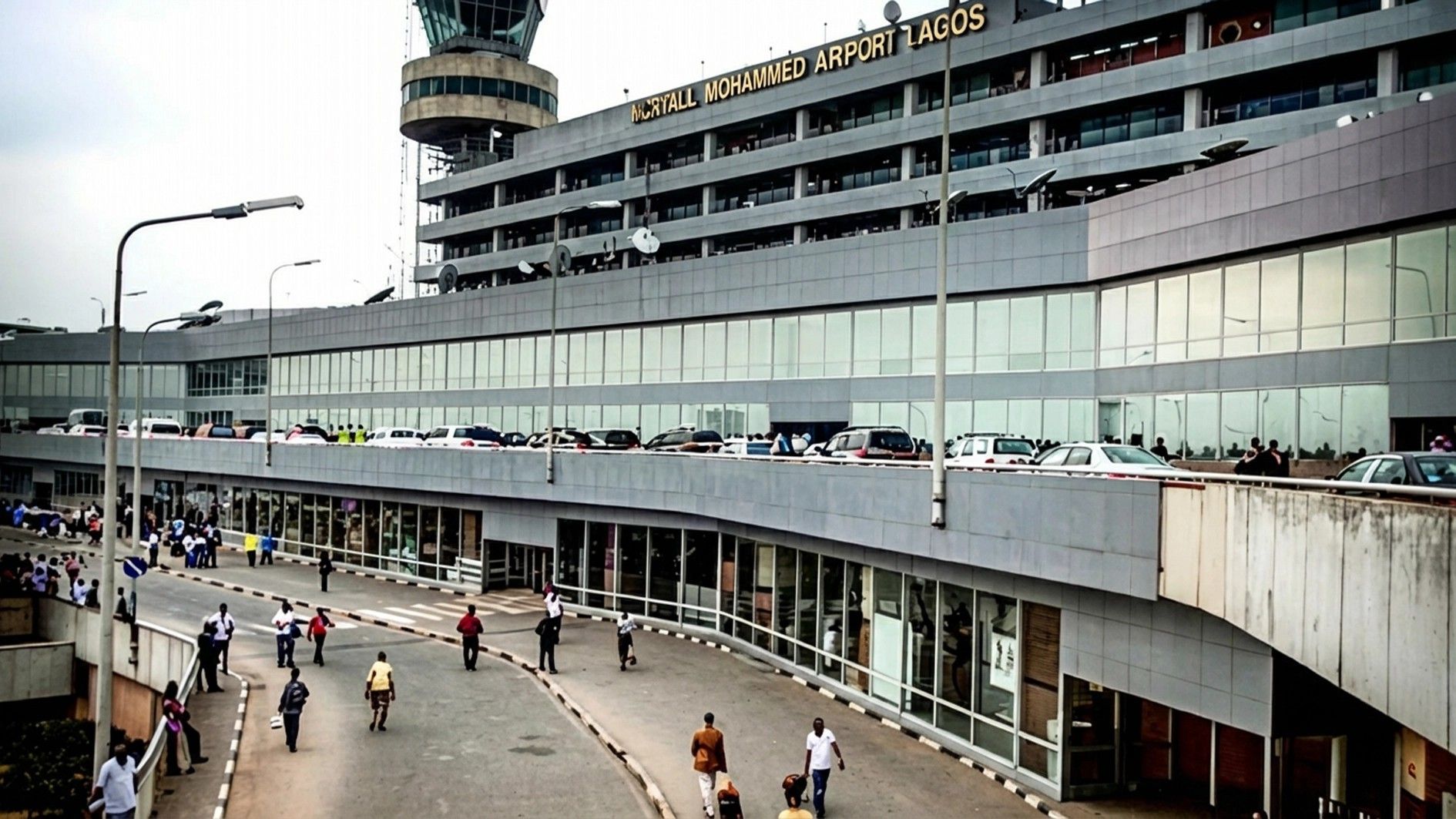
Nigeria risks losing aviation jobs, investment and business to emerging aviation hubs in neighbouring countries unless the Federal Government gives the sector a deliberate strategic focus, Managing Director of Aero Contractors, Ado Sanusi, has warned.
Sanusi spoke during his welcome address at the 67th anniversary of Aero Contractors at the Murtala Muhammed Airport (MMA), Lagos.
He said the emergence of competing airports and maintenance facilities outside Nigeria should serve as a wake-up call to policymakers to reposition the aviation industry.
According to him, aviation should be treated not merely as a means of transportation but as a catalyst for economic growth, tourism, job creation and foreign investment.
He said the emergence of a new mega airport and major maintenance hub “just across our border” and within a few minutes’ flight from Lagos was being deliberately positioned to serve the Nigerian market.
Sanusi therefore appealed to the Minister of Aviation and Aerospace Development, Festus Keyamo, to champion a renewed strategic focus on aviation under the Federal Government’s Renewed Hope agenda.

“If we do not respond strategically and soon, we risk our airports becoming ghost airports, our hangars falling silent and our jobs and investment flying quietly across the border, sadly using our own population as the price,” he said.
“We are respectfully asking for a Renewed Hope for aviation, a deliberate strategic national focus for this sector alongside roads, rail and power, so that Nigerian skies remain ours to command.”
Sanusi said the aviation industry had demonstrated in several countries, particularly in the Gulf and parts of Africa, that it could serve as a powerful engine of economic development when deliberately supported by government.
He said Aero Contractors was ready to partner with the government in achieving such a vision, adding that recent investments in airport infrastructure had demonstrated the potential of aviation to transform Nigeria’s gateways.
He also recalled some of the most difficult periods in the airline’s 67-year history, including periods when its aircraft were grounded, hangars were empty and employees went months without pay.
Sanusi said the airline’s continued operations were not a matter of luck but the result of resilience by its management and staff.
He said Aero Contractors had evolved into an integrated aviation enterprise with scheduled passenger operations, charter and rotary-wing services, Maintenance, Repair and Overhaul (MRO) facilities and pilot training.
Its MRO facility, he added, currently serves 16 carriers in Nigeria, West and Central Africa and beyond.
The Minister of Aviation and Aerospace Development, Festus Keyamo, in his keynote address, called on other indigenous airlines to emulate Aero Contractors.
He pledged that the Federal Government would continue to support the growth of the aviation industry.
The Managing Director of the Asset Management Corporation of Nigeria (AMCON), Gbenga Alade, said the corporation’s “gamble on Aero Contractors” had paid off.
Alade, who was represented by Usman Abubakar, promised that AMCON would continue to support the airline and urged its management to sustain investment in its development.
The Director-General of the Nigerian Civil Aviation Authority (NCAA), Chris Najomo, also congratulated the airline on its anniversary.
Najomo, represented by Olubukola Teriba, said the theme of the celebration resonated with the global observance of International Customer Service Week, noting that aviation was ultimately driven by human trust, which remained central to safe and reliable air travel.

