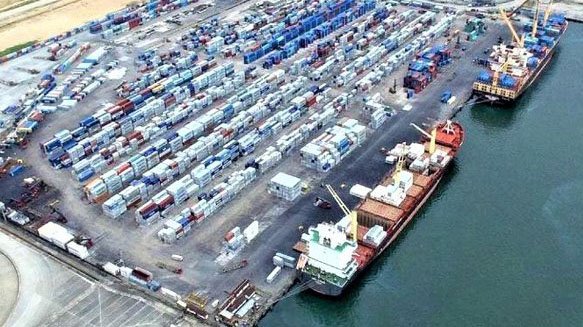
The Nigerian Maritime Administration and Safety Agency (NIMASA) said it will consolidate the gains recorded in 2025 that strengthened the maritime sector, enhanced the country’s standing in global maritime governance and further position it for greater impact in the years ahead.
The agency said its alignment with the Federal Government’s Blue Economy agenda, coupled with growing international recognition, has placed it in a strong position to further advance Nigeria’s status as a leading maritime nation.
In a statement issued by the Deputy Director and Head of Public Relations, Osagie Edward, NIMASA noted that sustained reforms, robust stakeholder collaboration and proactive global engagement would remain central to its operations in 2026.
Reviewing the Agency’s activities in 2025, Edward said NIMASA, operating under the supervision of the Federal Ministry of Marine and Blue Economy, sustained a reform-driven agenda focused on maritime safety and security, capacity development, regulatory efficiency, labour harmony and international engagement.
According to him, these deliberate efforts culminated in one of Nigeria’s most significant maritime achievements in recent history, which was the country’s successful return to the International Maritime Organisation (IMO) Council after a 14-year absence.
Edward highlighted President Bola Tinubu’s commendations for the achievement, noting that Nigeria’s return to the IMO Council aligns with his administration’s broader vision to unlock the nation’s blue economy potential, strengthen anti-piracy initiatives in the Gulf of Guinea, expand maritime infrastructure and position the country as a regional shipping and logistics hub.
He also highlighted the sustained zero piracy incidents in Nigerian waters, attributing the achievement to the effectiveness of the Deep Blue Project.
BThe initiative, Edward said, was commended by the IMO Secretary-General, Arsenio Dominguez, who recommended it as a model for other maritime nations.
Edward further noted that NIMASA’s Port State and Flag State Control activities during the period under review were effective and surpassed globally acceptable standards.
On staff welfare and institutional strengthening, he said the Agency recorded significant progress through staff promotions, structured training programmes and targeted capacity-building initiatives, implemented to improve career growth, professionalism, morale and operational efficiency.
Edward added that these measures strengthened NIMASA’s capacity to deliver on its statutory mandate.
In the area of human capacity development, Edward said the long-standing issue of sea-time placement for beneficiaries of the Nigerian Seafarers Development Programme (NSDP) is receiving deserved attention, as efforts are ongoing to clear existing backlogs.
The Acting Rector of the Maritime Academy of Nigeria (MAN), Dr Kevin Okonna, commended NIMASA’s sustained support for maritime education and seafarer development, noting that the Agency’s interventions have continued to strengthen the training pipeline and improve the quality of maritime manpower.
On labour harmony and stakeholder confidence, the President-General of the Maritime Workers Union of Nigeria (MWUN), Francis Bunu, praised NIMASA for its constructive engagement with maritime labour, improved regulatory oversight and commitment to policies that promote workers’ welfare, industry stability and indigenous participation.
Bunu also commended the Director-General of NIMASA, Dr Dayo Mobereola, for facilitating the successful unionisation and signing of a Collective Bargaining Agreement (CBA) between maritime workers and some shipping companies, which established clear working conditions for union members.