 Follow Us on Google News


 Follow Us on Google Discover
Long before artificial intelligence became central to his academic and professional work, Nigerian mechanical engineer and engineering management master’s student Adedayo Aruwajoye, was building a career around a practical question: how can organizations use technology, data, and disciplined management systems to perform better?
Between 2020 and 2022, Aruwajoye worked as a program manager at Kawai Technologies Limited, where he coordinated technology, supply-chain, and consulting projects involving clients, vendors, and professionals across several countries.
His responsibilities extended beyond the routine monitoring of projects. He developed governance processes, established performance indicators, coordinated multicultural teams, and managed relationships involving more than 100 vendors across four continents.
During this period, Aruwajoye directed a portfolio of more than 580 projects and worked with a cross-functional team of over 30 professionals operating across at least 10 countries. His project and commercial responsibilities included negotiations and transactions valued at more than $500,000.
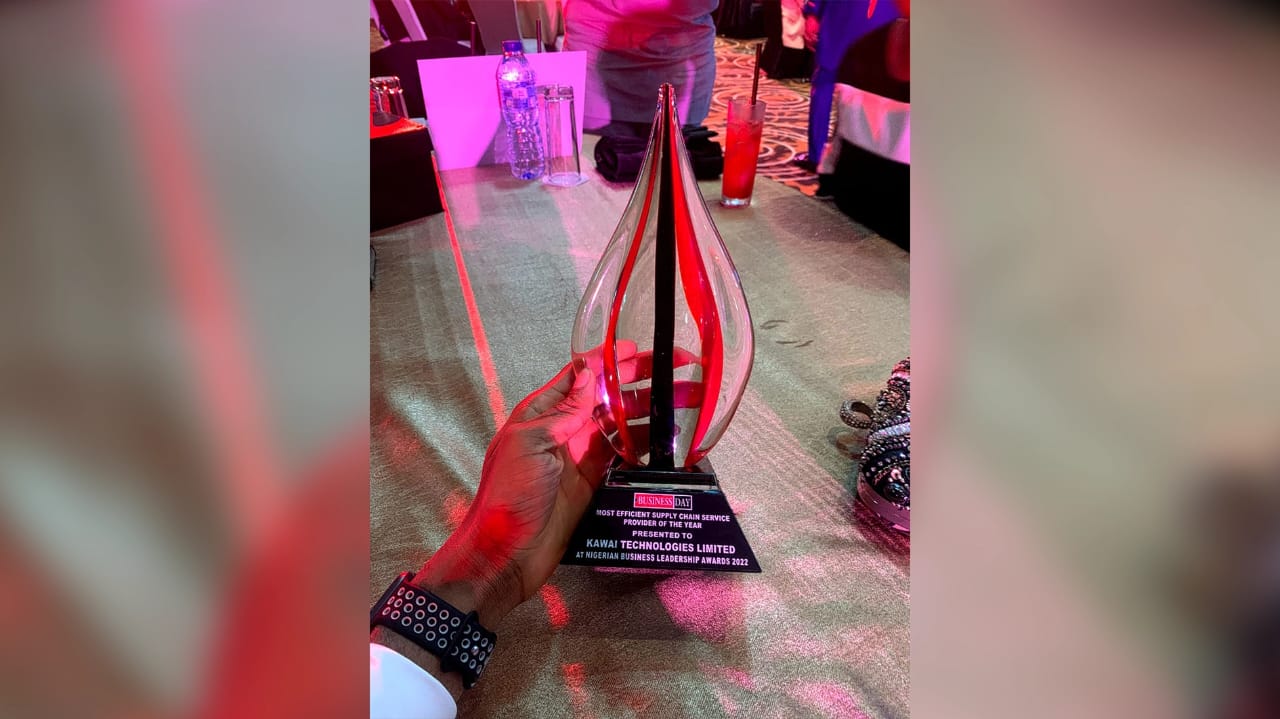
The programs he managed contributed to approximately $11 million in revenue, according to professional records detailing his work with the organization.
One of the most significant parts of his work involved identifying operational delays caused by manual and fragmented processes. Rather than treating the problem only as a staffing or productivity issue, he approached it as a system-design challenge.

He helped develop and implement a cloud-based business automation system that reorganised key workflows, reduced repetitive tasks, and improved the speed at which teams could process and complete projects and assignments. The resulting process reportedly produced an efficiency improvement exceeding 1,000 percent in the affected operations.
His former supervisor and the Managing Director of Kawai Technologies Limited, Engr Akinbo Akin-Olugbade, said Aruwajoye’s contribution had a significant effect on the company’s operations and commercial growth.
“Adedayo played an important role in transforming how we managed our projects and daily operations. He identified inefficiencies that were affecting productivity and helped develop practical technology-based solutions to address them. His leadership contributed significantly to the successful management of hundreds of projects, improvements in operational efficiency, and the revenue growth recorded during his time with the company. His ability to coordinate people, processes, and technology made him one of the key contributors to our organization’s progress.”
According to Engr Akin-Olugbade, Aruwajoye was also trusted with responsibilities involving international clients, vendors, and multidisciplinary teams because of his ability to manage complex projects while maintaining quality and timely delivery.
The automation project reflected a form of engineering management that combines technology with organizational design. It involved process analysis, requirements gathering, user testing, implementation, and training for several other team members.
Aruwajoye also established standardised operating processes and quality management structures that contributed to the organisation’s ISO 9001:2015 compliance.
His record in operational improvement developed from earlier work in technology-product research. At IT Horizons in Lagos, he analyzed customer needs across healthcare, law, hospitality, and insurance, translating business problems into product requirements and technical specifications.
His work contributed to the development of three products and an expansion of the company’s product offerings. He also participated in business-development and partnership activities, including the adaptation of a technology solution that supported the award of a healthcare contract valued at more than $60,000.
Beyond his corporate work, Aruwajoye demonstrated an early interest in engineering education and innovation through the Professor Ayodele Awojobi Design Competition.
As chairman and program manager, he helped expand the competition from a single university-level program into a national initiative reaching more than 45 tertiary institutions and approximately 40,000 undergraduate students.
The program encouraged students to develop technology-based responses to social and economic problems. Aruwajoye coordinated a 22-member planning committee, worked with hundreds of volunteers, and led fundraising activities, securing more than $32,000 in sponsorship and support.
The experience required him to work across corporate, government, and academic institutions while managing program design, partnerships, fundraising, communications, technology systems, and national participation.
Taken together, these experiences established the foundation of Aruwajoye’s approach to engineering management: identifying problems, understanding the people and processes involved, developing and implementing structured interventions, before measuring the outcomes and redeploying insights for further growth and efficiencies.
His early record also demonstrates how engineering professionals can contribute beyond traditional product design or manufacturing. By combining mechanical-engineering training with program management, data analysis, and digital systems, Aruwajoye positioned operational improvement itself as an engineering problem capable of systematic analysis and measurable resolution.

