
 Get Guardian on Google
Telecommunication operators in Nigeria have appealed to the over 200 million active telephone subscribers in the country about the drop in telephone service quality in the country.
The telcos under the aegis of the Association of Licensed Telecom Operators of Nigeria (ALTON) noted that while millions of frustrated subscribers direct their anger squarely at mobile network operators, said the nation’s telecommunications backbone is being systematically choked by three relentless forces: a crippling electricity deficit, brazen criminal vandalism, and violent community hostility.
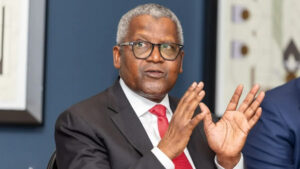
The Chairman of ALTON, Gbenga Adebayo, who disclosed this yesterday during a monitored television interview, laid bare the brutal realities of keeping Nigeria connected.
Responding to mounting public outrage and a recent four-week ultimatum from the Nigerian Senate to improve service delivery, Adebayo declared that money and regulatory decrees alone cannot fix the network until the country confronts the hostile operating environment on the ground.
“I do not want to come here and claim that network services are satisfactory or that there are no problems,” Adebayo admitted. “However, we operate in a peculiar environment characterised by several challenges, some of which are beyond the control of service providers.”
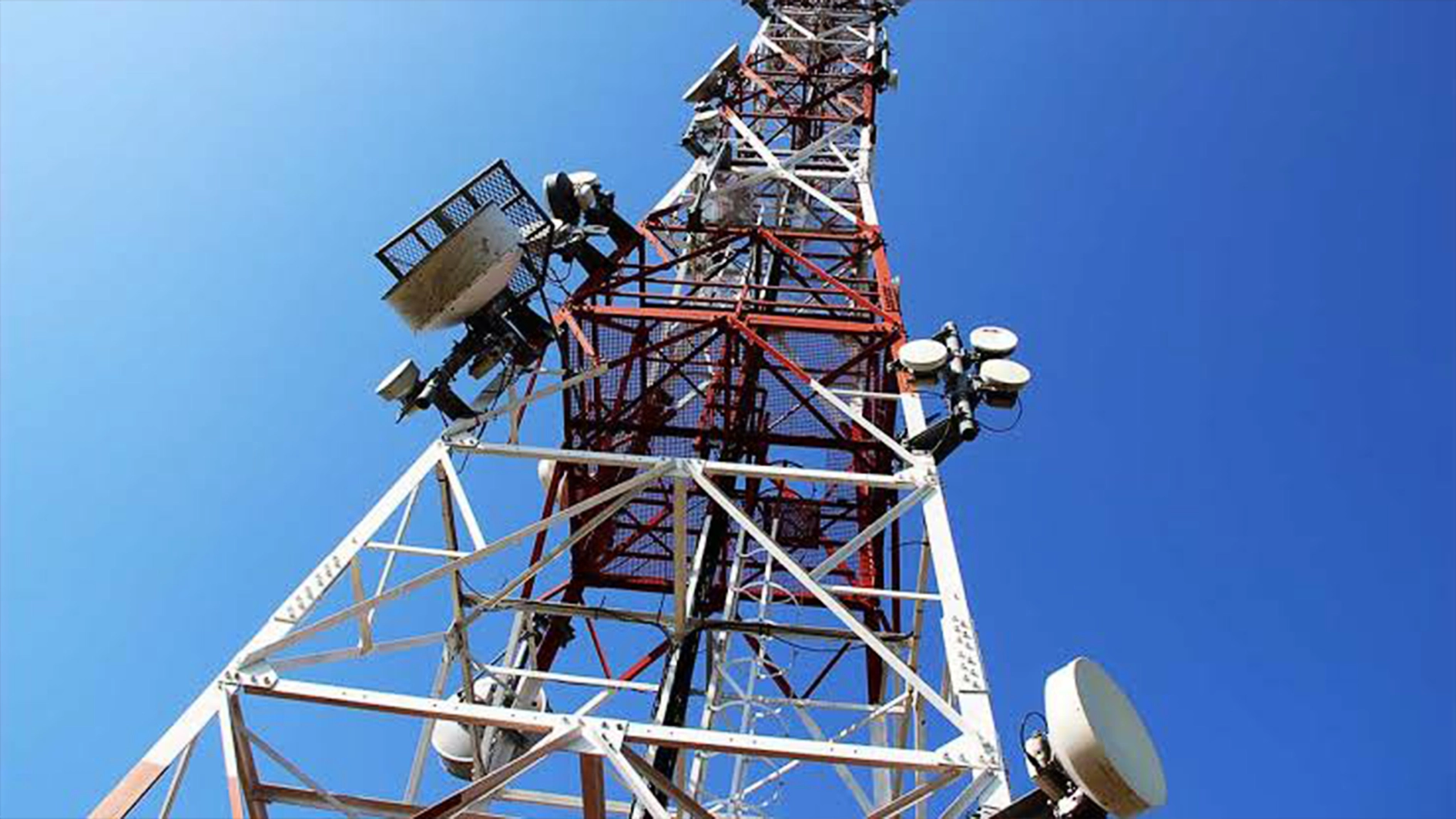
According to him, unlike operators in developed markets, who plug seamlessly into stable national power grids, Nigerian telecom companies operate largely as independent power generation outfits. He stressed that across roughly 50,000 telecommunications sites nationwide, operators must constantly juggle heavy-duty diesel generators, solar arrays, and battery banks just to keep signals beaming.
“Consider the amount of work involved in managing electricity supply in an average Nigerian home. You have to ensure that fuel is available for your generator, recharge your electricity meter where applicable and ensure that your inverter is adequately charged. Now imagine managing those requirements across approximately 50,000 telecommunications sites nationwide,” Adebayo explained.
According to him, because telecommunications networks operate as an interconnected national grid, a power failure in one town triggers a domino effect elsewhere. “Yet, keeping those 50,000 sites fueled is a logistical nightmare. Even when operators deploy vast fleets of diesel tankers, bad roads, insecurity, and localised blockades routinely prevent trucks from reaching remote base stations before tanks run dry.”
Further, he said compounding the energy crisis is an alarming wave of targeted criminal sabotage. Adebayo revealed that telecommunications infrastructure has become a prime hunting ground for vandals looking to strip and sell components on the black market, often leaving entire cities disconnected for a few thousand naira in scrap value.
“We have had situations where individuals steal manhole covers and subsequently set fire to underground cables in an attempt to extract copper.
An incident like that can affect connectivity across an entire neighbourhood,” he lamented.
He said even attempts by operators to bypass the diesel crisis by transitioning to green energy have been hijacked by criminals. Remote sites are raided daily by thieves siphoning diesel from generator tanks, while newer sites equipped with solar panels and smart lithium batteries are systematically stripped clean.
“A single telecommunications site may serve about 5,000 subscribers, while a fibre-optic cable could connect millions of users,” Adebayo noted. He said when vandals strike at night, the fallout is immediate and irreversible overnight. “Even if an operator has the financial resources to replace the equipment immediately, the process of sourcing, delivering, installing and restoring the facility takes time. During that period, subscribers will inevitably experience service disruption.”
Perhaps the most insidious threat to telecom reliability is the hostility operators face from the very communities and local authorities meant to benefit from connectivity. From state governments imposing prohibitive Right-of-Way (RoW) charges that stall fibre expansion, to landlords arbitrarily locking technicians out of cell sites over rent disputes, physical access to critical infrastructure is under constant siege.
Adebayo, an engineer, said on the streets, the extortion turns overtly violent. The ALTON boss confirmed that such hostility, coupled with outright security threats in volatile regions, severely hampers maintenance teams. “There are also security situations where technicians cannot access certain sites at particular times. In some instances, our personnel have lost their lives in the line of duty,” he revealed.
Responding to critics who argue that profitable telecom giants should simply spend more money to fix poor service, and dismissing comparisons with countries like the United Kingdom where state-protected infrastructure and widespread public Wi-Fi ease pressure on mobile networks, Adebayo drew a sharp parallel with Nigeria’s troubled electricity sector.
“There is also a misconception that because telecommunications companies make money, they should simply spend more to resolve every challenge,” Adebayo argued. “Consider the electricity sector. Successive governments have invested substantial resources in the power sector, yet the challenges remain. This demonstrates that funding, although important, is not the only solution.”
While welcoming the Federal Government’s designation of telecom assets as Critical National Information Infrastructure (CNII), which has mobilised the Nigeria Security and Civil Defence Corps (NSCDC) and the Office of the National Security Adviser (ONSA) to track equipment thieves, Adebayo insisted that lasting relief requires a shift in national mindset.
“We must build an ecosystem in which everyone takes responsibility,” the ALTON chairman stressed. “Network quality is not solely the responsibility of telecommunications operators. It requires a collective societal approach.”