
 Get Guardian on Google
Slum2School Green Academy, a school established in a remote riverine community in Lagos, has won the 2026 World’s Best School Prize for Environmental Action, bringing international recognition to a Nigerian education model that connects environmental sustainability with inclusive, quality learning. This award places the Green Academy as the first Nigerian school to win the World Best School Prize globally and also the first African school to win the prize for the environmental action category.
Located on Saga Island, Epe, Lagos, the Green Academy is an initiative of Slum2School Africa, established to address longstanding barriers to education across eight underserved riverine communities. Its recognition highlights an important proposition for the education and development sector: achieving meaningful educational inclusion requires more than expanding access to classrooms; it requires building learning environments that respond to the social, geographical and environmental realities shaping children’s lives.
For generations, children in Saga Island and neighbouring communities faced significant barriers to formal education, with geographical isolation limiting their opportunities to learn. The Slum2School Green Academy was established to address this gap through an approach that considers the learning environment, educational delivery and wider development of the child as interconnected priorities.
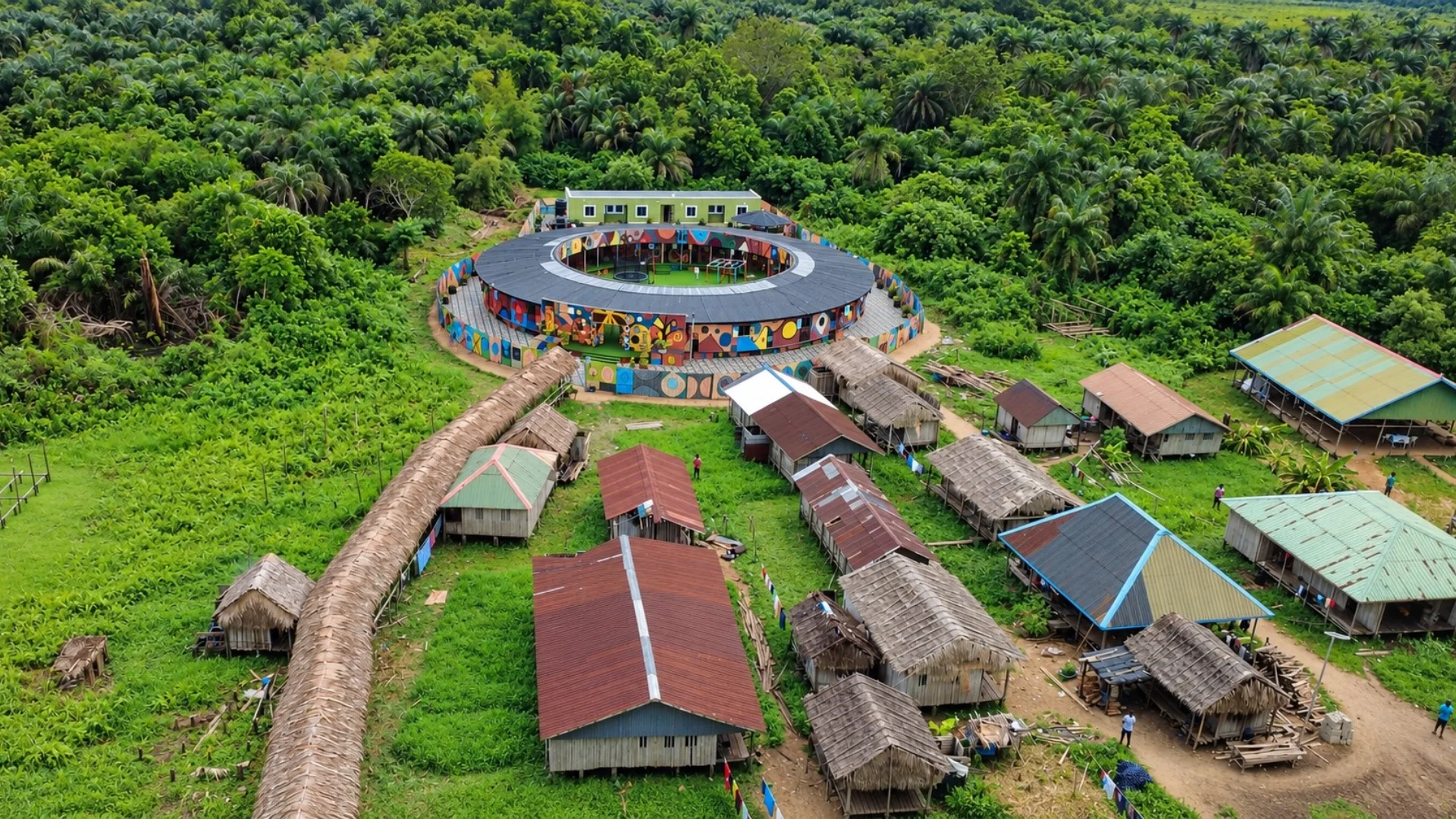
Today, the school serves approximately 250 learners through an approach that integrates environmental sustainability into the design and everyday operations of its facilities. Built with bamboo as a key building material, the school is powered entirely by solar energy. It also incorporates rainwater harvesting and a waste-to-energy system that converts organic waste into cooking gas, bringing together sustainable construction, renewable energy, water conservation and resource recovery within a single educational environment.
These interventions extend the school’s environmental commitment beyond infrastructure, creating opportunities for learners to encounter sustainability as part of their everyday experience. By integrating environmental considerations into the spaces where children learn, the Slum2School Green Academy demonstrates how schools can contribute to climate awareness while providing an environment designed around the needs of their communities.
The community it serves has also shaped the school’s development. Residents of Saga Island donated the land on which Green Academy was built, making them active contributors to the establishment of an institution designed to serve their children and neighbouring communities. This partnership reflects an important principle of sustainable development: lasting solutions are strengthened when communities have a meaningful stake in their creation and future.

Beyond its environmental infrastructure, Green Academy integrates digital learning, arts, sports, leadership development and psychosocial support into its educational experience. Its approach recognises that preparing children for the future requires more than access to classrooms; it requires learning environments that nurture intellectual, social, emotional and practical development.
Commenting on the achievement, Otto Orondaam, Executive Director of Slum2School Africa, said: “For too long, conversations about education access have focused primarily on getting children into classrooms. But access alone is not enough if the learning environments we create do not respond to the realities of the children they serve. Climate change, geographical inequality and the changing demands of the global economy require us to rethink how we design, deliver and sustain education.
At Slum2School Green Academy, we set out to demonstrate that a school in a remote riverine community could bring together environmental responsibility, quality learning, technology and whole-child development. From its bamboo construction and solar-powered facilities to rainwater harvesting and the conversion of organic waste into cooking gas, sustainability is reflected not just in what children learn, but in the environment in which they learn. Equally important, this school stands on land generously donated by the community, reminding us that lasting development must be built with communities, not simply for them.
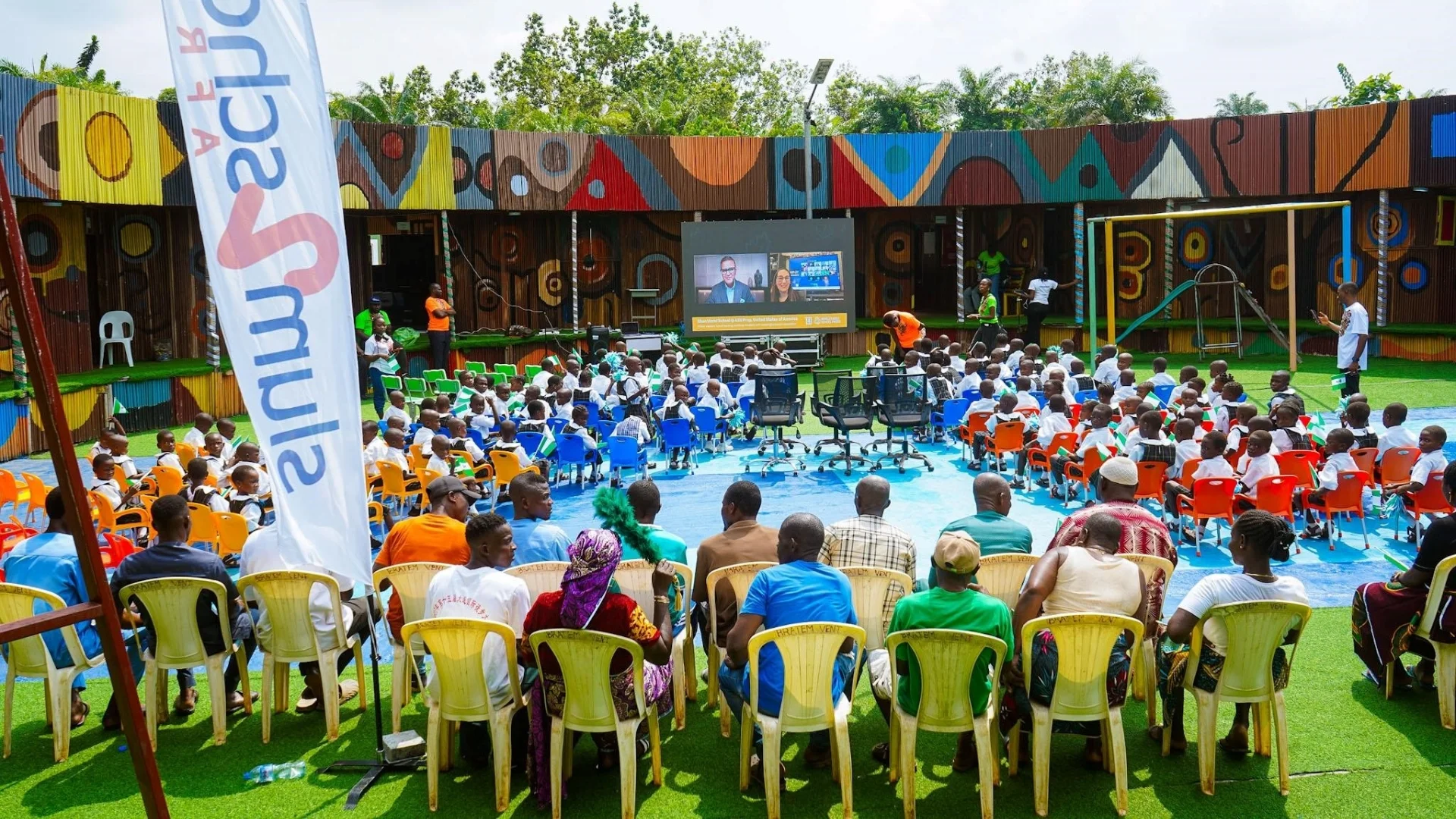
This recognition affirms the importance of investing in solutions that emerge from the communities they serve and reminds us that innovation in education does not have to originate in the world’s most privileged settings. We hope the Slum2School Green Academy contributes to a wider shift in how governments, development institutions and education partners think about the future of learning, particularly for children and communities that have historically been left furthest behind.”
Endorsing the award, Nik Kafka, Founder and CEO, Teach A Man To Fish said: “Slum2School Green Academy shows what happens when children are trusted to solve real problems on their own doorstep. Turning an invasive weed into marketable products and waste into cooking gas teaches science, enterprise and responsibility in a more powerful way than any textbook ever could. It is a richly deserved win, and a model schools everywhere can learn from.”
For the wider education and development sector, Slum2School Green Academy offers an opportunity to examine how locally developed approaches can inform responses to persistent inequalities in educational access and the growing need for climate-conscious infrastructure. Its experience points to the value of considering school infrastructure, digital inclusion, educational quality and community ownership as complementary elements of a sustainable education model.

While the environmental and geographical realities of communities differ, the principles informing Slum2School Green Academy’s development raise important considerations for education systems seeking to serve populations often excluded by conventional models of school provision. These include designing infrastructure around local conditions, integrating environmental awareness into learning and ensuring that children in underserved communities have access to the same breadth of educational opportunities as their peers elsewhere.
As climate change increasingly shapes the conditions in which communities live and learn, the responsibility to prepare children for the future must extend to the environments in which education takes place. Green Academy’s recognition reinforces the importance of ensuring that communities most exposed to these challenges are also included in developing solutions.
For Slum2School Africa, the achievement represents both a milestone and an opportunity to deepen collaboration with education institutions, policymakers, development partners and other stakeholders working to advance inclusive and sustainable learning environments.