 Follow Us on Google News



 Follow Us on Google Discover
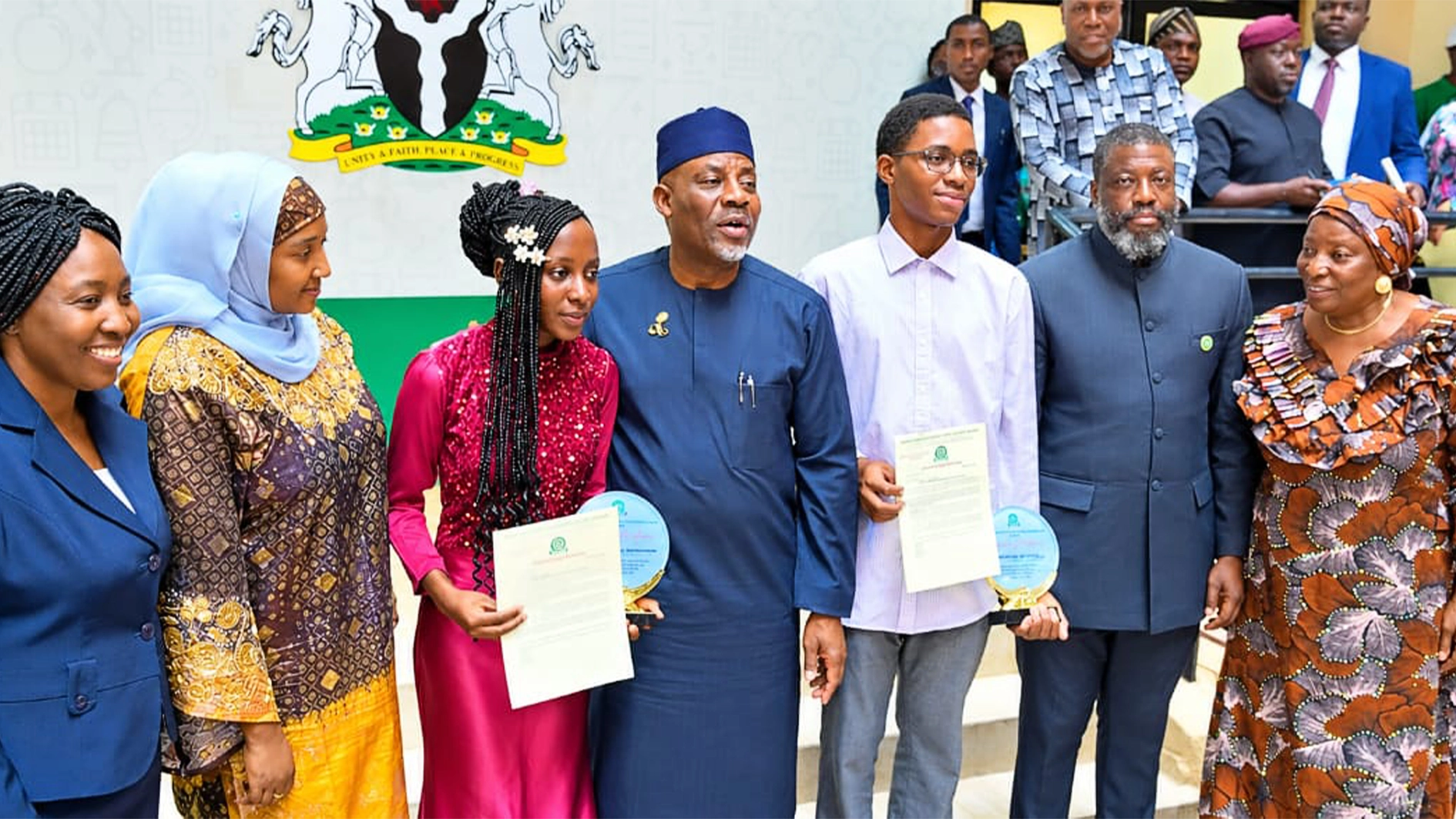
At a time when the slogan “school is a scam” is gaining traction among some young Nigerians, fuelled partly by the apparent wealth of internet fraudsters, popularly known as Yahoo boys, and those involved in transactional sex, commonly called “hookup”, the value of education is increasingly being questioned. But Owoeye Daniella Jesudunsin, the country’s top scorer in the 2026 Unified Tertiary Matriculation Examination (UTME), holds a different view. For the 16-year-old, education is far more than a certificate or a means of securing a job.
Jesudunsin, who scored 372 out of 400 in the examination, believes the growing cynicism about formal education should not obscure its enduring value. To her, the words of former South African president Nelson Mandela that “Education is the most powerful weapon which you can use to change the world” remain as relevant as ever.
Her position offers a timely intervention in a debate fuelled by graduate unemployment, low wages and the struggles of young Nigerians to achieve financial independence despite years of schooling. For many, the sight of graduates searching endlessly for jobs or accepting poorly paid employment has raised doubts about whether the time and resources invested in education are worth the effort.
However, Jesudunsin challenges the assumption that education should be judged exclusively by how quickly it produces financial rewards.
Speaking with journalists in Abuja after she was honoured by the Minister of Education, Dr Tunji Alausa, alongside the first runner-up, Enwere Kingsley Ikenna, who scored 370, and six outstanding underage candidates in the 2026 UTME, she argued that education remains essential to personal development and social mobility. The candidates were presented by the Registrar of the Joint Admissions and Matriculation Board (JAMB), Prof. Segun Aina, as part of activities marking this year’s Customer Service Week.
“Education and schooling are not a scam. They actually help people, even those from disadvantaged backgrounds, leverage opportunities and improve their circumstances. Education remains a powerful tool for personal growth, social mobility and success; it is not a scam, but an investment in a better future,” she said.

Her argument underscores the need to understand education as more than a route to certificates and employment. It enables people to acquire knowledge, develop critical thinking, discover their abilities and find solutions to problems confronting their communities.
From a doctor’s ability to diagnose diseases and an engineer’s capacity to design infrastructure to a teacher’s influence on future generations and a scientist’s contribution to technological advancement, the benefits of education extend far beyond individual earnings. It also helps people distinguish facts from misinformation, understand their rights and responsibilities, make informed decisions and participate meaningfully in society.
Yet, defending education does not require ignoring the frustrations that have made the “school is a scam” narrative appealing to some young Nigerians. The slogan did not emerge in a vacuum. It reflects disappointment among graduates whose qualifications have not translated into decent employment, as well as concerns about outdated curricula, inadequate facilities, poor teaching conditions and the disconnect between academic programmes and labour market demands.
For many families, educating a child requires significant financial sacrifice. Parents spend scarce resources on school fees, books, transportation and other expenses in the hope that their children will enjoy better opportunities. When graduates struggle to find jobs or earn incomes insufficient to meet their basic needs, the promise of education becomes difficult to defend.
The solution, however, lies not in abandoning education but in addressing the weaknesses that prevent it from delivering its full benefits.
Schools must prepare young people not only to pass examinations but also to think independently, innovate, adapt to changing circumstances and respond to emerging economic opportunities. Achieving this requires sustained investment in teachers, laboratories, libraries, digital infrastructure, research and technical and vocational education. Stronger partnerships between educational institutions and industry are also necessary to ensure that graduates acquire relevant skills.
Nigeria must equally move beyond the assumption that university admission and prestigious qualifications are the only measures of success. Technical skills, entrepreneurship, practical training and lifelong learning are vital in an economy increasingly shaped by technology and changing employment patterns.
Jesudunsin’s achievement offers an opportunity to reflect on how Nigeria identifies and nurtures talent. Her score of 372 demonstrates outstanding academic performance, but examination results alone cannot determine a person’s intelligence, potential or prospects for future success.
Thousands of gifted children may never receive national recognition because poverty, inadequate school facilities, a shortage of qualified teachers and other disadvantages limit their opportunities. Ensuring that talent is not wasted requires equitable access to quality education and the support necessary for students to thrive.
The Federal Government’s screening of underage UTME candidates for possible admission into tertiary institutions also highlights the importance of balancing academic ability with developmental readiness.
According to Alausa, 2,244,149 candidates registered for the 2026 UTME, while 2,174,396 sat the examination. Approximately 39,000 candidates were younger than the prescribed minimum admission age of 16.
Of these, only 391 scored at least 320 out of 400, while further assessments reduced the number who met the requirements for possible admission to 108.
The candidates were assessed on their UTME performance, post-UTME examinations, O-level results and psychological, emotional and intellectual readiness for university education. Alausa maintained that the minimum age policy was not intended to hinder gifted children but to ensure that those admitted early possessed the maturity required to cope with university life.
The figures illustrate that academic ability, although important, is only one consideration in preparing young people for higher education. If education is intended to develop well-rounded individuals who can contribute meaningfully to society, intellectual advancement must be accompanied by emotional development, social awareness and the capacity to navigate responsibilities.
Alausa urged the candidates to see their abilities as a responsibility to Nigeria and the wider world, expressing the hope that they would develop innovations capable of improving millions of lives.
His appeal is significant given Nigeria’s youthful population. The minister put the country’s population at approximately 220 million, with an average age of 18.5 years and about 70 per cent of its people below 30.
A well-educated, skilled and innovative population can drive economic growth, strengthen institutions and accelerate national development. Without quality education and meaningful opportunities, however, the country’s youthful population risks being burdened by unemployment, inequality and social frustration.
The responsibility for changing this situation cannot rest on students alone. Government must create an environment in which education delivers tangible benefits, while universities must equip graduates with relevant knowledge and practical competencies. Employers, too, must recognise skills and potential rather than rely exclusively on certificates.
Her rejection of the notion that school is a scam should not be interpreted as a dismissal of the difficulties confronting Nigeria’s education system. Rather, it is a reminder that the shortcomings of the system should not be confused with the worthlessness of education itself.
Education may not guarantee instant wealth, employment or social mobility, but it provides the knowledge, perspective and capabilities with which individuals can pursue opportunities and transform their circumstances.
Nigeria’s task is to bridge the gap between schooling and employability, expand access to quality learning and encourage innovation so that the benefits of education are not reserved for a privileged few.
For Jesudunsin, the message is clear: education remains a force for change. The challenge for Nigeria is to build a system worthy of that belief.
Also speaking, Professor Aina, said excellence was not just about celebrating outstanding results but also about building systems that gave every candidate a fairer, smoother and more reassuring experience.
He said the board would continue to build trust, listen to candidates and reduce the trauma associated with the admission process.
“For us, excellence is not just about celebrating outstanding results; it is also about building systems that give every candidate a fairer, smoother and more reassuring experience.
“We will continue to build trust, listen more and reduce the trauma associated with the admission process“, he said.

