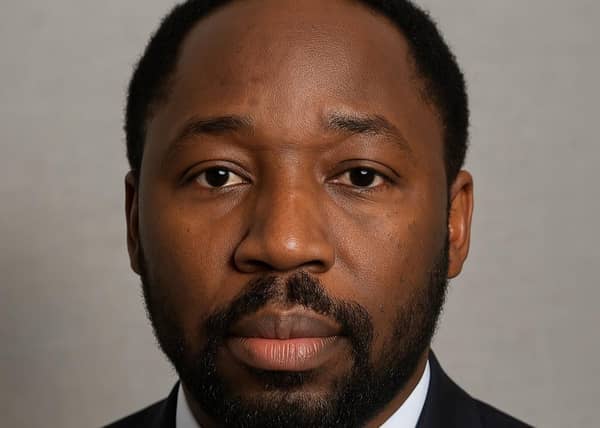
Finance Expert, Victor Oluwafemi Arowolo has highlighted how Artificial Intelligence (AI) could revolutionise lending for small and medium-sized enterprises (SMEs), unlocking billions in untapped economic potential.
Arowolo noted that many SMEs in Nigeria struggle to access financing due to traditional banking practices that rely heavily on collateral, rigid documentation, and formal credit histories, factors most small businesses cannot meet.
“A large percentage of SMEs lack visible assets and operate outside the formal banking system. This creates a massive credit gap currently estimated at ₦24.2 trillion,” he said.
According to him, Nigeria needs about ₦64.55 trillion annually in loans to meet economic demand, but only ₦37 trillion is typically disbursed, leaving a significant financing shortfall that impairs SME growth and national development.
However, with the emergence of AI-driven credit scoring, the tide could turn.
“AI is transforming how lenders assess risk. By analysing alternative data like mobile money transactions, e-commerce activity, utility payments, and even social media behavior, AI can evaluate creditworthiness in real time without requiring paperwork or physical collateral.”
Fintech platforms like FairMoney are already leading the way. Their systems, with user consent, access smartphone and app data, analyze hundreds of behavioral indicators, and generate credit scores that enable instant loan disbursements often within minutes.
To fully realise this potential, Arowolo advocates a strong regulatory and infrastructural foundation. He recommends that the Central Bank of Nigeria (CBN) issue guidelines on AI lending practices, including standardized data usage, consent protocols, and independent audits for algorithm fairness.
He also proposed a national credit scoring infrastructure to securely integrate data from fintechs, telecoms, and banks, as well as certification processes for AI models to ensure accuracy and fairness.
“Beyond infrastructure, we must invest in borrower education and digital literacy while encouraging public-private partnerships to scale adoption,” Arowolo added.
With SMEs contributing significantly to job creation and GDP, experts agree that AI’s integration into financial services could be a game-changer for Nigeria’s economic future.
“The adoption of AI in credit scoring isn’t just a technological leap,” Arowolo noted, “it’s an economic necessity.”