 Follow Us on Google News



 Follow Us on Google Discover
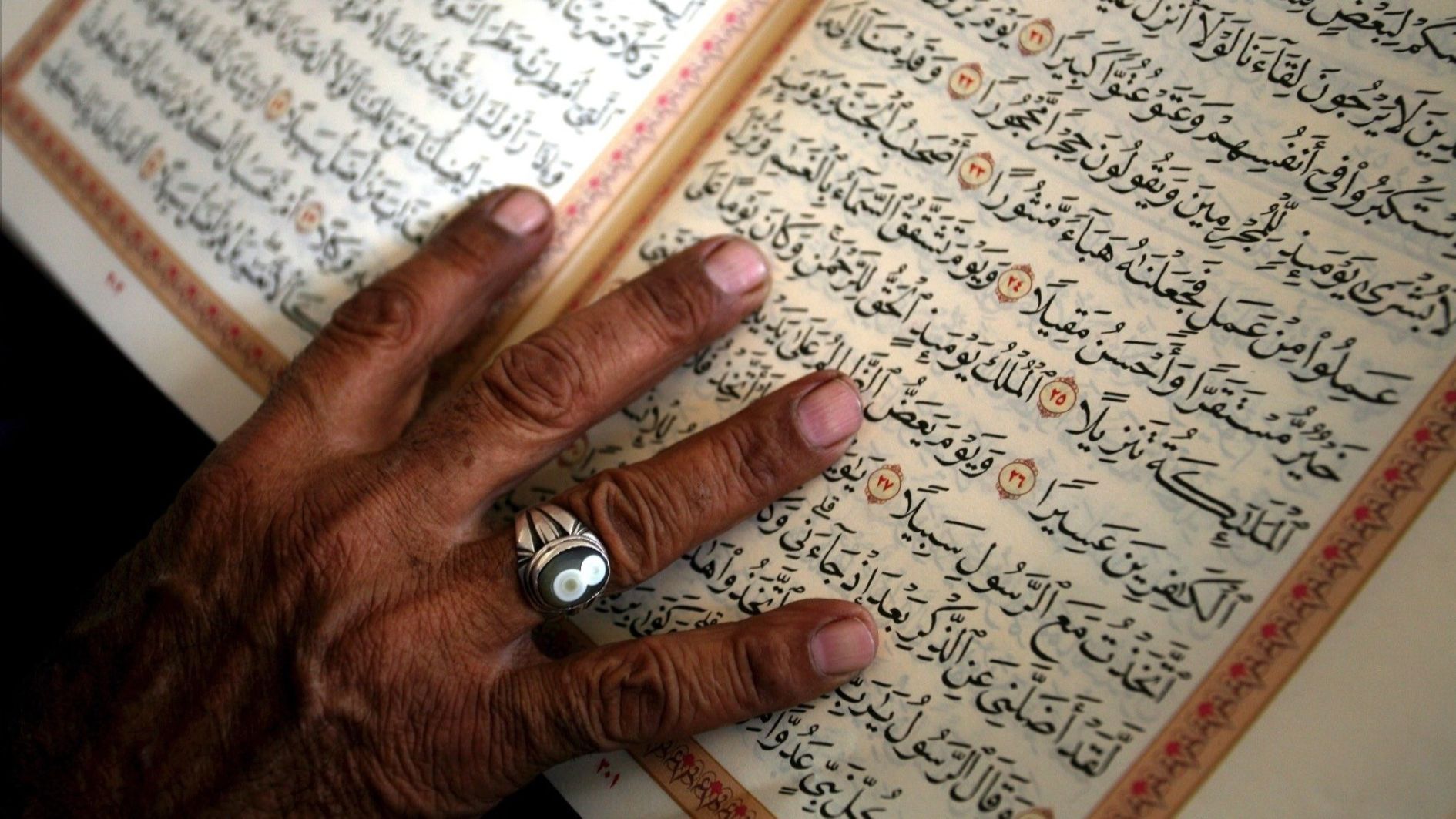
By Kabir Alabi Garba
“Indeed, Allah commands you to render trusts to whom they are due and when you judge between people to judge with justice.” Qur’an 4:58.
Brethren, as Nigeria prepares for another general election, a troubling question confronts every citizen: Will we vote for the future of our country, or sell that future for a bag of rice, a few naira notes and promises that may disappear the moment the winner takes the oath of office?
In a country where many families struggle with the cost of food, where young people search desperately for jobs, where insecurity disrupts livelihoods and where communities continue to demand better schools, hospitals, roads and electricity, elections should be a moment of serious reflection.
Yet, too often, the electoral season becomes a marketplace where poverty is exploited, ethnic loyalties are weaponised, religious sentiments are manipulated and political ambition is disguised as public service.
A politician arrives with money and food during the campaign, promises heaven on earth at a rally, and asks for the people’s mandate. But what happens after the votes are counted? Who remembers the unemployed graduate, the struggling market woman, the farmer worried about security, the parent unable to afford school fees or the patient waiting for treatment in an under-equipped hospital?

When the campaign vehicles disappear and the political billboards come down, the people are left to live with the consequences of their choices.
For Nigerian Muslims, this is more than a political question. It is a question of faith, conscience and accountability before Allah. The ballot paper may be a democratic instrument, but the principles that should guide its use—justice, honesty, trustworthiness and responsibility—are deeply rooted in Islam.
What is the value of our prayers if we knowingly support injustice? What is the worth of our religious devotion if we exchange the future of our children for temporary inducements? And what answer shall we give before Allah if our choices help place public power in hands that misuse it?
Qur’an 4:58 referenced above provides a clear foundation for this responsibility: “Indeed, Allah commands you to render trusts to whom they are due and when you judge between people to judge with justice.”
This injunction places a responsibility on those seeking public office to protect citizens’ rights, manage public resources responsibly and administer justice without discrimination. But the responsibility also extends to voters, who must make informed choices rather than allow personal interests or group loyalties to override the common good.
Qur’an 28:26 offers a useful standard for selecting people for responsibility: “Indeed, the best one you can hire is the strong and the trustworthy.”
The verse highlights two essential qualities: competence and trustworthiness. Voters should therefore look beyond campaign theatrics, political slogans and the size of rallies. They should examine candidates’ records, character, policies and capacity to serve.
Popularity does not guarantee competence, just as wealth does not establish integrity. Neither eloquence nor political connections should substitute for a credible record of service.
The question is not merely who can win an election, but who can be trusted with the people’s mandate.
One of the greatest threats to electoral integrity is vote-buying, through which politicians offer money, food or other inducements in exchange for citizens’ electoral choices.
For people struggling to feed their families, such offers can be tempting. Yet the money may disappear within days, while the consequences of poor governance can endure for years.
The warning against unlawful appropriation of wealth and bribery in Qur’an 2:188 is instructive: “And do not consume one another’s wealth unjustly or send it (in bribery) to the rulers in order that (they might aid) you to consume a portion of the wealth of the people in sin, while you know (it is unlawful).”
The Prophet (peace be upon him) also said: “Whoever deceives us is not one of us.”
These teachings challenge both those who manipulate voters and those who knowingly participate in electoral wrongdoing. Poverty must not be trivialised, and citizens facing hardship deserve compassion. But their vulnerability should not be exploited to purchase political loyalty. Politicians should compete through credible policies and verifiable records, not by turning hunger into an electoral weapon.
Indeed, electoral politics becomes dangerous when ethnic, religious and regional identities are exploited to secure support. Citizens may be told that only a candidate from their group can protect their interests, or that supporting someone of another religion amounts to betraying their faith.
Such appeals can transform political competition into communal hostility, turning neighbours into enemies while leaving the underlying problems of governance unresolved.
Islam demands justice even when it challenges personal loyalties. Allah (SWT) says: “O you who have believed, be persistently standing firm in justice, witnesses for Allah, even if it be against yourselves or parents and relatives” (Qur’an 4:135).
Again, Qur’an 5:8 pushes the argument further: “And do not let the hatred of a people prevent you from being just. Be just; that is nearer to righteousness.”
These verses leave no room for selective morality. Corruption does not become acceptable because it benefits our community, and dishonesty does not become righteous because it advances our preferred candidate.
In a diverse country such as Nigeria, citizens share fundamental interests in security, education, healthcare, employment and economic opportunity. A functioning hospital saves lives regardless of religion or ethnicity; a good school benefits children from different communities.
Voters should therefore assess candidates on their integrity, competence and commitment to public welfare rather than allow identity politics to replace critical judgement.
It is also important to note that the electoral contest now extends beyond rallies and polling stations to social media, where fabricated videos, unverified allegations and inflammatory messages can spread rapidly.
A clear warning is provided in Qur’an 49:6: “O you who have believed, if there comes to you a disobedient person with information, investigate, lest you harm a people out of ignorance and become, over what you have done, regretful.”
Another injunction states: “And do not pursue that of which you have no knowledge” (Qur’an 17:36).
Citizens must verify information before sharing it, especially when it concerns candidates, electoral officials or religious and ethnic communities. A claim does not become true simply because it damages a political opponent or supports a preferred candidate.
Political disagreement is no justification for deception, defamation or incitement. Before forwarding a message, citizens should establish its source and seek credible confirmation.
In an age when misinformation can travel faster than corrections, responsible citizenship begins with the willingness to pause before pressing “send”.
Moreover, electoral violence threatens both democratic participation and national cohesion. No candidate’s ambition justifies the death of an innocent citizen, and no political disagreement warrants the destruction of another person’s livelihood.
The command in Qur’an 5:2 is succinct: “And cooperate in righteousness and piety, but do not cooperate in sin and aggression.” The Prophet (peace be upon him) said: “A Muslim is the one from whose tongue and hand the Muslims are safe.”
These teachings require citizens to reject intimidation, attacks on opponents, destruction of property and the recruitment of young people into political violence.
Where tensions arise, citizens should avoid mob action, refuse to spread inflammatory rumours and report credible threats to appropriate authorities. Electoral disputes should be pursued through lawful procedures rather than revenge.
A candidate may contest another election, but a life lost to political violence cannot be restored. Political competition is temporary; the pain and mistrust caused by violence can endure for generations.
Beyond the immediate consequences of elections lies a deeper question: what will every individual answer for before Allah?
Muslims should be reminded of the admonition in Qur’an 99:7–8 thus: “So whoever does an atom’s weight of good will see it, and whoever does an atom’s weight of evil will see it.”
The Prophet (peace be upon him) also said: “Each of you is a shepherd, and each of you is responsible for his flock.”
Political leaders, electoral officials, party agents, community leaders and ordinary citizens all have responsibilities within their respective spheres of influence.
Those who deliberately deceive voters, corrupt elections or encourage violence should reflect on their moral responsibilities. Equally, citizens who uphold truth, refuse wrongdoing and protect others from harm contribute to a society grounded in justice.
The final judgment of individuals belongs to Allah, but the obligation to act responsibly in this world remains. Religious and community leaders must discourage the exploitation of faith and ethnicity, promote peaceful coexistence and remind citizens that moral responsibility does not end at the mosque door.
Political parties and electoral institutions must also encourage peaceful competition, transparency and accountability.
Ultimately, the ballot paper is temporary, but the consequences of electoral choices can shape a nation for decades.

