
 Get Guardian on Google
- 84 per cent of blindness avoidable, treatable, Ibenu warns
- Poor vision threatens productivity, household incomes, national economy
An estimated 4.2 million Nigerians aged 40 and above are either blind or living with visual impairment, while more than one million adults have lost their sight completely, largely from preventable or treatable causes, the Eye Health Officer of Sightsavers Nigeria, Dr Joshua Ibenu, has said.
Ibenu, who described the figures as alarming, warned that the growing burden of blindness and visual impairment was not only a public health concern but also a major threat to Nigeria’s workforce, household incomes and economic productivity.
Speaking at a meeting with the organisation’s media partners in Keffi, Ibenu stated that about 84 per cent of blindness in Nigeria was avoidable, stressing that millions of Nigerians could regain or preserve their sight through timely diagnosis, access to appropriate treatment and sustained investment in eye health services.
According to him, cataract remains a major cause of blindness, accounting for a significant proportion of cases that could be treated through relatively simple surgical procedures.
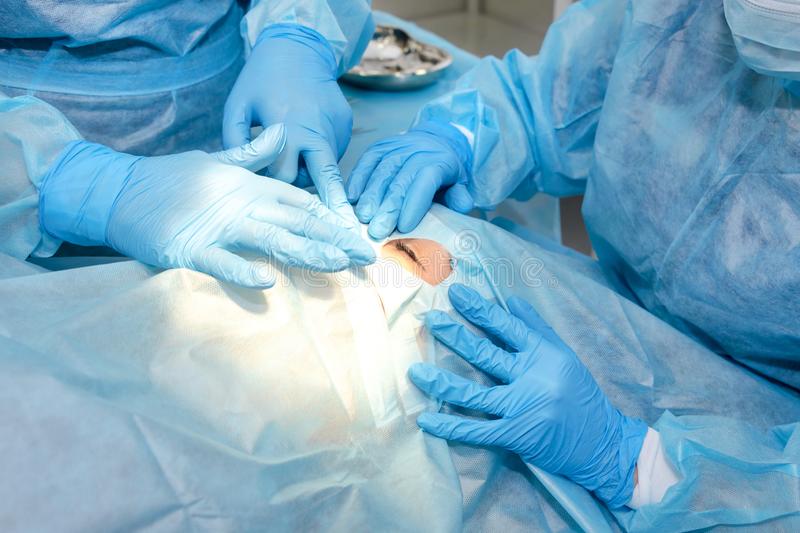
Ibenu said many people who had lost their sight to cataract could regain their vision through surgery, which could be completed within minutes, depending on the procedure and the patient’s condition.
He lamented that despite the availability of effective interventions, access to eye care services remained severely limited, leaving millions of Nigerians exposed to avoidable blindness.
Ibenu noted that tthe situation was particularly disturbing because a large proportion of those affected could have their sight restored or their conditions managed if they had access to appropriate services.
He noted that cataract surgery, which could be completed within 15 to 20 minutes in suitable cases, offered a practical and effective intervention for many people living with blindness.
Ibenu said: “If 84 per cent of blindness is avoidable, that means a significant number of people who are blind today could have been prevented from losing their sight.
“A lot of the blindness can even be treated. You can just imagine the gap. There are people who are blind for different causes, and those causes can be treated.”
He, however, expressed concern that only about 4.4 per cent of Nigerians currently had access to eye care services, describing the figure as a major gap that required urgent government intervention and stronger partnerships.
According to him, poverty, rising inflation and the increasing risk of diseases could further worsen the country’s eye health challenges if adequate measures were not taken to expand access to services.
Beyond the health implications, Ibenu said blindness and visual impairment had far-reaching consequences for the economic wellbeing of individuals, families and the country.
He explained that when a person became blind, the consequences often extended to another family member who had to provide support, particularly in a country where public infrastructure was largely inaccessible to people with disabilities.
According to him, the absence of accessible roads, buildings and transportation systems means that many people living with blindness depend on others to move around, attend appointments, go to work or participate in everyday activities.
He said: “Poor vision causes Nigeria millions of naira annually due to lost productivity and income.
“The thing about blindness, compared to other diseases, is that no matter how healthy a person is, if that person is blind, there is somebody who has to support him.
“One case of blindness will definitely impair two persons: the blind person and the person who supports him.”
Ibenu said the situation was particularly challenging for families struggling to meet their daily needs, as relatives who should be engaged in productive activities were often compelled to provide care and assistance.
He explained that adults who should be working could find themselves spending considerable time assisting relatives with visual impairment, while children who should be in school might have to accompany elderly family members or assist them with movement.
He said such circumstances contributed to lost income, reduced productivity and increased dependence, with consequences extending beyond the affected individual.
The Sightsavers official said the economic cost of blindness should therefore be considered alongside its medical implications when governments and policymakers were determining priorities for health sector investment.
Ibenu said increased investment in eye health could deliver substantial economic benefits, particularly through interventions such as cataract surgery, the provision of spectacles and comprehensive eye care programmes.
He cited research presented at an international eye health meeting, which he said demonstrated the significant returns that could be generated from investing in interventions to address visual impairment.
According to him, the research indicated that every dollar invested in cataract surgery could generate about $28 in economic returns through improved productivity and other benefits.
He said: “That is a huge return on investment. I don’t think any other health programme will compete with that.
“It just goes to show how important these services are. If we can focus on how important it is to invest in eye health and the returns we will get, it will help us generate more funding and income for eye health.”
Ibenu also highlighted the importance of providing spectacles to artisans and other workers whose jobs required good vision.
He said research and programme experiences had shown that providing spectacles to workers with refractive errors could significantly improve their productivity.
According to him, some artisans struggle to perform basic tasks because of poor vision, often experiencing headaches and difficulty seeing small objects or details required for their work.
He cited the example of a mechanic who struggled to see small components while repairing vehicles but experienced a remarkable improvement after receiving spectacles.
Ibenu said: “For these people, there is a 30 per cent improvement in their work rate just by a single spectacle.
“Imagine a mechanic who has to work on very tiny components. If he cannot see properly, he will struggle. But when you give him spectacles, his work improves. That is why we advocate for investment in eye health.”
He said such interventions could improve the productivity of workers, increase household earnings and contribute to national economic growth.
Ibenu said Sightsavers Nigeria had continued to expand its eye health interventions across the country through screening, treatment, surgery, provision of spectacles and referrals.
He disclosed that the organisation had screened more than 4.6 million Nigerians for various eye conditions across its programmes in the last 10 to 15 years.
According to him, more than 300,000 Nigerians had been connected to appropriate eye care services, including surgery, treatment, spectacles and referrals.
Ibenu further disclosed that the organisation had supported more than 14,000 cataract surgeries across different states and programmes in the last 15 years.
He said Sightsavers had also screened more than 27,000 teachers, primary healthcare workers and other professionals for eye health conditions as part of efforts to improve access to services and strengthen the country’s eye health workforce.
He added that the organisation’s programmes had covered more than 10 states in Nigeria over the last 15 years.
Ibenu said more than 60,000 Nigerians had benefited from refractive error correction through the organisation’s programmes in the past decade, while more than 40,000 spectacles had been distributed in recent years, particularly to children and adults who needed vision correction.
He said the achievements demonstrated the impact of sustained eye health interventions but stressed that the scale of the country’s needs remained far greater than the resources currently available.
Ibenu said Sightsavers was working with the Federal Government and state authorities to strengthen policies and strategies aimed at ensuring sustainable eye health services.
He said the organisation supported the implementation of the National Eye Health Policy and the National Eye Health Strategy, with emphasis on integrating eye health into the broader healthcare system.
According to him, one of the priorities in states where Sightsavers operates is to encourage state ministries of health to establish and strengthen eye health structures that can support service delivery, particularly at the primary healthcare level.
He said ensuring that primary healthcare workers were adequately supported and remunerated was essential to improving access to eye care, especially in underserved communities.
Ibenu also highlighted Nigeria’s progress in developing clinical guidelines for eye health, including guidelines for glaucoma management and primary eye care.
He said strengthening the country’s eye health system required more than the availability of treatment, adding that adequate funding, trained personnel, sustainable policies and reliable service delivery mechanisms were equally important.
He called for stronger collaboration between government, local companies, development partners and other stakeholders to expand access to eye health services.
Ibenu said: “Funding is very important. The more funding and connections we get, the more we can do.
“We don’t just provide services. We also work with the Federal Government to ensure that there are sustainable policies and strategies that can help improve eye health.”
He said increased local investment and partnerships would enable organisations to reach more people, particularly those in rural communities who often faced significant barriers to accessing eye care.
Ibenu urged Nigerians to take eye health seriously and seek professional care when they experience changes in their vision, warning that delays in seeking treatment could lead to avoidable complications.
He said the scale of blindness and visual impairment in Nigeria required a collective response involving government, healthcare providers, development organisations, the private sector and the media.
He stressed that public awareness was particularly important in addressing misconceptions surrounding blindness and encouraging people to seek timely treatment.
According to him, the country’s eye health challenges should not be viewed merely as statistics, as every person living with blindness or visual impairment represents a family affected by the consequences of lost sight.
Ibenu said with increased investment, stronger partnerships and improved access to services, Nigeria could prevent millions of people from losing their sight unnecessarily.
He called on policymakers to prioritise eye health funding, strengthen primary healthcare services and ensure that effective interventions reached those who needed them most.
He said the country could no longer afford to overlook the economic and social consequences of avoidable blindness, particularly when many of the conditions responsible were preventable or treatable.
Ibenu, however, said that 84 per cent of blindness in Nigeria could be prevented through surgery, particularly cataract, which accounts for 43 per cent of blindness in the country.
He lamented that only 4.4 per cent of Nigerians currently access quality eye health services, adding that poor vision costs Nigeria billions annually through productivity and income losses.
Ibenu, who said that the NGO’s eye health programmes were currently active in seven states and the Federal Capital Territory (FCT), said that more than 60,000 Nigerians benefited from its refractive error correction services.
He also explained that globally, Sightsavers had, over the years, performed 9.7 million cataract surgeries and more than 235 million eye examinations.Order Contacts
He added that in Nigeria, the organisation supported the development of the National Eye Health Policy, National Eye Health Strategy, Nigerian Glaucoma Guideline and toolkits, among others.
Speaking on Sightsavers’ Disability Inclusion Programme, its Senior Finance Officer, Mr Fabian Tukman, said that the organisation intends to create equal opportunities for Persons with Disabilities (PWDs) in society, especially through job opportunities, economic empowerment, skills acquisition and mentorship for PWDs.
He stated that the organisation had also supported PWDs with revolving funds to empower them through trade and other petty businesses.
Tukman decried the continued inaccessibility of public buildings, including airports, schools and hospitals, despite the Discrimination Against Persons with Disabilities (Prohibition) Act.
He pointed out that the Nigerian system is still not designed for people with hearing, visual or intellectual impairments, leaving many dependent on manual support rather than accessible infrastructure.
Tukman called for the dissemination of policies to the state level and the creation of more enabling environments for implementation.
He disclosed that the organisation provides revolving funds that help persons with disabilities start or expand businesses, while its Inclusion Works initiative links them with employers such as MTN, based on their skills.
Tukman observed that Sightsavers worked with the National Teachers Institute to develop policy documents and train more than 1,000 teachers in inclusive teaching, so that children with and without disabilities can learn in the same classrooms.
He noted that more than 1,500 health workers had been trained in disability-inclusive family planning, with improvements made to hospital accessibility in some facilities.
Speaking on the high incidence of Neglected Tropical Diseases (NTDs) in the country, the Technical Manager, Surgery Antibiotics Facial Cleanliness and Environment Improvement (SAFE) at Sightsavers Nigeria, Ms Grace Ajege, identified poor hygiene and sanitation as major obstacles to eliminating NTDs in communities.
She said, “Poor sanitation is a very big issue. People hardly keep their environment clean, and it’s a major challenge. People co-exist with flies and mosquitoes due to a dirty environment. We hardly clean and make our environment habitable. People defecate in the open, particularly on our water bodies, and we keep heaps of waste in our neighbourhoods for long. So, to curb the rise in NTDs, we must promote sanitation and discourage open defecation in our communities,”.
Ajege stressed the need for sustained community awareness, environmental sanitation, facial cleanliness and improved access to clean water to curb the spread of NTDs.
She also called for continuous surveillance, noting that some communities previously considered free of NTDs had recorded new cases.
She said Nigeria had made significant progress toward eliminating the diseases, particularly through sustained interventions by the government, development partners, and international donors.