

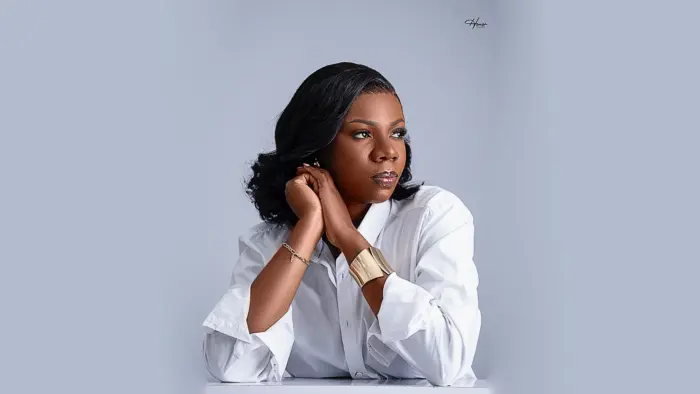
Jennifer Awirigwe is a certified personal finance expert, Investment Banker, Chartered Accountant and Chartered Stockbroker. As founder and Chief Executive Officer of FinTribe, Africa’s pioneering wealth company for women, she is known as The Women Money Cheerleader, trained over 1,000,000 women in personal finance, guided thousands on their investment journeys, and reached over 7,000,000 people through her online campaigns and financial education classes. As a financial literacy advocate, Awirigwe breaks barriers in the male-dominated world of stock investing.
She convenes the Biggest Finance Fair in Africa and advocates closing the gender gap in capital market participation. Her professional background spans auditing, aviation, treasury operations, fixed income, asset management, and fintech, shaping how she teaches and simplifies finance for everyday women across 40+ countries. In this interview, she speaks on her vision to have every woman invest confidently while building a thriving investment portfolio.
You have built an impressive career in investment banking, accounting, stockbroking, and financial education. What inspired your passion for helping women achieve financial independence?
My passion is rooted in a combination of what I saw growing up and my own personal journey with money. Growing up, I saw women remain in unhealthy situations because they lacked the financial means to leave. It made me realise early on that financial independence is about more than money; sometimes, it is about having the power to make choices about your own life.
My own journey with personal finance also taught me that earning money and building wealth are two very different things. Having an income doesn’t automatically mean you know how to make your money work for you. Working in the financial services industry gave me the technical knowledge, but these experiences gave me the purpose.
That’s why I started FinTribe in 2021 with just 13 women. I wanted to make financial education more accessible, practical and relatable, rather than something that felt intimidating or reserved for people who worked in banks or understood financial jargon. Ultimately, I believe financial independence gives women options, and every woman deserves to have options.
You recently hosted the Finance Fair 2026, themed I CAN. What inspired this year’s theme, and what were your biggest takeaways from the event?
The theme, I CAN, was inspired by something I have observed over the years: sometimes, the biggest barrier between a woman and her goals isn’t necessarily a lack of opportunity. It’s that she doesn’t believe she can achieve them. We wanted to challenge those limitations and remind women that they can build, lead, create and pursue whatever possibilities they desire. The response was incredible. We brought together over 10,000 women, with attendees travelling from across Nigeria and countries including the UK, France and Uganda.
Beyond the numbers, what stood out was the energy and the conversations around investments, business growth, property ownership, personal branding and wealth creation. One particularly memorable moment was when a young female entrepreneur came prepared, wearing her handmade earrings and looking for an opportunity to showcase her business. During a conversation on stage, Funke Akindele showcased the earrings and promoted her business. That moment has since gone viral. For me, it perfectly captured the spirit of I CAN: showing up, believing in what you’re building, and being ready when an opportunity comes.
Ultimately, I CAN is about possibility, confidence, and refusing to put limitations on what a woman can become.
The Finance Fair brought together women at different stages of their financial journeys. What major gaps in women’s financial knowledge and wealth creation did the conversations reveal?
One major gap is that many women understand the importance of saving but haven’t necessarily moved from saving to investing and wealth creation. You can save consistently for years, but if your money isn’t growing or keeping pace with inflation, you’re potentially losing purchasing power. We also saw gaps in how women manage their businesses financially. Some generate millions in revenue but struggle to build personal wealth because they don’t distinguish between revenue, profit, and cash flow, or separate business finances from personal finances.
Another gap is investment confidence. Some women have the money to invest but lack the knowledge to assess risks, ask the right questions, or identify legitimate opportunities. Ultimately, financial education must go beyond teaching women to save. We need to show them how to grow, protect, and make their money work for them. The goal shouldn’t just be women who understand financial terms, but women whose financial decisions and net worth reflect what they have learnt.
Through FinTribe, you have reportedly trained over one million women in personal finance. What measurable impact have you recorded in helping women move from financial literacy to actual wealth creation?
Since we started in 2021, FinTribe has grown to over 20,000 active members across 43 countries, with a digital audience of over one million people across platforms. But what matters most to us is what happens beyond the numbers. Through our ecosystem, we have facilitated over US$8 million in investments, helping women move beyond simply consuming financial information to actively building wealth.
Our Wealth Builders Academy has reached approximately 5,000 students, providing more structured financial education. Through our real estate initiative, we’ve also helped over 100 women become first-time property owners. Our work spans financial education, cooperative savings, joint investments, and asset ownership. Through partnerships, including the One Woman Investment Programme with the Federal Ministry of Women Affairs, we’re also working towards bringing 100,000 women into Nigeria’s capital market.
We’re equally leveraging technology to make these opportunities more accessible. The FinTribe app brings together four pillars: Save, Learn, Invest, and Community. We don’t just want financially literate women. We want women who own assets, build wealth, and have a stake in the economy.
Despite increasing financial awareness, many Nigerian women still struggle to build sustainable wealth. What are the biggest barriers holding women back?
I think there are several barriers, and not all of them are financial. The first is the income gap. Many women are doing the work of multiple people, earning relatively little while carrying significant family responsibilities. You cannot talk about wealth creation without acknowledging what people earn and what they have to spend.
Then there’s the responsibility gap. In many Nigerian households, women are expected to support both their immediate and extended families. A woman saving towards her first property, for instance, might have to redirect those funds to an unexpected family need.
Another major barrier is the fear of investing and lack of trust. Having experienced or witnessed losses from fraudulent schemes, many women would rather leave their money in a bank account than risk making an investment decision they don’t fully understand. I don’t believe the solution is simply telling women to be more disciplined. We must improve access to financial opportunities and create environments where women can learn and invest confidently.
At the same time, women must begin to see wealth creation as a personal responsibility, not something to postpone until everyone else has been taken care of. You cannot pour into everyone else indefinitely while leaving yourself with nothing. Your financial future deserves a place in your priorities too.
With Nigeria’s challenging economic realities, rising living costs and competing family responsibilities, how can women build financial security regardless of their income levels?
I always say that financial security is not determined by how much you earn alone, but also by what you do with what you earn. Of course, I recognise that this isn’t an easy conversation in an economy where the cost of basic necessities keeps rising. Some people’s incomes barely cover their essential expenses, so we shouldn’t pretend everyone can comfortably save 20% of their salary. But there are practical steps women can take, depending on their circumstances.
First, understand your numbers. Know what comes in, what goes out, and where your money is going. You cannot manage what you don’t measure. Second, look for ways to increase your earning capacity. Sometimes the problem isn’t excessive spending; it’s that your income hasn’t kept up with your responsibilities. Developing new skills, negotiating better pay, or exploring additional income streams can make a difference. Finally, invest when you have the capacity to do so. Explore accessible investment options depending on your goals and risk appetite.
And please, don’t compare your financial journey with someone else’s. A woman earning ₦200,000 and consistently putting something aside is making progress. Someone earning ₦5 million but spending everything may not be. Start where you are, with what you have, but have a plan to grow beyond where you are today.
Women remain underrepresented in stock investing and capital market participation. What needs to change to encourage more women to invest confidently and build diversified portfolios?
I think we need to address three things: access, education, and representation.
For a long time, investing in the capital market has been presented in a way that feels intimidating. The language is technical, the processes seem complicated, and many women assume you need significant money or financial expertise before you can participate. We need to change that.
Financial institutions and market operators must make investment products easier to understand, more accessible, and more affordable. Digital investment platforms have made some progress, but there is still a lot of work to do around investor education and building trust.
We also need better representation. Women need to see other women participating in the capital market, investing in businesses, owning shares, and building wealth through financial assets. When women can see people like themselves doing it, investing becomes less abstract and more achievable. We need more women not just as consumers of financial products, but as active participants shaping the market.
Through FinTribe, and our work with organisations such as the Nigerian Exchange Group, the Securities and Exchange Commission and the Federal Ministry of Women Affairs, we are helping to bridge some of this gap. I want more women to look at the Nigerian capital market and see themselves as participants, not spectators.
One of the conversations at Finance Fair 2026 focused on The Business of Being Her. How can women translate their skills, personal brands and influence into sustainable income and long-term wealth?
I love this conversation because we’re entering a period where women have more opportunities than ever to monetise their knowledge, skills, creativity and influence. But there’s a difference between being popular and building a profitable business. Having thousands of followers doesn’t automatically translate into income. The first step is identifying the value you offer and who is willing to pay for it. Then, package that value into something people can buy. Personal branding helps people understand what you stand for and builds trust, but don’t spend money trying to look successful before you’ve built something that generates revenue. You don’t need an expensive photoshoot or a huge following to start.
You also need to understand the business numbers: your costs, pricing, profit margins. Revenue is not profit. And importantly, don’t spend every naira you earn upgrading your lifestyle. Pay yourself, reinvest strategically, build reserves, and channel some of your profits into assets that can grow over time.
For instance, a content creator earning from brand partnerships could use part of that income to build a business, invest in financial assets or acquire property. Your personal brand can generate income, but your assets help you build lasting wealth. Don’t just build a brand that people recognise. Build a business that makes money, and use that money to acquire assets.
As a woman who has navigated the traditionally male-dominated financial industry, what challenges have shaped your leadership journey, and what lessons can other women learn from your experience?
One of the biggest lessons in my leadership journey has been recognising that what got me to one level may not necessarily be what takes me to the next. I’ve built experience across financial services and entrepreneurship, but I also recognise that leading at a higher level requires continuously developing new skills, perspectives and capabilities. That’s one of the reasons I’m currently pursuing my MBA. I want to strengthen my strategic thinking, broaden my understanding of business and become a more effective leader.
My advice to other women is to never become so comfortable with what you know that you stop learning. Be honest about your gaps, invest in your development, and don’t be afraid to reinvent yourself as your ambitions grow. Growth requires recognising that you don’t have to remain the same leader you were when you started.
What is your long-term vision for FinTribe and the Finance Fair, and what practical steps should women take today to secure their financial future and build generational wealth?
My long-term vision for FinTribe is a world where every African woman has the financial freedom to make choices about her life, her family, and her future. Our mission is to help women move from earning money to building lasting wealth through financial education, community accountability, and access to trusted financial opportunities. We are bringing this mission to life through our app, with four pillars: Save, Learn, Invest and Community. I want FinTribe to continue evolving into an ecosystem where women don’t just learn about wealth creation but have the tools and opportunities to practise it.
For the Finance Fair, I want it to become a platform that inspires action beyond the event itself, with more women becoming investors, business owners and property owners. For women looking to secure their financial future and build generational wealth, I want you to move from asking, ‘What can I afford?’ to asking, ‘What am I building, what do I own, and what will I leave behind?’
