Follow Us on Google News


 Follow Us on Google Discover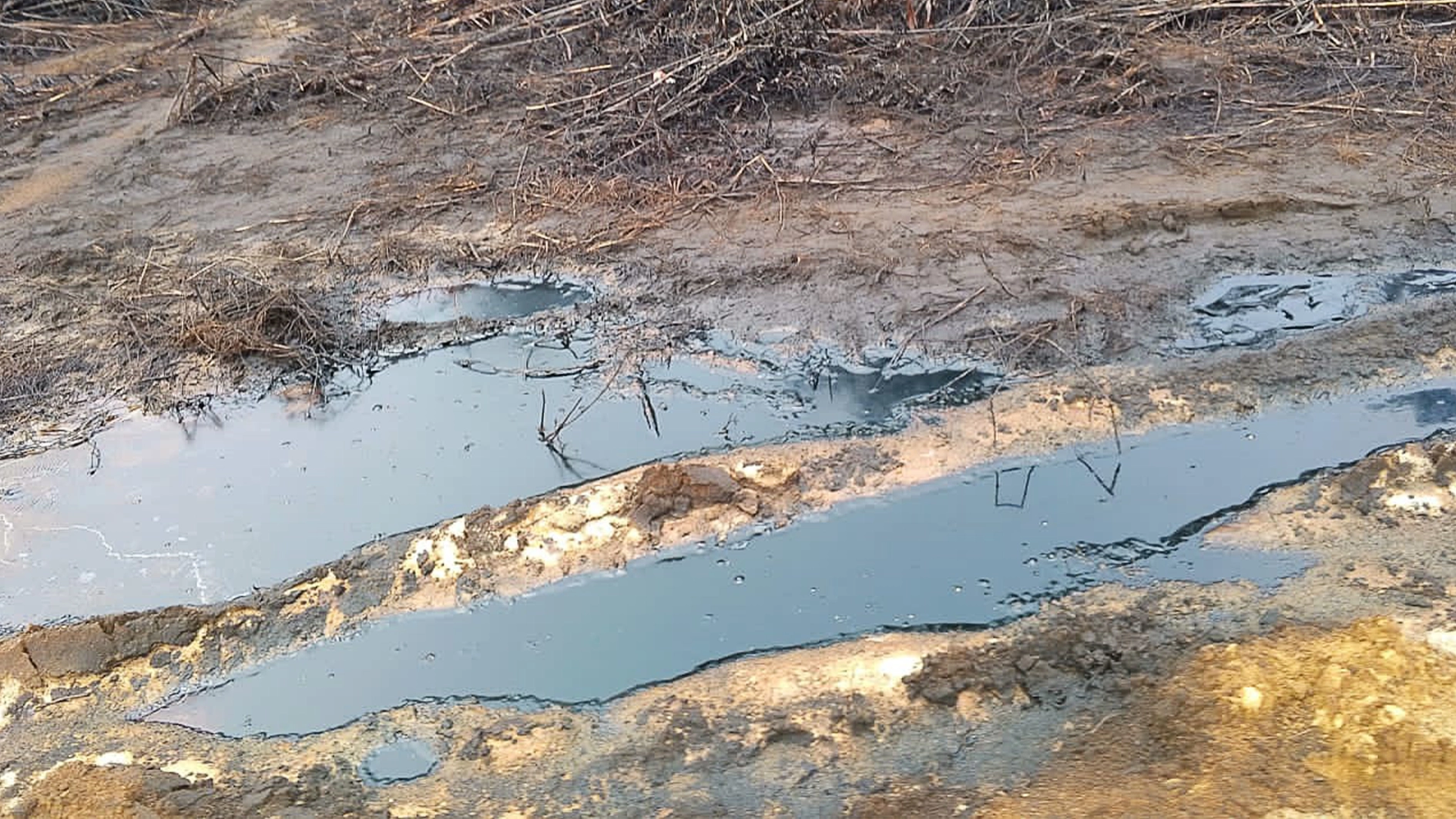
From relentless gas leaks and flaring to soot-filled air, contaminated water, and toxic pollution, communities across Rivers State have been paying a grim price for years of environmental degradation. The pollution is now creeping into their lungs and water sources, triggering recurring respiratory illnesses and other health problems, while some families are being forced to relocate to safer environments, ANN GODWIN reports.
Michael Nwagwu was the kind of consummate professional whose peers brand not merely as talented, jovial, and approachable, but also irreplaceable.
As a technology expert at Today FM in Port Harcourt, Rivers State, he was dependable and often the first person that the team turned to whenever a technical failure threatened to cripple the newsroom.
Ranging from failed Internet connections and malfunctioning computers to a stubborn system glitch that could bring operations to a standstill, he was the go-to guy for technical solutions to such problems.
Indeed, before a disruption matured into a crisis, he was always on hand with a solution or a way out, as he had a deep grasp of computer systems, knew how to troubleshoot under pressure, and always kept the newsroom running.
Only weeks earlier, those around him still saw in him a seemingly healthy young man, as there was little indication that his life was about to take a devastating turn.

However, upon noticing changes and signs of ill-health, he promptly went for laboratory tests in a hospital and, like anyone anxious for answers, returned all by himself for the test results. That visit marked the beginning of the end for the budding tech personnel.
Rather than return home at the end of that visit, Nwangwu was admitted as his condition deteriorated rapidly, with his legs becoming swollen. The diagnosis confirmed that he had been battling lung and respiratory challenges.
As concerns grew over alleged inadequate care at the University of Port Harcourt Teaching Hospital (UPTH), and questions about the availability of equipment kept pulsating, his family moved him from the UPTH to a private hospital. Sadly, a young man who was healthy enough to walk into a hospital to collect his lab test results failed to return home alive.
“He could not last more than three hours,” his colleague, Ucheundu Ejehor, who closely followed his treatment, recalled.
ALLWELL Okpi, a gynaecologist at the Rivers State University Teaching Hospital, was the kind of doctor who did his job with passion and gusto. At 50, he had spent about a quarter of his life caring for others.
A few weeks back, he suddenly became a patient after complaining of tiredness and his breathing becoming increasingly difficult. He asked for his inhaler – a simple request from a doctor who knew exactly what he needed.
As a colleague made to get it, the doctor who had spent his working life saving other people’s lives suddenly went into a fit and passed on before long. His final moments have left colleagues struggling to reconcile the man they knew with the suddenness of his death.
A medical doctor at the UPTH, who preferred anonymity, reliably informed The Guardian that two weeks ago, a 26-year-old man arrived at the facility seeking help for a heart-related condition.
According to him, what began as a desperate search for medical care ended a few days later in a private clinic, where the patient was eventually moved after being diagnosed with heart disease. The circumstances surrounding the case, the doctor said, have added another painful story to the growing concerns over heart-related issues across the state and the way the illness kills suddenly.
The emergence of severe respiratory illnesses, sudden, premature deaths, as well as respiratory and cardiovascular-related deaths linked to the proliferation of black soot pollution in Port Harcourt has been ongoing for a decade now, having started in 2016.
Among other things, artisanal crude oil refining in the swamps and creeks of the Niger Delta releases massive plumes of black carbon. The military and security task forces also frequently open-burn confiscated illegal refining equipment and stolen crude. These and many more contribute to worsening Air Quality Index (AQI) levels in parts of Port Harcourt, which frequently surge past 155, well above the 150 threshold that signals a public health emergency.
Residents of Rivers State have continued to live in the shadow of gas flaring, industrial emissions, and leaks from oil and gas facilities. But beyond the familiar haze of soot that once blanketed Port Harcourt, a more insidious threat seems to be taking root, one that residents carry inside their bodies.
Although the thick black soot that became a disturbing feature of life in Port Harcourt between 2016 and 2023 appears to have reduced, the pollution itself has by no means disappeared. At its peak in 2016, the black substance stained homes, cars, offices, clothes, and even food, leaving residents grappling with visibly dark surroundings.
Today, while the dark haze may be less pronounced, gas flaring and leakages around oil and gas installations persist, and the effects are troubling as residents continue to report respiratory difficulties, asthma attacks, and other health problems. This development has raised fresh concerns about potentially longer-term health consequences of prolonged exposure to polluted air.
From children struggling with asthma to adults battling recurring respiratory problems, the health burden is becoming harder to ignore. For some residents, relocation has become the only escape from the pollution. For others, leaving is simply not an option. They remain trapped in communities where the air they breathe, the water they drink, and the environment in which they live have continued to expose them to harmful pollutants.
A consultant paediatrician at the Rivers State University Teaching Hospital, Dr Apollous Josiah, who has been following the trend, described the development as disturbing, saying respiratory-related cases were increasingly being recorded among patients.
According to him, symptoms including fast breathing, cough, and catarrh are becoming common, with about 50 per cent of patients attending the unit daily presenting with respiratory complaints, particularly difficulty breathing or fast breathing.
A trail of respiratory drugs
THE Guardian’s visit to hospitals, pharmacies, and other health outlets across Port Harcourt to examine whether demand for respiratory and related medications reflected the complaints reported by residents showed a clear affirmative trend, with striking findings.
At Sharon Health and Wellness Store along NTA-Apara Road in Port Harcourt, monitoring showed high demand for lung and liver detox products. A staff member, who did not wish to be named, said the outlet sells more than 50 packs of the products weekly, with online sales reportedly exceeding in-store purchases.
When The Guardian visited the outlet at about 3:29 p.m. on Thursday, August 27, 2026, the shelves displaying the lung and liver detox teas were almost empty despite regular restocking, while several other product shelves remained well stocked.
The staff member attributed the demand to growing public concern over respiratory health, adding that the products are imported and subsequently processed before being marketed locally.
At a pharmacy around Chief Walison Street, Nkpolu-Rumuigbo, The Guardian also observed residents requesting medications commonly used for respiratory conditions, including Ventolin and other breathing medications.
Similar observations were made at Naviv Pharmacy in Rumuosi and other pharmacies at the entrance to the UPTH, where customers were seen purchasing inhalers, bronchodilators, and other respiratory medications.
The pattern was not limited to pharmacies.
At primary healthcare facilities in Mile One, Diobu, and in Rumuekini and Rumuokoro, The Guardian’s review of medical records and interactions with health workers pointed to cases involving children with asthma and other respiratory conditions.
The emerging picture is troubling: while the soot may no longer hang as visibly over Port Harcourt as it once did, the health consequences of years of exposure to polluted air may be far from over.
In the last seven years, a study shows that about 22,077 persons have suffered from respiratory-related ailments.
Specifically, in April 2019, a scientific report by the technical study team on soot, following a hospital-based review of records of 22,077 persons who received care for soot-related conditions at health facilities across Rivers State, found adverse respiratory, skin, and reproductive conditions associated with black soot. The report noted that the people who received health care included women, men, and children.
This was contained in the reviewed report of a technical team set up by the Rivers State Government under the administration of Nyesom Wike, and headed by the former state Commissioner for Environment, Prof. Roseline Konya.
The team, made up of 20 experts from various interdisciplinary and relevant fields, including a Consultant Physician and Dermatologist at the University of Port Harcourt Teaching Hospital, Dr Dasetima Altraide, conducted an investigative study into the airborne particulate (soot) in Port Harcourt, and the report unequivocally stated that gas flaring and illegal bunkering are two major sources of soot in the state, with consequences.
The report further noted that, since the prevalence of dangerous particulate matter (soot) increased, there has been an upsurge in diagnosed cases amongst residents of Port Harcourt, and inhalation of known carcinogens due to the prevalence of black soot has increased among residents.
The report found, based on the risk assessment of analysed black soot samples, that heavy metals were concentrated in the soot and, as measured in the study, that thousands of people in the state are expected to suffer cancerous and non-cancerous diseases from the soot in the atmosphere.
Between the periods under review, many residents of the state have continued to experience various respiratory illnesses.
Bille as ground zero for gas leaks
FOR 46-year-old Veronica Amakiri, fetching water from Bille community’s traditional water source has become an ordeal she can no longer take for granted.
But on a recent day, what happened to the water she fetched offered a chilling glimpse into the environmental crisis confronting the community in Degema Local Council.
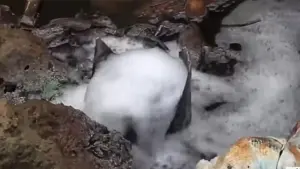
In the presence of The Guardian, Amakiri fetched some water and poured it into a pet bottle. Barely five minutes later, the clear-looking, colourless water had become darkened. The transformation was startling, and for residents, painfully familiar.
“This is how we live,” Amakiri lamented. “Many people drink from this water source because a bag of pure water is N1,300. And even when you buy it, you cannot use it to cook.”
Interpreting the water changes, a professor of community medicine and environmental health at the University of Port Harcourt, Best Ordinioha, warned that water turning black after exposure to air could indicate chemical contamination, with potentially serious health consequences.
Ordinioha, who also works at the University of Port Harcourt Teaching Hospital (UPTH), however, said the specific contaminants responsible for the colour change could only be determined through proper chemical analysis.
According to him, the reaction of certain chemicals with oxygen after the water is exposed to air could account for the colour change, stressing that the health implications would depend on the substances present in the water.
He said if the contamination is oil-based, the water could contain crude oil-related pollutants capable of causing both immediate and long-term health problems.
“Some of those contaminants can have acute effects, which are immediate, and they can also have long-term effects,” he explained.
Ordinioha warned that consuming contaminated water could trigger gastrointestinal problems, including vomiting and diarrhoea, while prolonged exposure could cause severe damage to vital organs like the lungs, kidneys and liver.
“Long-term exposure can cause organ damage, including kidney failure, and different types of cancers have also been associated with some of these chemicals,” he said.
The don further warned that some chemical contaminants could interfere with human reproduction and foetal development, potentially resulting in congenital abnormalities in babies.
Contaminated water is only one part of the ordeal, as observations showed that persistent gas leakage has saturated the atmosphere to such an extent that residents have been warned against using naked flames for fear of triggering a fire.
“Due to the saturated gas in the air, we cannot turn on lights in our homes because our leaders warned us that it can catch fire. We cannot cook with fire anymore. We cannot catch fish. Life has become unbearable,” she said.
In Bille, an environmental disaster is therefore no longer confined to the river or the oilfield. It has entered homes, kitchens, and livelihoods, leaving residents to navigate an increasingly dangerous daily existence.
Findings by The Guardian revealed that the unabated gas leakage in Bille Kingdom began in October 2025 and worsened in 2026, drawing the attention of civil society organisations, the media and relevant government agencies.
During a visit to Bille between June 20 and 29, The Guardian observed that the atmosphere where residents dwell was very harsh and difficult to breathe in.
The pungent air raised concerns about what residents may be inhaling daily and the possible health implications of prolonged exposure.
Speaking, one of the women’s leaders, Victoria Jack, said the crisis was taking a particularly heavy toll on families and children, as pollution had simultaneously contaminated their water, damaged their farmlands, and disrupted their sources of livelihood.
“We find it difficult to breathe. Our system is not functioning well. We are inhaling so many things that we don’t know,” she added.
Consequently, some residents are relocating from the state, which they claim is no longer safe. One of the fleeing residents, Mrs Kesiah Amadi, in the Abloma axis of Port Harcourt, said a lot of people these days are hospitalised due to respiratory and lung diseases, stressing that she is scared about the ugly development and no longer
comfortable living in the State with His family.
WHO’s position on the health crisis
THE World Health Organisation (WHO) has warned that unhealthy environments and preventable exposure to environmental pollution are responsible for roughly 24 per cent of all deaths globally, about 13.7 million premature deaths every year.
Air pollution, unsafe water, and exposure to toxic chemicals have emerged as major public health threats, with the burden falling disproportionately on low- and middle-income countries and vulnerable groups, particularly children and the elderly.
The health consequences are also far-reaching. According to the WHO, about two-thirds of the disease burden linked to environmental risks manifests through non-communicable diseases, including ischaemic heart disease, stroke, chronic obstructive pulmonary disease (COPD), asthma and lung cancer.
The widening gap between global health targets and the reality in oil-producing communities in Rivers State is becoming increasingly troubling as the deadline to achieve the United Nations Sustainable Development Goals (SDGs) draws closer.
SDG 3, which focuses on ensuring healthy lives and promoting well-being for all, specifically targets a substantial reduction in deaths and illnesses caused by hazardous chemicals and pollution of the air, water and soil by 2030.
Under Target 3.9, countries are expected to reduce deaths and illnesses resulting from hazardous chemicals and air, water and soil pollution.
But with 2026 already here, less than four years remain until the 2030 deadline, while gas flaring, leakages, and environmental pollution continue to threaten communities across the Niger Delta.
While the global community is racing towards a deadline aimed at reducing pollution-related deaths and illnesses, residents of oil-rich Rivers State are still struggling to secure something as basic as clean air and safe water.
Unfortunate happenings taking heavy toll on residents
CONSULTANT Family Physician at UPTH, Dr Ephraim Iloabuchi, said doctors were seeing patients with chronic lung diseases, although he acknowledged that the country still lacked sufficient local data to establish the precise scale of the problem or directly attribute individual cases to environmental pollution.
“There has been an increase in the number of people who have come down with these chronic diseases, both heart-related diseases and lung-related diseases, especially those prone to exposure to toxic chemicals in the air,” he said.
The physician also cited conditions such as sarcoidosis, pneumoconiosis and chronic obstructive airway diseases among illnesses that could be associated with exposure to environmental pollutants.
Iloabuchi said the increasing demand for medications used in managing respiratory and cardiovascular conditions has also become a concern, but stressed the need for more local research and reliable data to properly establish the trend.
He explained that people with pre-existing respiratory conditions, particularly asthma and chronic obstructive airway diseases, could experience worsening symptoms when exposed to polluted air.
Similarly, a professor of paediatrics at the University of Port Harcourt Teaching Hospital (UPTH), Prof. Alice Nte, acknowledged an increase in asthma and other respiratory illnesses.
She said children were particularly vulnerable to the consequences of environmental pollution because their bodies and tissues were still developing.
She warned that persistent exposure to polluted air and contaminated surroundings could contribute to increased cases of asthma and other respiratory illnesses, as well as other long-term health problems.
According to her, environmental pollution could contribute to a range of health problems, including respiratory diseases, cancers, congenital abnormalities and skin diseases.
She expressed concern over the possibility of pollutants entering water sources through oil and gas leakages, thereby exposing residents to additional health risks.
Nte said the situation required urgent intervention from the government and relevant regulatory authorities, stressing that authorities should not wait until affected communities resort to “crying on the pages of newspapers” before acting.
Regulatory failures, corporate impunity fuel endless pollution as govt shields oil firms
DESPITE a raft of laws, government policies and court pronouncements declaring gas flaring illegal, oil companies continue to flare gas across the Niger Delta, raising questions about the Federal Government’s willingness to enforce its own rules and protect communities from pollution.
Environmental advocates say the problem is no longer the absence of legislation but the failure of authorities to enforce existing laws against companies whose operations continue to degrade the environment and expose residents to harmful pollutants.
A lawyer and the 2022 Goldman Environmental Prize winner for Africa, Chima Williams, said ending the menace required the government to move beyond rhetoric and enforce the laws.
“There are no two ways about it: enforce the laws, enforce compliance, and then put the people first,” the environmentalist said.

On the legal front, Williams, the Executive Director of Environmental Defenders Network (EDEN), said the continued flaring of gas was evidence of regulatory failure rather than a lack of legal provisions.
Williams questioned why companies would continue an activity that government policies and legislation have already prohibited.
“There are laws already in existence, but how far are those laws implemented?” he asked, stressing that the effectiveness of legislation was ultimately measured by enforcement.
He cited the Gas Flaring Prohibition of Waste Policy 2018, which, he said, explicitly recognises gas flaring as waste and declares the practice illegal.
Williams also pointed to the Associated Gas Re-Injection Act and other existing legal provisions that regulate gas flaring, arguing that the government has sufficient legal authority to compel oil companies to stop the practice.
Williams alleged that the failure to enforce the rules could be linked to the influence of certain government officials and a reluctance to take action that could affect the oil industry, a major source of government revenue.
He criticised what he described as the tendency to “pamper” the oil sector because of its revenue-generating importance, while authorities look the other way as communities continue to bear the environmental consequences.
“The first duty of government is to protect the lives, livelihoods and properties of our citizens. That’s the first primary assignment of any government. It is not to make money. To make money, all are intended to serve the people,” Williams said.
Also, a renowned environmental activist and Executive Director of Health of Mother Earth Foundation (HOMEF), Dr Nnimmo Bassey, called for immediate clean-up and environmental restoration.
For researcher and environmental advocate, Emen Okon, the orange glow that repeatedly lights up the horizon of the Niger Delta is not a dawn breaking over the oil-producing communities but the enduring inferno of gas flaring.
According to Okon, the Executive Director of Kabetche Foundation, night after night, gas flaring sends pollutants into the atmosphere, leaving communities to contend with what he described as a toxic environmental burden. The consequences, he said, extend from the air residents breathe to the water they drink and the land on which they depend for survival.
She painted a grim picture of communities where rainwater, once a dependable source of life, is increasingly feared because of pollution, while the fallout from gas flaring corrodes roofing sheets and leaves residents questioning the safety of water collected from their roofs.
For women, she said, the burden is compounded by the demands of sustaining households in an increasingly hostile environment, amid complaints of severe headaches, fatigue, digestive problems and persistent joint and muscle pains. She further raised concerns about possible reproductive and pregnancy-related consequences associated with prolonged exposure to environmental pollutants, including adverse birth outcomes and miscarriages.
For Okon, while the flames remain visible from a distance, much of the damage they cause may be unfolding silently on the health of the communities.”
Another environmental activist, Celestine Akpobari, expressed shock at the rate at which water fetched from a well at Bille in less than five minutes will turn black, saying, “This is not magic; this is real. The well is boiling like water on fire, and when you bring out the water in less than five minutes, it changes to black.”
Akpobari said he has never seen such a thing before, decrying the health and environmental implications for the people.
While Williams urged the government to stop treating gas flaring merely as an environmental or economic issue, demanding a shift from paper compliance to actual enforcement, he warned that without sanctions for violations and sustained regulatory action, Nigeria’s environmental laws would remain largely ineffective on paper while oil-producing communities continue to pay the price for pollution.
On his part, Iloabuchi advocated for a multi-level preventive approach, beginning with proper environmental and health impact assessments before gas plants and other industrial facilities are sited.