 Follow Us on Google News


 Follow Us on Google Discover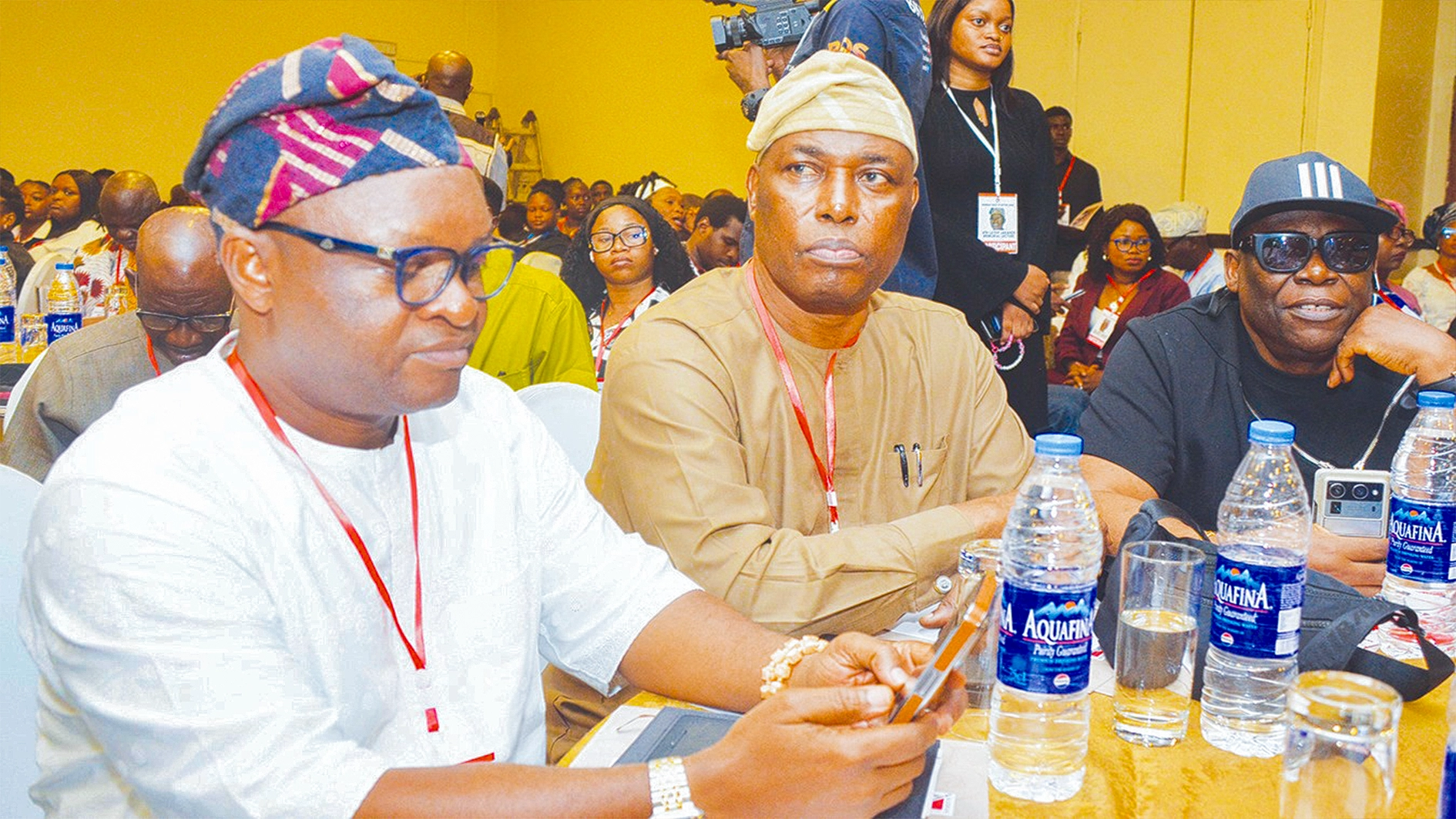
With the political atmosphere ahead thickening by the day, stakeholders in the media industry have called for credible, transparent, and violence-free elections in 2027. This was the focal point of the 4th Lateef Kayode Jakande Memorial Lecture, where stakeholders converged on Lagos to examine the critical role of the media, the Independent National Electoral Commission (INEC), and voters in deepening Nigeria’s democracy.
Themed: ‘The Media, INEC, Voters and Path to Credible Elections’, the lecture, which was organised by the Nigerian Guild of Editors (NGE), was instituted to immortalise the legacy of first Executive Governor of Lagos State, and one-time Minister of Works, Alhaji Lateef Kayode Jakande, widely regarded as an exceptional leader andmedia icon.
The event, which deviated from the conventional lecture format, attracted a crème de la crème gathering of senior journalists from print and broadcast media, academics, public office holders, and students.
Participants engaged in insightful deliberations on practical strategies on how the longstanding challenges in Nigeria’s electoral system, including vote buying, voter apathy, misinformation, etc can be resolved.
Beyond the conversation on the theme of the event, stakeholders used the occasion to demand that a national recognition should be conferred on the late Lateef Kayode Jakande posthumously in acknowledgement of his lifelong service to the country.
Additionally, there were strong appeals for the renaming of the Lagos State University (LASU) in his honour, citing his enduring contributions to education and human capital development during his tenure as governor.
Speaking at the event, Governor of Lagos State, Babajide Sanwo-Olu, who was represented by the Commissioner for Information and Strategy, Gbenga Omotosho, described the late Alhaji Lateef Jakande as a shining example of loyalty, professionalismand versatility.

He highlighted the enduring lessons from Jakande’s life, noting that the late icon demonstrated how journalists could excel beyond writing and reporting.
“What we are doing today about Alhaji Jakande is a lesson for all of us — a lesson in loyalty, because Alhaji was loyal to the people of Lagos and to his profession,” he stated. “Journalists are not just about writing and speaking; we are also good administrators and can be excellent in public service. Journalism teaches you to do anything as far as you set your mind to it. If you make a journalist a soldier, he will be a better soldier. If you make a journalist a governor, he will be a better governor,” he said.
He pointed out that journalists must not relent in fighting one of the pressing issues confronting the industry which is the proliferation of fake news enabled by technology.
“We as media people have a common enemy in what is going on in the land now — fake news. How do we stop it? How do we make people know that the possession of an Android phone is not enough qualification to be a journalist?” he queried.
He warned about the dual nature of technology, including the growing influence of Artificial Intelligence (AI), saying, “Technology is two-edged. You use it well and it will pave the way for a lot of good things. You misuse or abuse it, it comes back to haunt you. Especially now that we have AI, experts are saying that the way the world is going, it will get to a point that all of us may start to feel the impact.”
Sanwo-Olu welcomed the Federal Government’s planned support for the media in its battle against Big Tech companies that monetise journalistic content without compensation or acknowledgment.
“We all put our financial resources and everything into reporters all over the world to look for news. Then people just take the content because they have the technology to reach anywhere in the world, with no acknowledgement, no payment. This cannot be allowed to continue. I would like all our people to join hands with the Federal Government to see that Big Tech pays the media for whatever content they take. That is the only way we can survive.”
He, therefore, stressed the need for media houses to build strong financial foundations to effectively champion credibility in elections and other national issues.
Delivering the lecture, Professor of Political Science at the Lagos State University, Sylvester Akhaine, lamented the monetisation of politics, elite closure, mediocrity in leadership recruitment, and a high trust deficit that have turned many citizens into mere “subjects” rather than active participants in the democratic process.
He stressed that the media must rise above information overload, fake news, and post-truth politics by prioritising factual reporting, balanced coverage, and public education.
“The task for the media and its practitioners in our electoral ecology besides managing the passionate rhetorics of victors and losers in elections is to moderate the sundry pathologies of the information world. Although, the next test ground is the 2027 general elections, it is not going to be an easy task,” he said.
Citing constitutional provisions, Akhaine urged journalists to uphold government accountability and resist harassment, especially during elections.
Noting that electoral management in Nigeria has had a checkered history, he advocated for greater independence of INEC, calling for the removal of the power to appoint INEC leadership from the executive and placing it with the legislature, as recommended by the Uwais Panel.
He noted that since the commencement of the fourth republic, none of the seven general elections could be said to be have been free and fair. According to him, “they were variously dogged by malpractices that robbed them of any credibility.”
The lecturer emphasised the need for continuous civic education to reduce voter apathy and vulnerability to financial inducements, warning that without active and informed participation, democracy remains hollow.
He further advocated for greater synergy among all stakeholders, urging the media to remain committed to truth and press freedom, while INEC to enhance its autonomy and transparency, and voters to become more active participants.
He noted that if these institutions play their roles effectively, Nigeria’s democratic process can be placed on a firmer footing.
President of the Guild, Eze Anaba, reaffirmed the commitment of the NGE in honouring the memory of its first president, noting his exceptional contributions to journalism and public service.
“The significance of this gathering, like I said, is to honour the first president of the Guild of Editors, set up in 1961, Alhaji Lateef Jakande,” Anaba stated. “Beside the fact that he was the first president, Alhaji Jakande was an outstanding journalist who used his craft, his skill and talent as a journalist to better the lot of the profession. When he got into governance, we all saw what he did in government. He was dubbed the Action Governor of Lagos,” he said.
He added that the Guild decided to institute the lecture series to serve as a moral compass and guardian angel for current and future generations of journalists.
“His achievements should not just be forgotten, so this lecture series is in his honour,” Anaba emphasised.
On the the theme of the event, Anaba stressed the urgent need for the media and the Independent National Electoral Commission (INEC) to work together in ensuring credible polls.
Emphasising the importance of electoral credibility, Anaba warned that any doubt about the integrity of the electoral process would undermine the legitimacy of the government that emerges and erode public trust in democratic institutions.
“As sentinels in the temple of democracy, the media must remain responsible, professional, accurate and fair in the coverage of the electoral process. The media must be above suspicion in its engagement with the electoral body. Likewise, INEC must continue to discharge its constitutional responsibilities with transparency, competence and impartiality,” he added.
He noted that the choice of the theme was to set an agenda for both the media and INEC on how to conduct free, fair and credible elections, stressing that the persistent issues that have plagued previous elections must not be allowed to recur in 2027.
Anaba decried the rising trend of vote-buying and other electoral malpractices, warning that any election lacking credibility would produce a government perceived as illegitimate.
“All we want is a credible election. If an election is not credible, whatever government that emerges is tagged illegitimate or unpopular,” he said. “But if we the media, the electoral umpire work together professionally, fairly and competently, to inform the electorate that your future is in your hands, I’m sure we will have a very good election next year.”
On his part,Chairman of the memorial lecture, Prof. Lai Olurode, paid glowing tributes to the widow of the late Jakande for her immense sacrifices andsupport to her husband during his active years.
“Alhaja Sikirat Jakande supported Lateef Jakande very well in all his services to the media and to Lagos State, in particular. It was a great sacrifice that mama had to make. Alhaji was like a permanent absent husband from his house. For this, I pay tribute to Alhaja for her support,” Prof. Olurode stated.
He also commended the Guild under the leadership of Anaba for sustaining the yearly lecture series, describing it as a consistent and worthy initiative.
Turning to the theme of the event, the former National Commissioner of INEC, said for Nigeria to have free and credible elections, the media must adhere strictly to fair and responsible reportage.
He stressed the critical role of voters, security agencies in delivering credible elections.
He warned the media against indulging in actions that could destabilise the country, noting that Nigeria’s large population makes it unique and irreplaceable.He also called on the media to help correct negative perceptions about public service.
“People tend to say people that serve in government are criminals. The media has a role to play in correcting this mind frame, this wrong perception about service. We are all serving our country,” he said.
Prof. Olurode described credible elections as indispensable to national stability and development.
“You cannot have a substitute for free and credible elections. There is no other way of caging the temperature of a country other than through free, fair and credible elections,” he emphasised. “We are still far away from attaining that, but I think we are doing our best in the country and there should be no relenting.”
Also, in his remarks, the former Managing Director and Editor-in-Chief of The Guardian, Martins Oloja, expressed concern that over how poor understanding of electoral laws is fueling false political expectations.
He urged commentators and media practitioners, who engage in debates on governance and elections to adequately study the laws that govern the country’s democratic process painstakingly so that they don’t misrepresent the electorates.
“I discovered that many of us are not reading the Constitution of Nigeria. Many of us have not even read the current Electoral Act, yet we are talking about electoral matters,” Oloja said.
The event was attended by the widow of the late Jakande, Alhaja Sikirat Jakande, Deji Jakande, Chairman, Odi-Olowo/Ojuwoye Local Council Development Area, Seyi Jakande; while other media icon at the lecture, included figures like founder of Vanguard Newspaper, Pa Sam Amuka-Pemu, among other veterans in the media industry.

