 Follow Us on Google News



 Follow Us on Google Discover
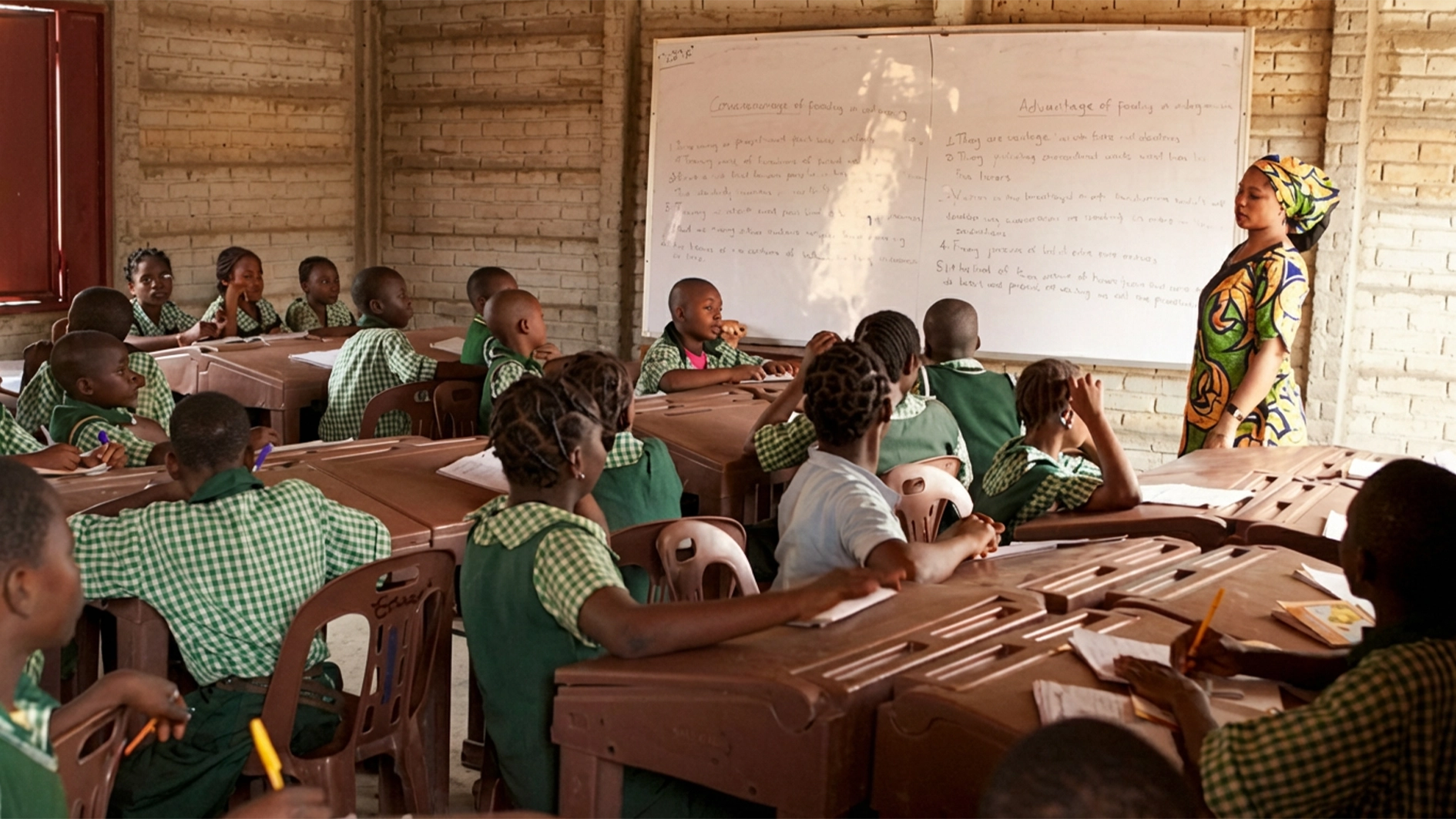
Across the country, alumni associations are increasingly returning to their former schools with more than memories of their schooldays. They are arriving with funds to renovate classrooms, construct buildings, provide desks, equip laboratories and libraries, install solar power, rehabilitate toilets, sink boreholes, award scholarships and support students whose families struggle to meet educational expenses. For many schools, these interventions represent welcome relief from years of inadequate facilities and limited resources. For students, they can mean a safer classroom, access to learning materials and an improved environment in which to study. The recent crisis in King’s College, Lagos brings to light the growing involvement of alumni associations in their alma mater and it presents two realities. On one hand, it demonstrates the power of community participation, solidarity and a commitment to giving back. On the other, it raises questions of inadequate government funding, delayed project implementation, poor maintenance and weak accountability in the running of schools, as the burden of sustaining public schools is transferred to private citizens, writes GBENGA SALAU.
For many Nigerians, the schools they attended hold memories of friendships forged, lessons learned and dreams nurtured. Years after leaving those classrooms, some former students are returning, not merely to reconnect with old classmates, but to rebuild the institutions that helped shape their destinies.
Across the country, alumni associations are mobilising resources to renovate classrooms, equip laboratories, provide learning materials and restore facilities weakened by years of neglect.
Last week, Government College Ibadan Old Boys Association (GCIOBA) had it’s reunion in Ibadan, where the association unveiled it’s projects for alma mater. It currently manages major infrastructure upgrades, teacher welfare programmes and free education policies under a 25-year management MoU with the Oyo State Government.
From modern learning facilities and refurbished laboratories to sports infrastructure and improved accommodation, the Government College Ibadan Old Boys’ Association is turning its shared heritage into investments for future generations.
The projects inaugurated by the Governor of Oyo State, Engr. Seyi Makinde, reflected the association’s approach to sustaining the school’s legacy through investments in education, sports, accommodation, technology and other essential facilities.

Among the projects were a 270-capacity Computer-Based Test (CBT) Centre for technical education executed by the 1976 Set; the GCI Green Renaissance Project, which includes improvements to the Agricultural Department and laboratory; a hockey pitch and pavilion donated by the Babalakin family; and a tennis and practice court provided by the 1986 Set.
Other facilities included the Jude Bademosi Cricket Oval, Imoyosi House, an expanded Lakeland Area Hall, a new dormitory and the Vice Principal’s Lodge, a project of the 1966 Set facilitated by the Imoyo family through Tunde Imoyo.
The school also benefited from a refurbished National Youth Service Corps (NYSC) lodge, a campus-wide Wi-Fi network, a command and control centre, refurbished chemistry and physics laboratories, and a five-a-side football pitch.
For GCIOBA President, Dr Wale Babalakin, the partnership between the association and the Oyo State Government has enabled the old boys to improve infrastructure, support learning and preserve the school’s traditions for future generations.
In 2021, the 1983 Set of the Anglican Grammar School, Iju/Itaogbolu, Akure North, Ondo State completed the renovation of science laboratories for the school, as their first Corporate Social Responsibility (CSR) project to mark their second reunion.
President of the Set, Prof Christopher Rotimi Falegan, said the laboratory was picked as the first project because the building was in a dilapidated condition.
Falegan said: “The project was done owing to the immediate need of the school when the principal was contacted. The project cost N1.3 million.”
Also, Festac Grammar School Class of 98 Alumni Association (FGSCAA) renovated and equipped a Senior Secondary School science laboratory at Festac Grammar School to support Biology, Physics and Chemistry practical learning. It commenced work in October 2023, and completed the project in 2024. The renovation included new furniture, laboratory apparatus, equipment and teaching charts and learning materials for biology, physics and chemistry practicals, spending about N2 million.
Similarly, the Annunciation Catholic College, Irrua Old Boys Association (ACCIOBA) Global President, Dr Joseph Ohens, recently said that the association has spent about N3.5 billion rebuilding infrastructure in the school, including classrooms, laboratories, hostels, and internal road networks. He disclosed that the institution had deteriorated significantly over the years, to the point of having only a principal and three teachers for more than 800 students.
Ohens said the intervention by old boys was driven by a sense of responsibility to support the institution that laid the foundation for their careers and personal development.
In addition, as part of activities celebrating 40 years it graduated from Lagos African Church Grammar School, Ifako, the 1983 Set presented and unveiled a N10 million modern Introduction To Technology Laboratory to the school.
Also, the alumni of the Ewutuntun Grammar School Old Students Association recently unveiled a new administrative building, principal’s office, and four classrooms equipped with modern furniture for its senior secondary school students.
President of the association, Adekunle Jaiyesimi, speaking on the interventions, stated that the alumni embarked on the projects after discovering the poor state of the principal’s office during a visit.
He disclosed that the association raised about N65 million for the construction and furnishing of the new facilities. Jaiyesimi added that the association plans to provide laptops, desktops, and modern printers to enhance digital learning within the school.
Also, old students of Community Secondary School, Amachalla (CSSA), Enugu-Ezike, Igbo-Eze North Council of Enugu State recently handed over a fully refurbished hall to the school authority. The students, it was said, were particularly happy because it was feared that the West African Examination Council (WAEC) and the National Examinations Council (NECO) would have withdrawn the accreditation of the school as a centre for Senior School Certificate Examinations over the dilapidated state of the facility. This is because the refurbished hall serves partly as an examination hall for students. And before the Alumni embarked on the refurbishment, both examination bodies were said to have warned the school authorities of the impending withdrawal of accreditation on account of the poor state of the hall.
The infrastructure challenge exists alongside a wider crisis of access to education and foundational learning.
UNICEF Nigeria reported in September 2024 that 10.2 million primary-school-age children and 8.1 million junior-secondary-school-age children were out of school. The organisation also reported that 74 per cent of children aged seven to 14 lacked basic reading and mathematics skills. These figures underline the scale of challenges facing the education system: improving buildings and providing laboratory equipment are important, but schools also need adequate teaching, learning resources and sustained support to help children enrol, remain in school and acquire essential skills.
In a chat with The Guardian, the Chairman of the alumni association of Community Secondary School, Amachalla (CSSA) Enugu, Mr. Aniagboso Eze, revealed that the school was in a very deplorable condition, with the examination hall completely dilapidated, stating that it was the condition of the school that birthed the alumni association, because the association was not in existence before the intervention.
According to him, what prompted the project was that some old students heard the school was about to lose its status as a centre where WAEC and NECO examination are written because of the poor state of its hall and they escalated it.
“The association has raised about N25 million and has spent over N17 million over the period of six years. The alumni has successfully renovated the exam hall and is currently undertaking another project which is the fencing of the school.”
He also revealed that the alumni has been awarding scholarship with 48 students benefiting from the gesture. “The funding for these projects and activities has been purely free will donations from members of the alumni,” Eze stated.
The association’s ongoing fencing project also reflects a broader school-safety concern.
According to UNICEF Nigeria, a 2023 assessment of the implementation of the Minimum Standards for Safe Schools found that states met an average of only nine out of 21 assessed standards.
Just 14 per cent of schools met basic safety requirements, including perimeter fencing and lockable gates. The figures provide a national context for the kind of infrastructure intervention being undertaken at Amachalla, although they do not establish the specific safety rating of the school.
Nevertheless, this also showed that the scale of the challenge extends beyond individual schools. Data on the Federal Ministry of Education’s Nigeria Education Statistics portal for the 2024/2025 school year put the number of learners at about 39.8 million, with 725,778 classrooms reported nationwide. The portal recorded a learner-to-classroom ratio of 60.1, compared with the Universal Basic Education Commission’s standard of 35 learners per classroom, while the ratio of learners to toilets stood at 65.9, compared with a benchmark of 30. This points to pressure on classroom capacity, although the figures should be interpreted with caution. This is because only 124,066 of the 230,844 schools listed on the portal had submitted data, representing a reporting rate of 53.7 per cent. The figures, nonetheless, provide a national context for the infrastructure challenges that alumni associations are attempting to address, but do not establish the condition of every public school.
Similarly, UNICEF reported that only 14 per cent of schools met basic safety requirements, including perimeter fencing and lockable gates, according to the 2023 Minimum Standards for Safe Schools implementation assessment. The assessment evaluated 21 safety standards across states to ensure a protective environment, finding that states met an average of only nine standards.
A subsequent audit by the Universal Basic Education Commission (UBEC) confirmed that 78 per cent of public schools still lack perimeter fencing and 65 per cent operate without security guards, making them vulnerable to security threats like mass abductions
While the interventions by alumni groups reflect a powerful sense of gratitude and collective responsibility, behind these acts of goodwill lay a deeper concern: why are former students increasingly required to shoulder the burden of providing basic educational infrastructure that government should guarantee? Their generosity is helping schools survive, but it also exposes the consequences of prolonged underinvestment in public education and whether their generosity is increasingly becoming a substitute for government action, and what that means for the future of public education in Nigeria.
A public policy and advocacy specialist, Adewale Adeduntan, stated that when old boys and girls have to fix leaking roofs, buy desks, or employ teachers for the schools under the PTA teachers because the state has abandoned its constitutional duty, it is not “public-private partnership,” it is public service’s failure with private bandages.
He maintained that Alumni are not saviours; they are citizens forced to do government’s abandoned homework.
Adeduntan also sees danger ahead if the trend continues unabated. “The danger is that we will start treating charity as policy. It lets government off the hook, creates dependency on the goodwill of a few successful graduates, and risks projects that look good on social media but collapse the moment the alumni lose interest or run out of money. Good intentions without systems become expensive photo-ops,” he argued.
Adeduntan added that the constant alumni interventions reveal a government that talks loudly about “human capital development” while starving the classroom and the teachers or lecturers as the case may be. “Nigeria still limps along at roughly six per cent of the national budget for education which is far below UNESCO’s 15-20 per cent call while many states cut education’s share even as their revenues jumped astronomically lately. That is not commitment; that is calculated neglect dressed up in celebrated budget speeches.”
The infrastructure challenges facing schools are part of a broader problem of education financing.
In a report published in September 2026, UNICEF Nigeria found that education expenditure as a share of total government spending declined from 9.3 per cent in 2015 to 3.6 per cent in 2023. The report contrasts this with the internationally cited benchmark of 15–20 per cent. It also noted that Nigeria’s earlier commitment to spend 4 per cent of gross domestic product on education by 2025 and maintain that level through 2030.
Yet, the consequences of inadequate and inefficient financing extend beyond buildings. UNICEF’s account of the 2022 National Assessment of Learning Achievement in Basic Education reported that 49 per cent of Primary 3 learners, 67 per cent of Primary 5 learners and 86 per cent of Junior Secondary 2 learners did not attain minimum proficiency in mathematics. In 2021, about 30 per cent of learners who reached Junior Secondary 3 lacked foundational reading skills expected to have been acquired in Primary 2 or 3.
Meanwhile, while renovating classrooms, providing equipment and awarding scholarships may address specific needs, proposals for alumni associations to assume a more direct role in managing public schools have generated a different set of concerns.
Recently, there was a crisis at King’s College, Lagos, following the Federal Government’s proposed 35-year concession of the school’s management to the King’s College Old Boys’ Association (KCOBA) under a Public-Private Partnership (PPP) arrangement. The proposal is intended to enable the alumni association to finance, rehabilitate, modernise and maintain the historic institution, whose infrastructure has reportedly deteriorated. The plan sparked strong opposition from school workers, labour unions and some parents, who fear it could amount to privatisation and undermine public control of the institution. The old boys’ association, however, insisted that the school is not being sold, rather promising to improve its facilities without increasing school fees.
The dispute escalated into protests and confrontations at the school gates disrupting school activities and triggering wider industrial action across federal unity colleges.
The Minister of Education, Tunji Alausa, explained that under the concession agreement, KCOBA would be responsible for financing, rehabilitating, modernising, operating and maintaining the school, while the Federal Government would retain legal title and its statutory, regulatory, monitoring, inspection and enforcement powers.
“The purpose of the arrangement is to mobilise the investment and management capacity required to strengthen this important national institution,” the minister said.
Alausa said the concession was developed under the established PPP framework and subjected to technical, economic, financial, legal, environmental and social assessments, value-for-money analysis, fiscal-impact assessment, risk allocation and commercial structuring before securing the necessary regulatory and Federal Executive Council approvals.
Alausa said the concession was principally designed to address the significant infrastructure and operational requirements of the 117-year-old institution and secure its long-term sustainability.
While proponents may argue that such arrangements would improve efficiency, mobilise resources and introduce better management practices, critics fear they could allow government to evade its responsibilities further, weaken public accountability and open the door to the commercialisation of institutions established to provide affordable education for all. There are also concerns that schools under alumni-led management could eventually impose higher fees or adopt policies that disadvantage children from low-income backgrounds, while institutions without wealthy, influential or well-organised alumni remain trapped in deteriorating conditions.
Commenting, an Educationist and researcher, Dr Peter Ogudoro warned that policymakers risk creating more problems when they respond to institutional failures without properly examining their underlying causes.
“What we tend to do in Africa is create a bigger problem as we try to solve a small problem. And we are not very good at thinking through our problems and establishing their root causes before we start applying solutions,” he said.
Ogudoro, therefore, questioned the reasoning behind proposals for alumni associations to take over the management of a federal school, arguing that changing the identity of those in charge would not necessarily resolve the weaknesses in school administration.
“The people who will manage it after the alumni have taken over are also Nigerians. So why do we think that the Nigerians who are managing it under the auspices of the government are inferior to the ones who will take over when the alumni people come?” he asked.
In his view, the more fundamental issue is whether those managing educational institutions possess the professional, administrative and leadership skills required to run them effectively.
Ogudoro acknowledged that school administrators often lack adequate professional management and leadership training. However, he argued that the appropriate response should be to strengthen their capacity rather than automatically transfer public institutions to alumni associations.
“If you think that the people running the school are not competent individuals, you provide them the skills. How do you provide them the skills? You send them for training,” he said.
He added that individuals and corporate organisations within and outside Nigeria could help provide the expertise needed to improve school management without requiring a transfer of control from government to alumni bodies.
For Ogudoro, the distinction between supporting a public institution and assuming control of it is critical. He stated that Alumni can contribute funding, expertise, equipment and professional support while the government retains its responsibility for the institution.
He also questioned whether some proposed management arrangements might create opportunities for private interests to benefit from public assets under the guise of philanthropy.
“There may be interested parties who may want to make money using the argument that they are trying to help,” he said, warning that some individuals could use alumni platforms to gain control of public infrastructure and institutions for their own benefit.
Ogudoro’s concern is that arrangements presented as social enterprises could eventually serve interests beyond the stated goal of improving education. He argued that proposals to transfer management should therefore be subjected to careful scrutiny, particularly where the financial and governance arrangements are unclear.
He also drew attention to the possibility that schools under alumni-led management could begin operating more like private institutions, with increased fees that could place them beyond the reach of students from low-income households.
“When they intervene, they are going to run these places as private organisations, increase fees, and make those places become institutions that marginalise individuals from marginalised communities who can no longer afford them,” he said. “I don’t think that’s what Nigeria deserves to experience now,” he further said.
His argument raises an important question about the purpose of public education: should efforts to improve school quality change the nature of public institutions in ways that could limit access for the very communities they are meant to serve? For a country where many families already struggle with the costs associated with schooling, any arrangement that introduces additional financial barriers could undermine the principle of equitable access to education.
Ogudoro’s criticism extended beyond the management of individual schools to the political and institutional factors that, because in his view, contribute to the deterioration of public education.
He argued that a major problem was the disconnect between political leaders and the experiences of ordinary pupils and students in government schools. According to him, many political office holders do not send their children to regular Nigerian public schools. Instead, some educate their children abroad, while others enrol them in international schools in Nigeria that prepare students for foreign examinations.
He stated that this separation means some decision-makers do not directly experience the conditions confronting pupils and students in the public education system. The implication, he therefore said, is that those responsible for education policy may lack the personal exposure that would compel them to respond more urgently to the challenges faced by ordinary schools.
Adeduntan also argued that if government is not made to adequately take up its responsibilities, it could widen inequalities between public schools. “This is because schools with rich, organised, and well-connected alumni will get laboratories and solar power. Schools whose graduates are still hustling in the informal sector will keep having leaking roofs and empty libraries. We will end up with a two-tier public system, one for the connected and one for the forgotten. That is inequality with a smile.”
The implications of unequal access to educational resources extend beyond school infrastructure. UNICEF reported in September 2024 that 10.2 million primary-school-age children and 8.1 million junior-secondary-school-age children were out of school in Nigeria. It also found that 74 per cent of children aged 7–14 lacked basic reading and mathematics skills. Although these figures do not directly measure disparities between schools with wealthy and less-affluent alumni, they illustrate the scale of the country’s education challenge
The wanting to take over the management of Kings College by the old boys was partly as a result of sustainability as the group complained that after its interventions, the projects become dilapidated in months due to poor maintenance and poor supervision. Adeduntan noted that issue around sustainability is key because after intervening a serious government should be able to maintain the facilities. But that seems not to be the case.
“When old students complete the projects, will old students continue to run the projects for sustainability. It is good to assist, it is good to give back but how do we ensure government continues to take up its responsibilities so that we do not continue to over pamper those in government who seems uncommitted to their responsibilities.”

