
 Get Guardian on Google
* Says only verified polling unit results will be uploaded to IReV
* Bandits behind plot to attack NYSC members, disrupt polls
* INEC to receive outstanding election funds by November end
* Commission battles over 300 lawsuits, vows to obey court order on Atiku’s eligibility
* CAIDOV wants workers who compromised electoral process prosecuted
The Independent National Electoral Commission (INEC) has unveiled fresh measures to prevent a recurrence of the challenges that marred the 2023 general elections. The commission assured Nigerians that only verified results from polling units will be uploaded to its Results Viewing Portal (IReV) ahead of the 2027 polls.
Already, the Commission has fixed November 28, 2026, for a nationwide mock accreditation and voting exercise ahead of the 2027 general elections to test upgrades to its Bimodal Voter Accreditation System (BVAS) and electronic results transmission.
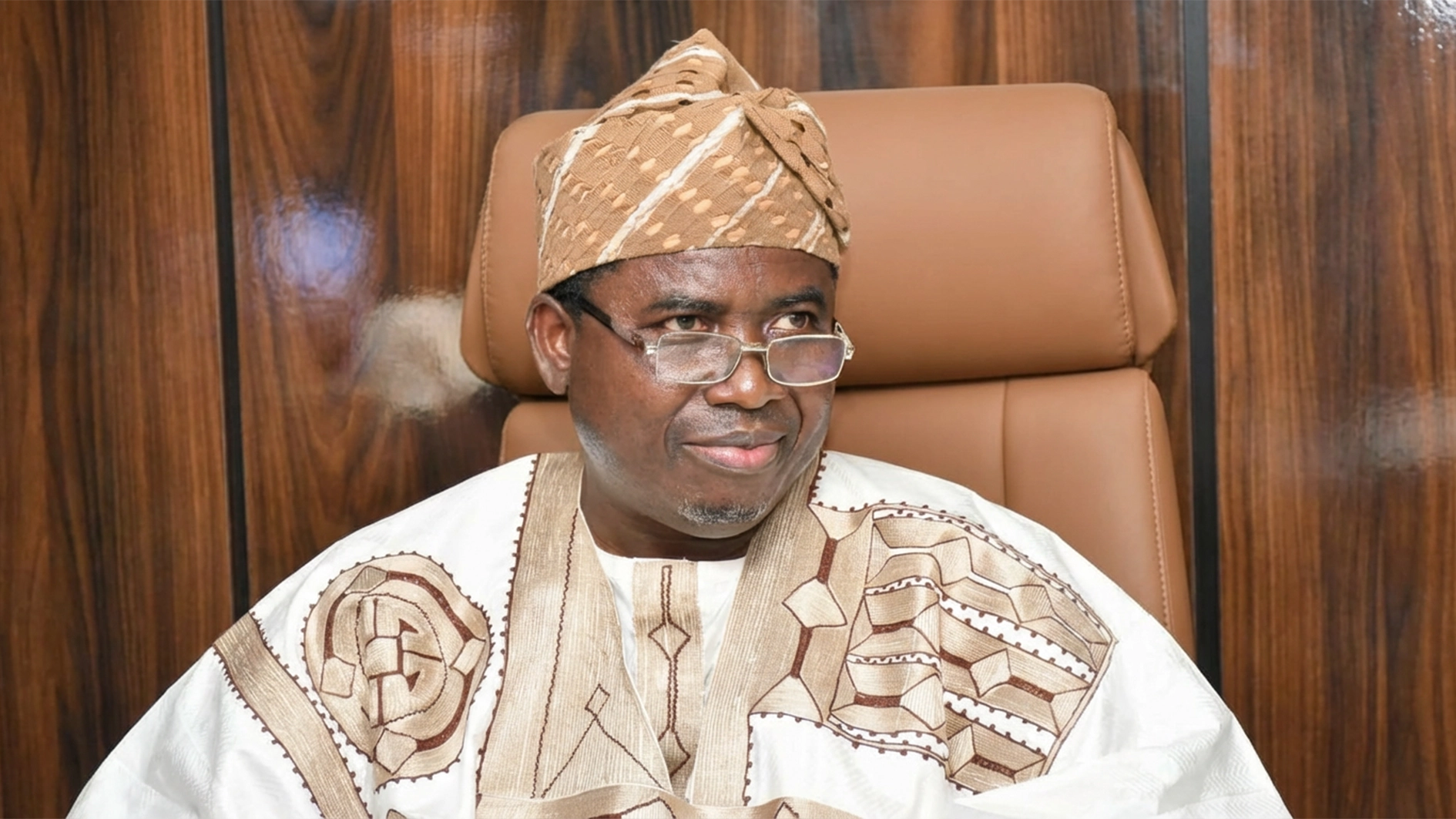
INEC Chairman, Prof. Joash Amupitan, disclosed this on Thursday while speaking on the Commission’s preparations for Nigeria’s 2027 general elections during a dialogue at Chatham House in London, organised in partnership with the Kimpact Development Initiative, on the theme, “Nigeria’s 2027 Elections: Democratic Trajectory and Regional Stability Beyond the Ballot.”
He said the commission had identified polling centres as the major source of result-management problems during the 2023 elections and was introducing additional checks to ensure that figures were properly verified before transmission. Amupitan said the Commission had learnt important lessons from the previous election and was determined to strengthen public confidence in the electoral process.
According to him, the Commission is introducing a new verification process to ensure polling unit results are verified by party agents before they are uploaded to IReV.
Responding to a question on why Nigerians should trust him to conduct credible elections, Amupitan cited the outcomes of recent off-cycle elections, particularly those in Anambra and Osun states, as evidence of improvements under his leadership.
Since taking over, he said INEC had conducted the Anambra governorship election, the Federal Capital Territory (FCT) Area Council elections, the Ekiti and Osun governorship elections, as well as 16 by-elections to fill vacancies in the National Assembly and state Houses of Assembly. He explained that the commission had treated each election as an opportunity to identify operational weaknesses and improve subsequent exercises.
According to him, Anambra and Osun were particularly challenging states because of their history of inconclusive governorship elections. He recalled that the Anambra governorship election in 2021 took about five days to conclude, but the recent exercise was completed much faster.
Amupitan, however, acknowledged that the credibility of the 2027 elections would depend not only on the outcome of off-cycle polls but also on the transparency of the entire electoral process.
He identified insecurity, logistics and result management as three major areas the commission was prioritising, saying INEC was working with security agencies to ensure that election materials and personnel reached polling units on time.
On result management, the chairman said the commission’s review of the 2023 elections showed that some of the major challenges occurred at collation centres, rather than at polling units. He said INEC had consequently introduced additional safeguards to ensure that results were checked for accuracy at polling units, in the presence of party agents, before they were transmitted to the INEC Result Viewing Portal (IReV).
“We decided that whatever is going to be uploaded from the polling unit is accurate. Because in 2023, there were all manner of things: results that were not correct, results that were full of over-voting, while you were uploading on the IReV. But now we have devised a safeguard.
“The moment it goes to IReV, you can believe what you see on IReV. And then this issue of inconsistency will be removed so that what will now be done at the collation will just be a matter of formality,” he said.
Amupitan also urged Nigerians to trust his leadership, acknowledging that the controversies surrounding the 2023 presidential election had significantly damaged public confidence in the electoral commission. “First and foremost, let me speak about what happened in 2023, which resulted in a significant trust deficit for INEC—damage so large that the Commission has not yet fully recovered from it,” he said.
The chairman also disclosed that security intelligence had uncovered a plot by bandits to attack INEC ad hoc personnel, particularly members of the National Youth Service Corps (NYSC), in a bid to disrupt the 2027 elections. He said the plot was uncovered through intelligence gathered under the Inter-Agency Consultative Committee on Election Security and the suspects were being prosecuted at the Federal High Court by the Department of State Services (DSS).
As part of the preparations, Amupitan announced that INEC would conduct a nationwide mock accreditation and voting exercise on November 28 to test its readiness for the 2027 presidential election. The exercise, he explained, would allow the commission to test its equipment and procedures, particularly voter accreditation and electronic transmission of results, before the general elections.
On concerns about his neutrality following allegations linking him to a controversial X account, the INEC chairman insisted that he had never operated the account and said the matter had been reported to security agencies. “I state here again that I have never operated an X account,” he said.
He also dismissed allegations that his previous legal work in a political dispute meant he would be biased in the discharge of his duties as INEC chairman, arguing that he had acted professionally as a lawyer before his appointment.
The INEC chairman further disclosed that the commission had yet to receive the full funds required for the 2027 elections, although he said assurances had been given that the outstanding balance would be released before the end of November. He explained that part of the outstanding funds was needed to pay ad hoc election personnel, adding that the commission had already commenced recruitment for the exercise.
On allegations of irregularities in the voter register, including claims of an 85 per cent increase in registered voters in a ward in Ebonyi State, Amupitan said INEC would examine the complaint and the correspondence submitted to the commission. He said the Electoral Act provided for objections and complaints after the continuous voter registration exercise, adding that aggrieved persons could request certified copies of relevant portions of the register.
ADDRESSING another major challenge confronting the Commission ahead of the 2027 polls, the INEC Chairman disclosed that it is currently facing more than 300 pending court cases, raising concerns over the impact of prolonged litigation on preparations for the 2027 general election. He, however, assured that INEC would abide by any court decision on the eligibility of former Vice-President Atiku Abubakar to contest the 2027 presidential election.
Amupitan was responding to a question on whether Atiku would be eligible to contest if he failed to overturn the court judgment affecting the leadership of the African Democratic Congress (ADC), the platform on which he intends to pursue his presidential ambition. He said the commission was constitutionally bound to obey court orders, particularly decisions of the Supreme Court, irrespective of their political implications.
“If he eventually fails, well, I’m obligated under Section 285 of the Constitution of Nigeria to obey every court order, especially if it is from the Supreme Court,” he said.
Amupitan, however, expressed concern over the growing number of lawsuits involving the commission, noting that unresolved disputes could complicate its preparations for the forthcoming elections. “Some of those issues we have with court cases, over 300 cases hanging on the neck of INEC, and elections is just about 66 days away,” he said.
He explained that INEC had earlier advocated an accelerated hearing of the ADC leadership dispute, arguing that pre-election matters should be resolved early enough to enable the commission to plan its logistics and other electoral activities.
According to him, the commission had initially acted in compliance with a court directive to suspend action and await the outcome of the legal process, but the dispute subsequently proceeded to the appellate court.
The INEC chairman called for reforms to the handling of pre-election disputes, proposing that such cases should be concluded at least six months or one year before a general election.
Furthermore, he said the commission had already commenced procurement of sensitive election materials, warning that unresolved court cases could create complications for its preparations.
Amupitan also lamented that INEC often bears the public backlash arising from implementing judicial decisions, even when the commission is merely complying with court orders. “The danger is that whenever there is such decision, and it’s you to now implement, you become the problem. The problem now is transferred unto you,” he said.
Corroborating the INEC Chairman on the commencement of the distribution of non-sensitive election materials to some states, INEC National Commissioner, Prof. Rhoda Gumus, disclosed that the Commission had completed nine scheduled activities and was stepping up preparations following an assessment of its readiness across the six geopolitical zones. She made this known in Abuja during a meeting with a delegation from Kenya’s Independent Electoral and Boundaries Commission, led by the country’s High Commissioner to Nigeria, Isaac Parashina.
She explained that the assessment involved visits to the six zones to evaluate preparations, identify challenges and determine areas requiring attention ahead of the elections.
“We have six zones in Nigeria. The purpose is to go around the zones to see how prepared we are, assess what the zones have put in place, the challenges and what to do,” she said.
The national commissioner said the commission was satisfied with the progress recorded, adding that the distribution of non-sensitive materials had begun in some zones. “Right now, all non-sensitive materials are almost ready. In fact, today as we speak here, the non-sensitive materials have been lifted to some zones now. I spoke to the commissioner in charge of that,” Gumus said.
She also disclosed that the production of Permanent Voter Cards had been completed, with most states receiving the first and second batches, while collection was ongoing. According to her, procurement and deployment of the Bimodal Voter Accreditation System were also ongoing.
Speaking, Parashina said the delegation’s visit was aimed at learning from Nigeria’s electoral experience ahead of Kenya’s August 2027 general elections. He noted that both countries faced similar electoral challenges despite differences in population and geographical size. The envoy said the delegation was particularly interested in Nigeria’s experience with diaspora voting and arrangements for special interest groups.
Parashina described Nigeria’s electoral experience as important to other African countries, saying Kenya was interested in strengthening its relationship with INEC. “The success of Nigeria remains a great success to Kenya and indeed to the continent. Everyone is looking at what Nigeria will do because it’s the biggest democracy in Africa,” he said.
MEANWHILE, the Centre Against Injustice and Domestic Violence (CAIDOV) has called on the Federal Government, INEC and security agencies to ensure that 54 officials found to have compromised the electoral process are investigated and prosecuted. The centre said the officials must face the full wrath of the law, warning that failure to punish those involved in electoral misconduct would further undermine public confidence in Nigeria’s electoral system.
In a statement issued in Lagos on Thursday and signed by its Executive Director, Gbenga Soloki, CAIDOV described the revelation involving the 54 officials as a damning indictment of the country’s electoral system. The organisation said the development confirmed longstanding concerns that some officials entrusted with conducting free, fair and credible elections were allegedly undermining the democratic process for selfish and partisan interests.
CAIDOV argued that identifying, querying or redeploying the affected officials would not be sufficient, insisting that those found culpable must be investigated, prosecuted and punished in accordance with the law. According to the group, compromised electoral officials pose a serious threat to democracy because they can manipulate election results, disenfranchise voters and undermine the will of the electorate from within the system. It said the officials must not be shielded by political godfathers, quietly retired or transferred to other states to evade accountability.
It also called for their immediate suspension pending thorough investigations by the Nigeria Police Force and the Economic and Financial Crimes Commission (EFCC), followed by prosecution under the Electoral Act where evidence establishes criminal liability.
Beyond the prosecution of the affected officials, CAIDOV called for a comprehensive overhaul of INEC, including a review of its recruitment, training and staff deployment procedures.
The group also demanded adequate protection for whistleblowers who exposed the alleged compromise, saying they should not be subjected to intimidation or victimisation for speaking out.