 Get Guardian on Google
“What passing bell for those who die as cattle?
“Only the monstrous anger of the guns.”
A war poet, Wilfrid Owen (who himself was a soldier and died not long before the Armistice)
Wilfred Owen and other WW 1 fallen heroes must be turning in their graves right now as the world shifts its attention towards Remembrance Sunday (today), the Sunday nearest to November 11, 1918. For this generation, 11th hour of November 11 is known as the day the guns fell silent in World War I, and a minute of silence is held in remembrance of fallen heroes.
It was the day the German Army, on one hand, and the British Allied Forces and other powers signed armistices that marked the end of the four-year war fought on the battlefields of France. That explains why Remembrance Sunday is so significant to countries around the globe. And for Nigeria as a nation, given its role in WW1 and how that event helped shape the country to this day, Remembrance Sunday cannot be swept under the carpet.
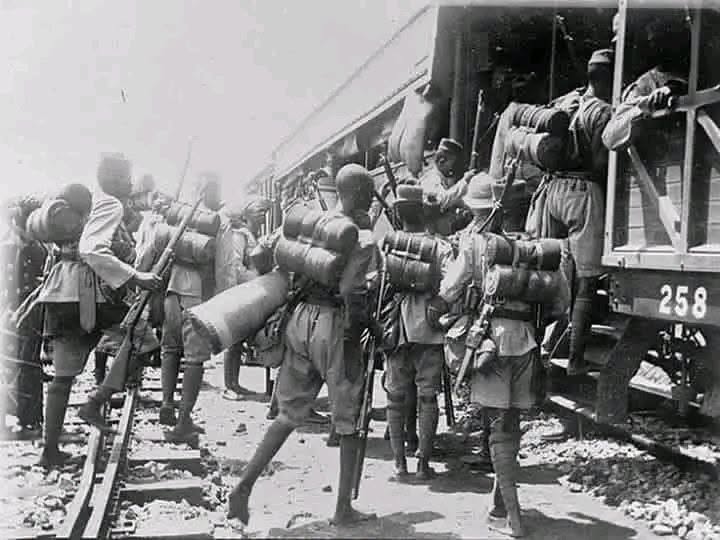
As a colony of Britain, Nigeria was part of the British Empire. The recruitment and conscription of combatants and non-combatants in Nigeria during World War I represented an unprecedented mobilisation of the country’s labour force. The Nigeria Regiment, which was a British Colonial Auxiliary Forces unit of the Royal West African Frontier Force, was formed through the amalgamation of the Northern Nigeria Regiment and the Southern Nigeria Regiment on 1 January 1914. The regiment served throughout the First World War in the Cameroons (1914-1916), and in East African Campaign (1916-1918).
 History books had it that it was only eleven years since British troops had entered Kano when the War began in 1914. Nevertheless, although they had other reasons for challenging the colonial government, Nigeria’s newly developing educated elite, based mainly in Lagos and composed of journalists, lawyers and other professionals, did not oppose Nigeria’s participation in the War, and expressed loyalty to Britain. They hardly had any choice, because there was censorship – as there was in Britain itself. Not less than 17,000 combatants, 2,000 enlisted carriers, and around 35,000 non-enlisted/forced carriers (including women and children) served in these campaigns by the end of the recruitment drive.
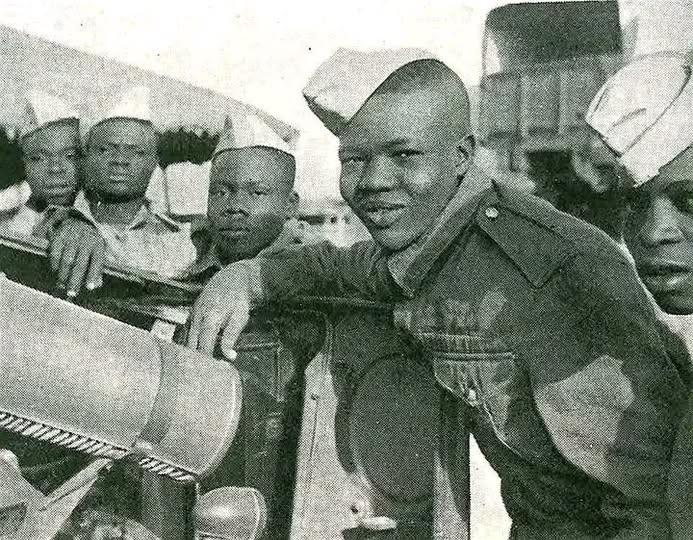
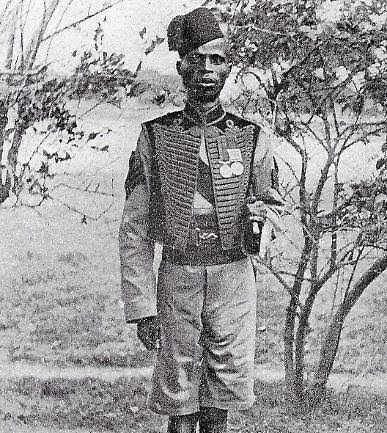
The British colonies had no choice but to fight in WW1, and the Nigerian Regiment fought Germany in Cameroon and Tanganyika (now Tanzania). One of their officers, Brigadier-General Cunliffe, described the Nigerian Regiment as a group of barefooted troops not found wanting either in discipline, devotion to their officers, or personal courage. This was evident when figures like Regimental Sergeant-Major Belo Akure was honoured with the Distinguished Conduct Medal (DCM) and Military Medal (MM) for his dedication and bravery during the Cross River, Cameroon, and East African campaigns.

MAJOR BATTLES
While in Cameroon, the Nigerian Regiment demonstrated its strength in the Battle of Tape in August 1914, forcing Germany’s withdrawal after British-led Nigerian forces overran and took over the German border post near Garua after initial three-day failed assault between August 29-31,1914 pushed the British-led Nigerian army back with heavy losses. The battle of Nsanakong (August 30 – September 6, 1914) also pushed the British-led Nigerian soldiers back to the border after a heavy German counter-attack. The battle of Yaounde (June 29, 1915) also saw Nigerian and Allied units pushed south after Garua and captured Ngaundere. Yaounde was later captured after the British-led Nigerian soldiers fought like Trojans alongside French and Belgian columns to capture the German colonial capital.
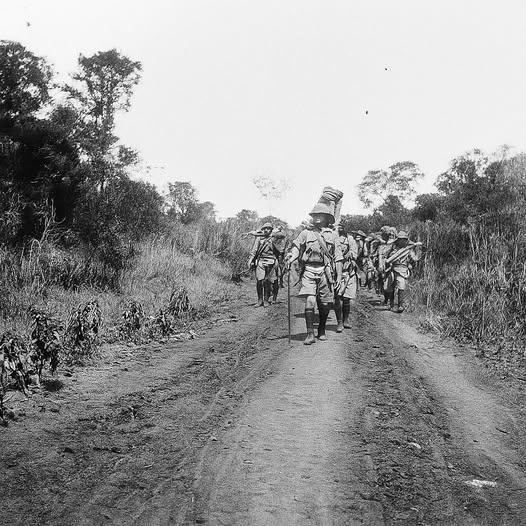
Buoyed by the success stories of Cameroon, the Nigerian Regiment was shipped to East Africa under the watchful eyes of Colonel Paul von Lettow-Vorbeck. The Units of the 1st and 2nd Battalions of the Nigerian Regiment combined hard work with versatility full of common sense to engage the German Schutztruppe in Behobeho / Bweho-Chini. The Regiment also secured another success story after it served as mobile shock troops chasing German forces through dense East African terrain and into Mozambique.
History has it that over 5,000 to 10,000 Nigerian soldiers and carriers serving under the British West African Frontier Force and Nigerian Regiment died in WW1 after most of them succumbed to series of diseases and harsh environmental conditions rather than direct combat.
IMPACT ON RETURNEES
It must be said that a few returnee soldiers had their mental horizons extended based on what they had experienced in WW1. Not only that, the war deepened their confidence to a large extent. These soldiers went on to share their personal experiences with families and friends. As a result, this positively impacted the outlook and expectations of the Nigerian population. It was in the aftermath of the First World War that the modern nationalist movement began to emerge. WW1 claimed the lives of 10,000 Nigerian soldiers and carriers, while at least 3,845 Nigerian soldiers paid the supreme price in WW2; hundreds were wounded, and another 13 were declared missing and never accounted for.
As Britain Observe Two-Minute Silence at 11:00 am to mark Remembrance Sunday in commemoration of military and civilian service personnel who have died in World War I and later conflicts, the lessons from WW1 has taught world that that war must not never be encouraged, and that global peace can only be achieved through dialogue.