 Follow Us on Google News
 Follow Us on Google Discover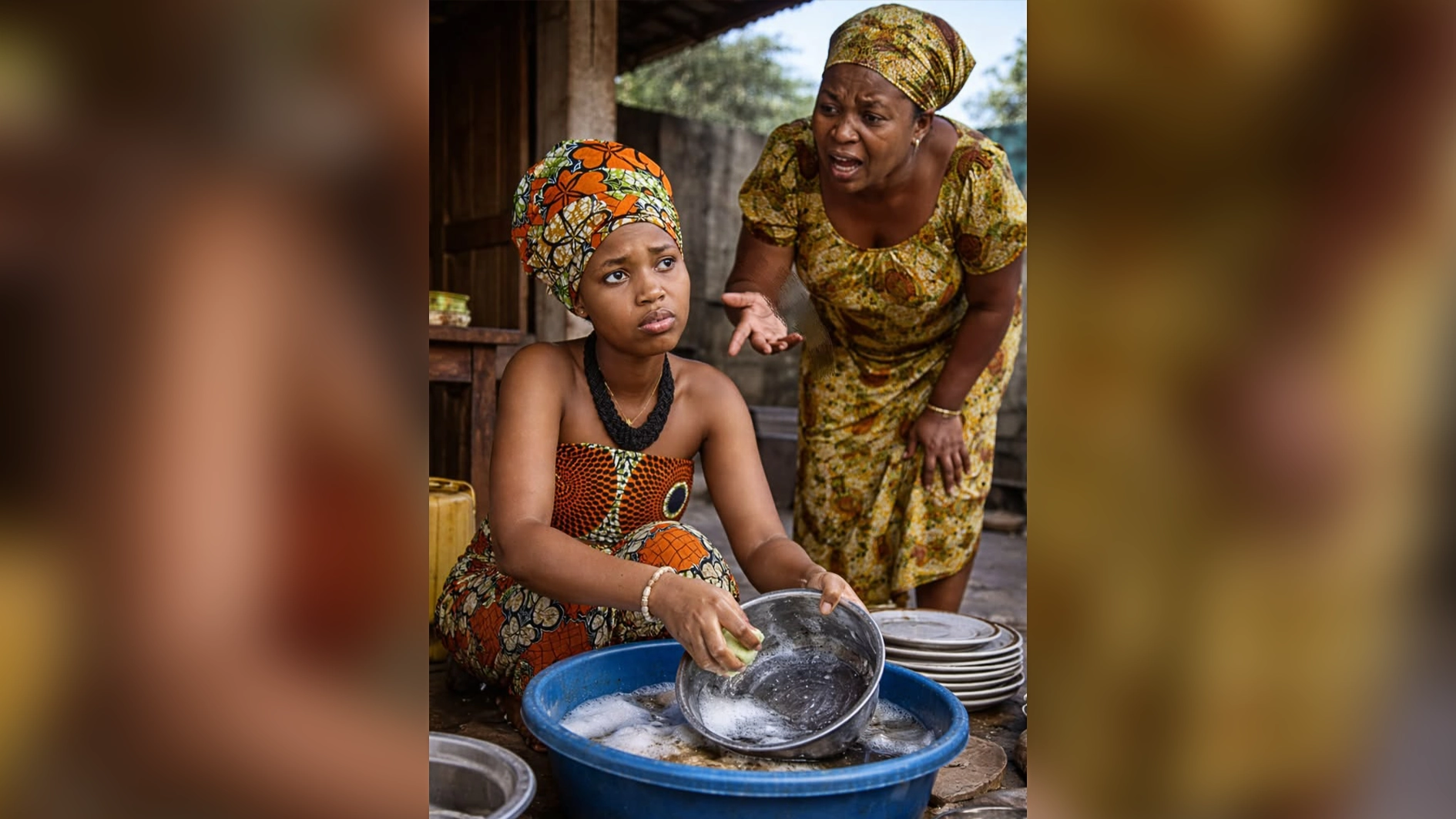
Children don’t choose the circumstances into which they are born. They do not choose their parents, the kind of marriage they had, the financial situation of the home, or the struggles that may follow. Yet, for some children, particularly daughters, the consequences of the difficulties their mothers face become the burdens they are forced to carry from childhood into adulthood.
A daughter is not supposed to be a mother’s second chance, she is not compensation for a failed marriage, she is not a weapon for revenge against men, she is not a financial plan, she is not responsible for completing the dreams her mother abandoned. And she should never have to carry the consequences of decisions made before she was old enough to understand them.
Sometimes, the burden comes through anger and resentment. Sometimes, it appears as neglect, excessive responsibility, financial pressure or constant reminders of the sacrifices a mother has made.
In other cases, a daughter becomes the vessel through which her mother attempts to achieve the life she could not have for herself. The daughter may be loved, but still be made to carry responsibilities she never created and expectations she never asked for.
For a lot of women, motherhood does not begin with an easy life but with heavy responsibilities that comes with several challenges including financial pressures, difficult marriages, broken relationships, absent partners, family expectations and the pressure to provide for children.
Some women learn to live with these experiences and continue raising their children as best as they can while others carry the burden and memories of personal life disappointments that were never properly addressed and project it on their children especially the daughters.

In some cases the situation escalates into a toxic behavioural pattern towards their children as though they are responsible for these disappointments. For others it appears in the advice they give their children, the fears they pass on and the expectations they place on their children forgetting that more often than not a mother is the first life teacher and learning example for kids, particularly the daughters.
Female children learn what relationships, marriage, sacrifice and womanhood truly means from their mother. Thus making everything a mother says and does powerful, even when they are shaped by experiences that happened long before the daughter was old enough to understand them.
Nigeria’s children are already growing up in an environment where violence and psychological aggression are widespread. UNICEF data shows that 90% of Nigerian children aged 1 to 14 experienced physical punishment and/or psychological aggression by caregivers. The figure does not mean all such experiences are linked to maternal trauma, but it illustrates the difficult environment in which many children are being raised.
For some children, however, the burden is not always physical. It can come through the stories they hear, the responsibilities they are given or the emotional conflicts they are expected to carry.
Seeing the world through a Mother’s Experiences
Comfort Ubong has seen this happen through a friend whose experience growing up eventually influenced how she viewed her own marriage. She recalled helping the woman’s husband secure a job at a bank. At the time, the man was working at a private school in Lagos despite being a second class upper university graduate. She felt he could do better and eventually told him about an opening at a bank. The man applied, went through the interview process and got the job. He later told his wife and mentioned Comfort’s role in helping him secure the opportunity. Instead of receiving the news positively, the woman became upset. “She turned it into a fight, Comfort recalled.”
The wife questioned why she had helped her husband get another job without speaking to her about it. When Comfort asked why she preferred her husband to remain in a low-paying job rather than take a better opportunity, she explained the experience that had shaped her thinking.
Growing up, her father had been financially comfortable, but according to her, he did not spend money on her mother. He eventually left them for another woman, leaving her mother to raise the children alone. That experience remained with her especially as her mother never missed a chance while raising the two daughters to remind them about not giving room for men to treat them as their father treated her. The rules for this mother were simple: “don’t marry a man who is financially stable so that he doesn’t leave you as your father left me.” After she got married, her mother warned her not to allow history to repeat itself and to avoid ending up as a single mother like her.
For this woman, keeping her husband from becoming financially successful became the only way of protecting her marriage. She felt the best solution was to keep him from being financially stable so he doesn’t have enough money to spend on another woman,” Comfort said.
This was not necessarily the original experience that was being repeated. It was the fear created by that experience.
Her mother had lived through abandonment and had passed the fear of abandonment to her daughter. Years later, the daughter was making decisions in her own marriage based on a story that had happened to her mother.
This is one way unresolved experiences can travel from one generation to another.
For Adejoke Olakunle, the experience was much more direct. Her parents separated when she was nine. Her mother later remarried and had three children with another man. Adejoke moved into the new household with them, but said she often felt treated differently from her younger siblings.
“There were times she made me go to school without food or money, and then she told me to go and call my father to give me money,” she said.
As Adejoke grew older, she said her mother began blaming her for the problems in her current marriage.
According to her, her stepfather was a womaniser. “Anytime he refuses to come home, my mother turns and blames me that I was the reason her husband has refused to come home.”
Adejoke was around 13 or 14 at the time. For a child, the responsibility was difficult to understand. She was being made to feel responsible for a relationship between two adults and for the behaviour of a man whose decisions were outside her control.
After graduating secondary school, Adejoke said the situation became worse. “It felt like my mother seeing me reminds her of something she doesn’t want to remember,” she said.
Eventually, Adejoke began looking for somewhere else to live. At 16, she moved in with her boyfriend. She would return home occasionally, but said her mother did not ask where she had spent the night or why she had not returned. At 17, after becoming pregnant, she was chased out of the house.
Adejoke’s experience illustrates how emotional burdens can sometimes affect a child’s sense of belonging. Rather than experience home as a place where she was protected while navigating adolescence, Adejoke began searching for somewhere else to live.
In Amaka Onuha’s case, the burden came through a combination of loss, neglect, physical punishment, poverty and an expectation to become responsible for a family that should not have been hers to carry alone.
After her father died, her mother refused to take responsibility for the family in the way Amaka needed. Instead, the young girl was expected to shoulder responsibilities not only for herself but also for her younger siblings. She was constantly beaten and subjected to the consequences of a situation she did not create.
Rather than allowing the circumstances to destroy her completely, Amaka decided to become what she considered a reasonable and responsible child. She began saving money with the hope of learning a skill that would give her a better future and eventually improve her circumstances. But even her attempt to build a better life was met with constant banter from her mother.
Instead of encouraging her to acquire a skill and create a future for herself, her mother repeatedly told her to go and find a rich man who would lift the family out of poverty. The message was that marriage to a wealthy man, rather than education, skills or personal development, was the quickest route out of their hardship.
For a young girl already struggling under the weight of family responsibilities, those words became discouraging and frustrating. She had tried to make a different choice. She had tried to save. She had tried to think about her future. Yet the person from whom she needed encouragement continued to remind her that a wealthy man was the answer.
The constant pressure eventually affected the way she viewed her own life. Instead of seeing her future as something she could build through a skill, education or legitimate work, she began looking for another way to make money and help her family. Sleeping with men and making money from those encounters became a way to contribute financially and escape the poverty that had become such a painful part of her life.
The choice was not presented as something she celebrated. Rather, it became part of the frustration and desperation surrounding her circumstances. The girl who had once tried to save money to learn a skill and build a better future had become so discouraged that she began seeing another path as a means of survival. And the deeper wound was not only the poverty, it was the resentment that developed towards the mother she believed had failed to protect or provide for her. She hated the life she was living, and she hated the person she felt had placed an unbearable burden on her shoulders.
Another woman, Aanuoluwapo David, describes a different form of burden: ‘overwhelming responsibilities’.
Her parents separated when she was very young, and she became responsible for her younger siblings. Eventually, she dropped out of school so she could work and support them. “My mum tells me every time they are my responsibility,” Aanuoluwapo said.
She said her mother did not have a job but depended on men for her personal needs, while Anuoluwapo was expected to provide for her siblings.
The situation became even more complicated when one of her mother’s partners moved into their home.
Anuoluwapo said the man touched her inappropriately. She told her mother, which led to a major disagreement between the couple and eventually his departure. But instead of feeling protected, Anuoluwapo said she was blamed for the consequences. Her mother told her that she now had to cater for the household because she had caused “daddy” to leave.
She was later enrolled for tailoring training. She saved up money to procure the machine for the training and her mother sold it for ₦30,000. According to Anuoluwapo, ₦10,000 was used to pay for her practical training while her mother kept the remaining ₦20,000, explaining that it was for the feeding and shelter she had provided.
Anuoluwapo still lives with her mother and says her mother is preparing to marry again.
Ganiyat Adesola’s marriage began with the hope that she had found the love of her life. She believed the relationship would work, but betrayal eventually shattered that expectation. She had only one child for her husband and was left to care for the child largely by herself, without child support from her former husband. As the man moved on with his life, she was left to deal with the heartbreak and trauma of the failed relationship, but the pain did not remain within the marriage. It gradually became part of the environment in which her daughter was raised.
The mother’s emotional struggles affected her relationship with the child, with even the slightest mistake capable of provoking anger. The daughter, who had neither caused the marriage to fail nor responsible for the betrayal that broke her mother’s heart, gradually began shouldering responsibilities that were beyond her age. She learnt to fend for herself, do things for herself and make money for herself, becoming mature earlier than she should have because circumstances demanded it.
When her mother later remarried and had other children, the situation became even more complicated for the first daughter. She increasingly had to stand on her own and was expected to take responsibility for herself, while also carrying expectations from her mother. The young girl, who had never asked to be born, was now living with the consequences of a pain she had not created.
The experience also began to influence the way she viewed men. Having watched her mother’s experience, she came to see men as nonchalant and unreliable and developed the belief that she would one day retaliate against any man who came into her life. Her perception of relationships was therefore being shaped by a battle that had begun long before she was old enough to understand it.
Her mother eventually remarried and tried to do everything humanly possible to please her new husband and preserve the marriage. But while the mother was trying to secure happiness in her new relationship, the daughter was left with unresolved emotions and questions of her own. She needed closure, emotional support and the presence of her mother, but instead learnt to grow up largely by herself.
The experiences of these women are different, but they share something in common: problems that belonged to adults eventually became problems the children had to navigate.
Psychology of Mother-Daughter Pain Inheritance
Clinical Psychologist Damilare Ashani said this can happen when mothers themselves have not recovered from their experiences. “It happens because those mothers cannot get the needed help. They are still traumatised and they are not healed yet and are unable to be a shining example for their children.”
According to Ashani, unresolved trauma can affect a person’s functioning ability and relationships, including their relationship with their children. “A mother may believe she is protecting her daughter when she tells her about the painful experiences she had with men. She may believe that warning her daughter repeatedly about the dangers she encountered will prevent the child from experiencing the same thing. Mothers shape and guide their children. In their mind, they are guiding those children, but unknown to them, they are not healed yet.”
In such situations, the advice may come from what he described as a wounded side of the parent. The daughter may then begin to see the world through her mother’s experience rather than through her own. “She is passing on the pain to the children. She is passing on her own fights to the children.”
The effect can extend beyond the mother-daughter relationship. According to Ashani, children who internalise these experiences may become less open to relationships, new experiences and trusting other people. They may approach the world with assumptions formed by what they have been told or experienced at home. They may also make important decisions based on fears that do not necessarily belong to them. This does not mean that mothers should keep their experiences from their children. There can be value in telling children the truth about difficult family experiences, particularly as they grow older and begin to ask questions. The difference, Ashani explained, is in how those experiences are presented. “If something happens with somebody, it doesn’t mean that is the way it happens with every other person.”
He described experiences as specific to the people and circumstances in which they occur. A failed relationship does not mean every relationship will fail. A betrayal by one person does not mean everyone else should be treated as untrustworthy.
This distinction is important for children because it allows them to learn from their parents without becoming prisoners of their parents’ experiences.
A mother who was abandoned by her husband, for example, can tell her daughter what she went through. But she can also explain where she believes she made mistakes, what she learnt and what she would do differently. The daughter can then take the lesson without taking responsibility for the pain.
According to Ashani, mothers should also be willing to acknowledge their own mistakes when sharing their stories. “It is not about blaming them. We are all sharing the story for us to learn and then to move forward and then to become a better person.”
That approach also leaves room for a child to make her own choices. A mother’s past can be part of a daughter’s understanding of life, but it should not become the blueprint for every decision she makes. The distinction is particularly important because children do not always have the emotional maturity to separate a parent’s experience from their own.
A young girl who repeatedly hears that men cannot be trusted may grow up believing that trust itself is dangerous. A child who is constantly reminded of how much her mother sacrificed may grow up feeling guilty whenever she wants something different from what her mother expects. A daughter who is repeatedly made responsible for adult problems may learn to measure her worth by how much she can carry. And when children grow into adults, those lessons can remain.
Ashani said one sign that a person may be carrying an emotional burden from their upbringing is an unwillingness to remain open to new experiences. “Such a person may struggle to trust, forgive or give people a chance. When questioned about why they think or behave that way, they may struggle to identify a specific personal experience that explains it. Sometimes, the belief has simply become part of them. This is where the idea of breaking a cycle becomes important.”
Breaking the Cycle Through Therapy
Breaking the cycle begins with recognising one simple truth: healing and knowing that a child can be aware of a mother’s circumstances without having to inherit her pain.
For mothers, healing does not necessarily mean forgetting what happened to them. It means understanding what happened and recognising where the experience may still be influencing their present behaviour. Therapy can help, although access remains an issue in Nigeria.
Ashani said more Nigerians are seeking therapy than before, but there is still a need for greater awareness about mental health services and how people can access them. “Some people do not know where to find mental health professionals. Others are unsure about the cost or what therapy involves. This means that some women continue carrying experiences they have never had the opportunity to process properly. And when there is nowhere for the pain to go, it can sometimes enter the home.

