 Follow Us on Google News


 Follow Us on Google Discover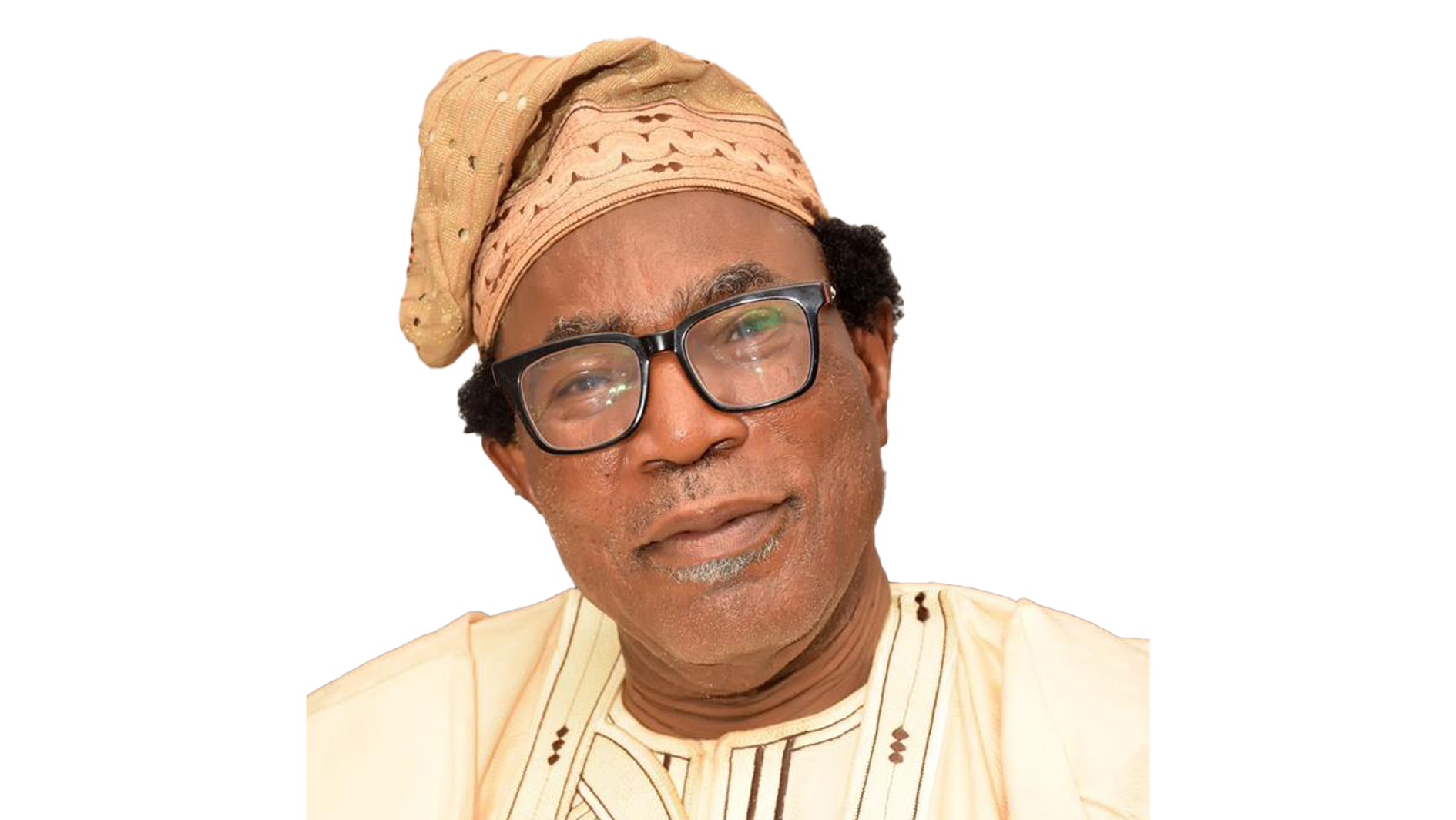
Mr. Joseph Babatunde Akeju launched his memoir titled, Whistleblower as Victim, in Lagos on Friday, August 7. He spoke with ONYEDIKA AGBEDO on his motivation for writing the book. An academician and consultant, Akeju also spoke on how Nigeria can strengthen accountability in governance, submitting that “the power to enthrone good governance in Nigeria is in the hands of Nigerians.”
Briefly tell us about your trajectory in the Nigerian public service?
I graduated from the University of Lagos with a B.Sc. in Accounting. I did my youth service in Cross River State. I was later employed at the Federal College of Education (FCE), Akoko, initially as a teacher. While there, I registered with my co-partners in accounting where I was getting my audit experience from private organisations. After working for some years at FCE, Akoka, I crossed to Yaba College of Technology as a lecturer. In my second year at YABATECH, I was made the Head of the Department of Accounting. Later, I was invited to be the bursar. I rejected it because I wanted to be a professor in Accounting. After some time, they said I could combine both the office of Head of the Department of Accounting and Bursar but I knew it was going to be too much for me. So, left the headship of the Accounting Department and reluctantly became the bursar of the college. While I was serving, I was seconded to the Federal Airports Authority of Nigeria (FAAN) as the Director of Finance. I worked there briefly and did my best. I left the place because I wasn’t ready to do all the nonsense some people were trying to do. I came back to YABATECH after one and a half years or so. It was when I came back that I discovered the rot that led to the problem we were having that almost took away my life but for God’s sake.
When I discovered the fraud that existed in the Bursary Department, I called the attention of my boss, who is now late, to it and he was very hostile about it. But I told him that there was no need for hostility. I wasn’t ready to expose the issue but I was out to clear my name. So, the intention was not to put anybody into trouble but while clearing my name some people were definitely affected. Before I knew it, they started chasing me up and down so I had to run for my life. During the period of this struggle, I lost my junior wife and it created a lot of tension. They were chasing me from pillar to post to the point that when I went to bury my wife, they withheld my salary. They made so many bad decisions against me. At the end of the day they dismissed me twice and reinstated me twice. I retired in 2018 and I have been on my own since then, working as a consultant and as a teacher in an accounting school.
Why did you decide to unveil your memoir at this point in your life?
Well, the whole thing was concluded in 2016 but I didn’t have the resources to publish it; I suffered a lot of financial stress. Things are not rosy up till now but I had to seek financial assistance to be able to put things together.
The book is mainly about my experience in the public service as an administrator, not as a teacher this time around, because throughout my life I have been a teacher. But I branched out to do some practical work on accounting. As the bursar of the college for almost nine years – first in acting capacity but later in substantive capacity – I had to put down what I experienced to encourage upcoming ones who may fall into a similar situation to know that if they depend on God, He will vindicate and exonerate them. So, I wrote the book to give a good account of what I have done so far.
Why didn’t you delay the memoir until you are very old as some people do?
Well, as of now I am still a student. I am studying for my PhD. Someone asked me, ‘At the age of 73, why are you just doing this?’ It’s for self actualisation of course though I’m still lecturing and will continue lecturing until I can no longer stand up. So, I just put it down for the upcoming ones to know that you have to struggle in life to achieve whatever you are looking for. You can’t just give up; when you meet difficulty you have to endure because everything in life depends on endurance and perseverance. So, I wrote the book to encourage the upcoming ones and my colleagues to know that God is there for you at any time.

How would you sum up your experience in the public service?
It was interesting and I don’t regret anything. If I live my life again I will do exactly what I have done. But I will be more careful because I actually suffered and put everyone in my family into difficulty. My family suffered so much because of me.
Things don’t work the way we expect it to in the public service. Two plus two will not give you four. It will give you five, 10 or even 20. The accounting system in the public service needs to be revitalised and I recommend what I call a stewardship accounting system. That will make everybody know that you cannot eat more than your stomach. All the money you are amassing, what do you use it for? So, we need to be speaking to the conscience of people in the public service to allow this country to move forward.
Are you saying that there is corruption in the Nigerian public service system?
It is not that I am saying it; it is there and everybody knows. It is too much and that is why people are struggling to be there – to go and get their own portion.
How did corruption manifest in the system during your time in the public service?
There are several ways corruption can be facilitated in the public service. One is to supply goods and go and take them back. You recycle the same item so many times. They were doing it during my time. When I went on leave of absence, I left a large sum of money on the ground as the bursar then. By the time I came back, the treasury was empty and I started asking questions. It was then I knew that many things were done in my absence to fritter the savings such that the college, which was buoyant before, began to incur a lot of liabilities. Corruption can also occur in the form of open sharing of money, empty supplies, which is paying for something that you didn’t buy at all; inflated contracts and direct labour. The objective of direct labour is to save cost but here it will be so inflated that you will be asking why it’s direct labour.
How can the problem of corruption in the Nigerian public service be addressed?
By speaking to conscience; we have to speak to the conscience of Nigerians. That is why I recommend stewardship accounting, which is what I am writing my PhD thesis on. It requires a lot of reorientation of people and resetting of their minds to make them know that they will account to God Almighty, not human beings. If Nigerian public servants can be thinking along that line, it will solve a lot of problems.
Will talking alone do the job? Where does law enforcement come in because there are legal safeguards against corruption?
Talking alone cannot do the job; there must be a kind of whistle-blowing. Whistle-blowing is one of the recommendations I made towards rebuilding the system. We have to make use of the law enforcement agents, but you know that they too are human beings working in the public service.
Given your experience in fighting corruption, what advice do you have for anyone who may want to toe your path?
I will tell the person not to follow my footstep so that his/her life will not be cut short because it is only by miracle that I am alive today. So, I will tell them to take it easy. I am lucky because I have followers; many of my ex-students supported me in several ways. But the experience impacted my family negatively; however, we were able to survive it. So, I wouldn’t want anybody to suffer what I suffered but they must not accept to be corrupted. Also, you cannot fight corruption if you can’t survive independently. You can’t fight corruption if you are greedy. And if you live a flamboyant life, you will be corrupted; there is no way you won’t be corrupt.
Corruption turns the system upside down. The countries that are doing well in the world are not corrupt. Those who are causing corruption in this country are mainly the pastors. People are using religion to cause problems in Nigeria.
Why do you say so? What’s the relationship between religion and corruption?
You can see what is happening in this country today. People are against President Tinubu, mainly Christians. I am a Christian but I assess his government constructively. This man is not against anyone’s religion; he is not forcing any religion on anybody; he is a Muslim with a liberal heart. But you see some pastors abusing him and calling him all sorts of names. I read in a newspaper where a pastor was accusing Tinubu of plotting to Islamise Nigeria because of the FRSC Bill before the National Assembly seeking to ban preaching in public buses. What is the relationship between that one and banning preaching in buses? Do Muslims not preach in buses? Are you not causing a nuisance when you preach in a bus?
So, many pastors are misleading people. If you want to go into politics, abandon your church and go into politics. Let God fight for Himself.
Some people even say that Tinubu has not done anything good. Why now? Is that how to do it? That is a very bad way of criticising people. So, we should be able to identify those areas he has done well and praise him and where he needs to do better we let him know. But it is wrong to say that he hasn’t done anything good.
Now, when people are hungry, they call Tinubu’s name. Is Tinubu your state governor? What of the money the state governors are receiving every month and the ones they generate internally? They are getting more than enough now. If they invested a good part of the money in agriculture, won’t we be having surplus food? What of the local councils? Why are they not utilising the money they are getting well? And the pastors will be encouraging them. I won’t answer anybody who preaches nonsense to me.
How can Nigeria strengthen accountability in governance?
Nigerians have to be talking; we have to educate ourselves; we have to make our leaders accountable. Let the states and local councils publish their accounts; let them make everything public. They should make whatever they are doing open. So, people should hold them responsible. Let them be accountable; let them give account of what they have been using the money to do on a regular basis and allow the people to ask questions. When we ask questions and they turn us to their enemies we vote against them in the next election. If they give you money, collect it and vote against them because that money doesn’t belong to them; they stole it. So, the power to enthrone good governance in Nigeria is in the hands of Nigerians. Citizens should make the leaders accountable and credible people should be encouraged to go into politics. Our destiny is in our hands as Nigerians; it is not in the hands of anybody.

