
 Get Guardian on Google
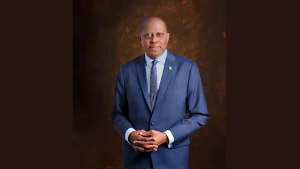
Founder, GMD/CEO of ARCO Plc, Engineer Alfred Okoigun, was recently at the National Institute for Security Studies (NISS) where he delivered a lecture, updating his views on the need to create opportunities for young, vibrant men and women in the country, by putting in place an enabling environment for building wealth in the polity, backed by economic security. NDUKA NWOSU captures the details, including a track record of his contributions to the growth of corporate Nigeria, especially in the oil and gas sector.
Dr. Alfred Okoigun, an engineer and GMD/CEO of ARCO Plc is distinguished as a scholar, a teacher, and a patriot whose love for the nation is expressed on how, when, and where he invests his time and wealth. As a scholar, Okoigun’s admission into the prestigious Government College Warri was significant in announcing his quest for knowledge, combined with service to the nation.
The whole idea of ending up as a pioneer student at the Petroleum Training Institute (PTI) Warri was driven by love for the fatherland, which was to be counted for the pioneer students as nation builders in the emerging oil and gas driven economy. But even at that, his exposure very early in the day within the ecosystem of the oil and gas business, whether in Warri or Italy, and France, told him there was need to dig deeper if we must as a people, make the best use of what our natural resources and knowledge acquired through skilled education, could offer.
Okoigun carried a one man crusade to stop wasting the flared natural gas in the oil producing Niger Delta region. That was when his organisation now ARCO Plc, hosted the country’s first international conference on gas re-injection, which deliberation was concretised in Lagos a few years later at a seminar chaired by the erudite economist Pius Okigbo. The communique went to Dodan Barracks and was part of the backbone in the establishment of the Nigeria LNG Limited (NLNG).
The scholar in Okoigun is best appreciated through his educational foundation, which has mostly benefited hundreds of students in the oil and gas discipline and other related programmes. His commitment to institutional growth manifests itself in his huge contributions to the physical and intellectual sustenance of the PTI and GCU. Beyond these two, he has been active in promoting the standard of higher education in the country, leading to recognitions and awards, something he is not easily taken to.
Despite his shyness and tendency to stay away from these numerous awards coming to add value to his already festooned cap of achievements, three institutions stand out for mention – the University of Lagos, the Federal University of Technology Warri, and the Nigerian Academy of Engineers from where he had an investiture of fellowship. The University of Lagos, through its Engineering Society, designated or tagged Okoigun a Role Model in recognition of his philanthropy and scholarship awards to deserving students of the institution and the development and progress of the university.
Again, because Okoigun would rather be the one recognising talents and giving awards, he deserves to be applauded once in a while. As a scholar, Okoigun keeps updating himself to keep abreast with modern trends taught in some of the world’s famous business schools. Contrary to Google report and as reported in some newspapers (not The Guardian.ng), Okoigun was neither at the Lagos Business School, the IESE in Barcelona nor at the Harvard Business School. Instead, he attended the top-tier independent business school, the International Institute for Management Development (IMD), in Switzerland. However, he has had the opportunity to espouse the principles that have brought ARCO thus far, from a limited liability company to a Plc and as one of the leading indigenous oil and gas companies in the country at the Lagos Business School (LBS) and many other places, on invitation.
With this type of background, is it any wonder Okoigun, over the years, has become an advocate of knowledge power over resource power urging policy makers whether in government or corporate Nigeria to lay emphasis on knowledge over resources, the same way he led the change advocacy in gas flaring to gas re-injection in 1982 and the early 1990s.
Part of Okoigun’s tradition is to pay tribute to scholars who work through research and development. He launched the Nigerian Excellence in Science and Technology (NEST), which was initiated in recognition of outstanding Nigerian scientists who have excelled in their fields of endeavour locally and globally.
Chairman and founder of Geometric Power Limited Aba, two-time minister and Professor of Robotics, Barth Nnaji and computer guru Philip Emeagwali, as well as Dr. Henrietta Ukwu who was recently listed in the prestigious Marguis Who’s Who, what Okoigun described as “a testament to decades of intellectual rigour, ethical leadership and professional excellence in a very demanding and consequential field,” were among the over 10 awardees honoured at the Dorchester Hotel London in 2001.
While Okoigun keeps tab with the ARCO Alumni, they in turn carry and wear his excellence mantra like a pair of a workman’s overall anywhere they go. DrAdedoyinAdeleke, co-chair of the United Nations Independent Group of Scientists and Executive Director Green Growth Africa, fits into this bill. An ARCO Alumnus, Adeleke had this to say about his former boss and mentor: “From a modest beginning, you built not just a company but an institution. Through courage, perseverance, discipline, and an unwavering belief in possibilities, you have shaped ARCO into a resilient enterprise that has stood strong for 46 years.
“Today, your vision sustains more than a thousand families. As one of Nigeria’s earliest indigenous oil and gas servicing companies, and among the few that survived and scaled, ARCO stands as a testament to your foresight and national impact.” Adeleke is just one among scores of the alumni that passed through the trajectory for which ARCO is known-a stickler for professionalism.
There is Mrs. FunkeAmobi who is an executive director at IBTC Bank and Vincent Ozoude managing director and chief executive of the Transafam Power, those the founder is proud to call ARCO’s ambassadors wearing the company’s badge of honour and distinction, a placement of premium on talent, which it hones through training and exposure of its staff in highly recognised institutions, corporations and work stations in different parts of the world.
In the 1990s, ARCO Plc took a team of journalists and civil service executives for a fact finding mission on why the Asian Tiger countries were galloping from the category of Third World countries to that of the Middle Income Countries (MICs) on the cusp of industrialisation. Okoigun was also in the team of industrialists, bank CEOs, et al, who President Ibrahim Babangida delegated to the same Asian Tiger countries under the leadership of Chief MKO Abiola and Finance Minister, Chief S P Okongwu on a fact finding mission on what lessons that could be learnt from their success story as well as what economic collaborations that could be forged with those countries. Their reception back home and brief at Dodan Barracks signalled a new era of economic awareness for the country.
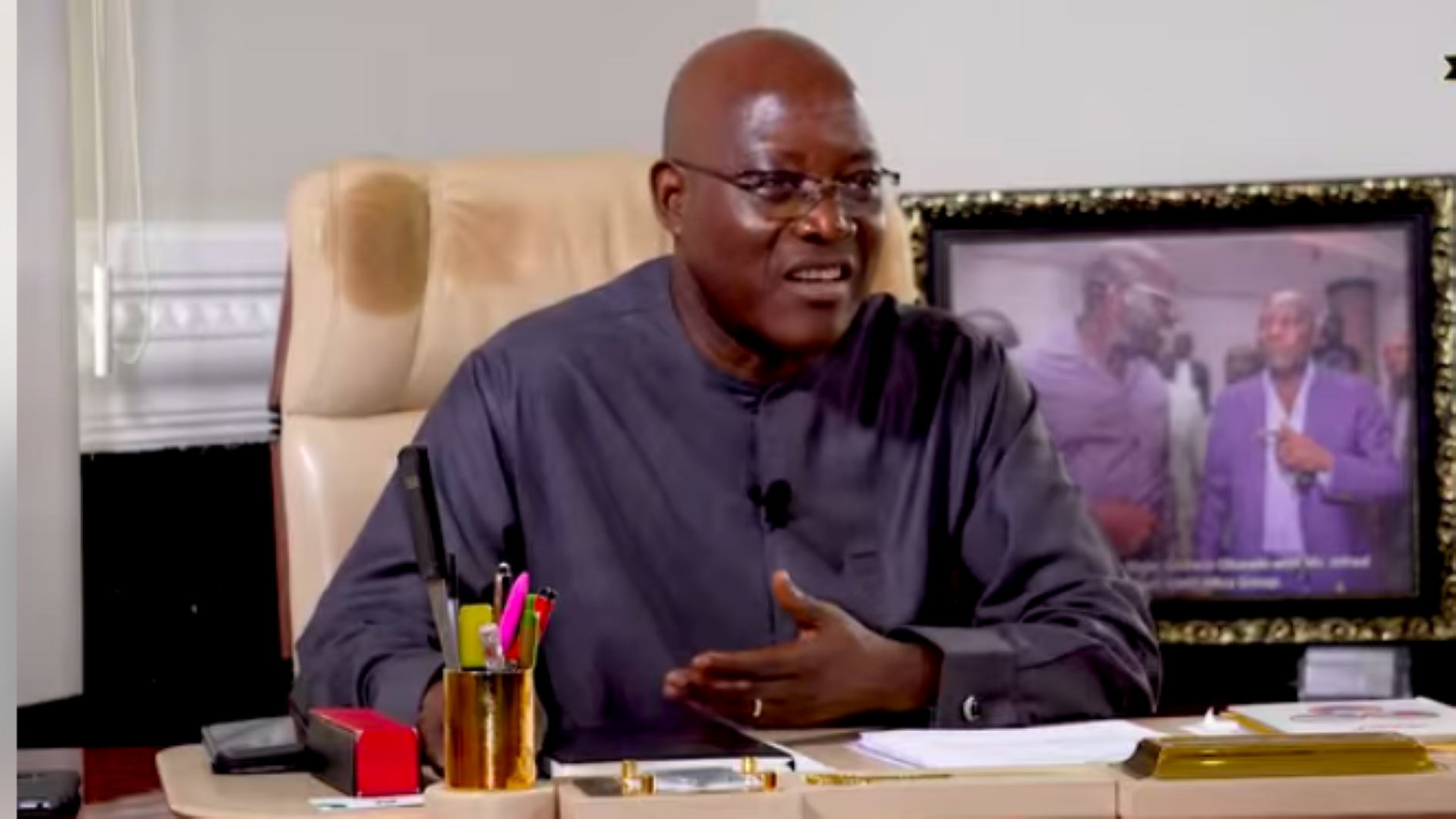
On a personal and corporate level, Okoigun has sustained this culture of Presidential briefing using the ARCO Plc platform and its progression for each incumbent Nigerian President with the exception of one or two, to date. Okoigun, in recent times, has been partnering with the Nigerians in Diaspora Commission (NiDCOM), in recognising and rewarding exceptional diaspora and local talents. He has sponsored a football and tennis foundation, which discovered local talents for export. Only recently in his regular lecture series, he had an update when the commandant of the National Institute for Security Studies (NISS), JO Odama, invited him to deliver a lecture to the students with emphasis on entrepreneurship and national development through the creation of wealth, economic opportunities and the strengthening of economic security. His opening and basic argument was that entrepreneurship and national development may seem to be poles apart in terms of context. One, he said, focuses on investment and wealth creation while the other is all about the protection of life and property, institutions, and national interests. “However, I believe they are deeply connected,” Okoigun surmised.
The details flowed with revealing and convincing sub-heads: “A nation can’t achieve lasting security without economic strength, and it can’t achieve economic strength without building its own productive capabilities. This is the central message I would like to share with you today.” he added.
“Drawing from my personal experiences and (with) more than four decades of building businesses in Nigeria, I would like to share with you today how entrepreneurship can help our country develop indigenous capabilities,” he added. The details: Entrepreneurship Lessons From Building ARCO: Entrepreneurship is often understood as starting a business. In reality, starting is only the beginning. Entrepreneurship involves identifying opportunities, solving problems, taking calculated risks, and creating value(s). Sustaining an enterprise requires persistence, adaptability, discipline, and the determination to build a lasting competence.
My journey with ARCO has taught me three important lessons: It has involved investing in people, equipment, partnerships, and professional standards. It has also taught me that local participation is not the same as local capability. A company may win a contract without acquiring the expertise needed to execute similar work independently. Our objective must be to ensure that participation results in lasting competence.
Second, adaptability is essential. Markets change, technology advances, and customer expectations evolve. Yesterday’s achievements do not guarantee tomorrow’s relevance. Entrepreneurs must continually assess emerging needs and develop the capabilities required to remain competitive.
Third, we must build institutions, not businesses that depend entirely on their founders. A company may begin with the vision and determination of one individual, but its long-term survival depends on professional management, governance, accountability, succession planning, and strong systems. Our ambition should be to build enterprises that preserve knowledge, sustain employment, and continue contributing to the economy across generations. The objective must be to transfer not own capability. Many of us have travelled abroad and observed how people live in other parts of the world. Such experiences can inspire us to think differently about what is possible in Nigeria.
Challenges and Opportunities: Turning Nigeria’s challenges into opportunities means that we must not ignore the considerable challenges that remain because these challenges also present opportunities. Consider education, healthcare, housing, transportation, water supply, and electricity as examples. In many communities, access to these essential services remains inadequate. Each gap represents a problem that needs solving. Each problem presents an opportunity for entrepreneurs who can develop practical, affordable, and sustainable solutions. The important question is not simply why these problems exist. It is this: What can we do to solve them? We must also recognise that solutions developed elsewhere cannot always be transferred directly to Nigeria. We should learn from successful economies but adapt useful ideas to our own peculiar circumstances, resources, and needs. Nigeria has enormous potential in agriculture, manufacturing, energy, technology, and infrastructure. Our task is to convert our resources into products, our knowledge into services, and our opportunities into sustainable enterprises.
The Dangote experience: The experience of AlikoDangote illustrates how entrepreneurship can move beyond trading into large-scale industrial production.
Manufacturing creates additional value through factories, technical skills, employment, suppliers, and supporting industries. For Nigeria, the ambition must go beyond producing successful business people. We must build competitive industries capable of meeting local needs and competing internationally.
ARCO and the power of local content: For Nigerian entrepreneurs, the Nigerian Oil and Gas Industry Content Development Act of 2010 was an important milestone. It helped create opportunities for indigenous businesses to participate more meaningfully in the oil and gas industry. However, our experience at ARCO taught us that policy alone is not enough. We must prepare people and build capabilities before opportunities arise. Let me share two experiences:
Our experience in marine operations: When we entered the marine business in 1998, we had to employ expatriates because they possessed the experience and qualifications required to captain vessels serving multinational oil companies. We recruited personnel from countries including Australia and the Philippines because Nigerian professionals were not being given adequate opportunities in these roles.Then came the Niger Delta crisis in 2007. As security conditions deteriorated, many expatriates had to leave the region. We were compelled to deploy Nigerians to pilot our vessels. The opportunity emerged from a crisis, but we were able to respond because we had already begun developing local capacity.
This experience reinforced an important lesson: Sometimes, an opportunity becomes visible only when circumstances change. The entrepreneur who has prepared for change is better positioned to respond.
Our experience in maintenance and engineering: We experienced something similar through our subsidiary, ARCO Maintenance & Engineering Limited, formerly ARCO Petrochemical Engineering Company. As the Nigerian representative of a multinational, an Original Equipment Manufacturer, our initial responsibility was largely to supply equipment, while the principal provided the technical manpower. We invested considerable time and resources in training Nigerian engineers and technicians at the manufacturer’s facilities so that they could eventually maintain and service the equipment themselves. It was expensive, but we were looking beyond the immediate situation. We were preparing for the future.
Again, during the Niger Delta crisis in 2007, expatriate technical personnel had to leave the region. A gas plant maintained by our principal still needed to operate. Our trained Nigerian engineers and technicians were called upon to take responsibility. For six months, they successfully maintained the plant to the satisfaction of our major client.
This was a defining moment for us. It demonstrated that Nigerians could perform highly specialised technical work when given the training, responsibility, and opportunity. However, the experience also created an unexpected challenge. Our success affected our relationship with the foreign principal, and 19 of our employees, including engineers, technicians, and other critical personnel, were subsequently recruited away from ARCO. The loss of these employees created a serious challenge for the business and, at one point, threatened its survival. The situation became so difficult that members of the security community were involved in helping to resolve it. But, the experience reinforced my conviction that Nigeria possesses intelligent, capable, and committed professionals who can support the development of sustainable indigenous enterprises. What is often required is vision, preparation, persistence, and the willingness to invest in people before the benefits become obvious. For me, this is the real power of local content. It is not merely about awarding contracts to Nigerian companies. It is about developing the people, and systems that enable Nigerian businesses to deliver independently and competitively.
Developing and building lasting institutions: Our experience has also reinforced the importance of investing in science, technology, engineering, and professional development. Over the years, we have sought to contribute to these areas through training, partnerships, and initiatives that recognise excellence.
In 2001, we sponsored the Nigerian Excellence in Science and Technology Awards in the United Kingdom, recognising Nigerians who had distinguished themselves in science and technology. Among those honoured were Professor Barth Nnaji and Dr. Henrietta N. Ukwu. Professor Nnaji subsequently served as Nigeria’s Minister of Power and went on to establish Geometric Power Limited, contributing to electricity supply in Aba and its environs. His journey illustrates how technical expertise and entrepreneurship can be applied to address critical national challenges.
More recently, ARCO Maintenance & Engineering Limited was selected as one of three Nigerian companies to participate in an initiative sponsored by the Nigeria LNG Limited to promote Kaizen, the Japanese philosophy of continuous improvement.
Representatives of participating companies travelled to Japan to learn from the Toyota model and explore ways to improve productivity, quality, efficiency, and competitiveness. This is particularly important because developing local capability is not simply about acquiring technical knowledge. It is also about improving how businesses operate so that they can compete with international standards.
In 2014, the Lagos Business School also prepared a case study on our company titled ARCO Petrochemicals: Climbing by Merit. We consider this an opportunity for students and business leaders to learn from our experience and draw lessons that may help them build successful enterprises. These initiatives reflect an important principle, which is that entrepreneurship is not merely about making money. It is also about developing people, sharing knowledge, encouraging innovation, and creating opportunities for others. The impact of a business should, therefore, be measured not only by its financial performance but also by the capabilities it develops and the contributions it makes to society.