 Follow Us on Google News


 Follow Us on Google Discover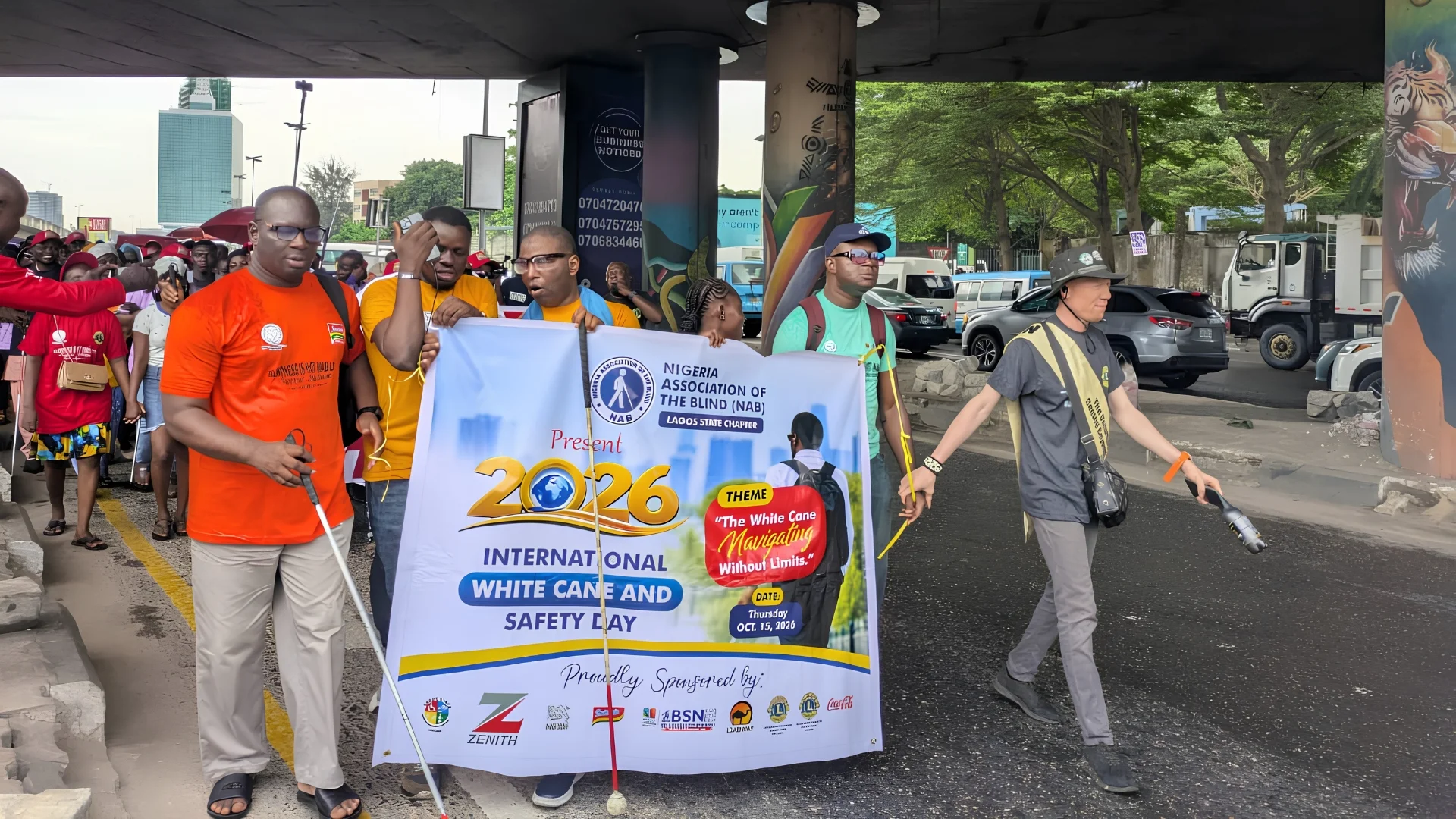
AccessTech Innovation and Research Centre has called for greater access to affordable white mobility canes for Nigerians who are blind or have low vision, describing the devices as essential tools for independent movement, personal safety and social inclusion.
The organisation made the call as it joined the Nigerian Association for the Blind in commemorating the 2026 International White Cane Safety Day in Lagos.
The commemoration, observed globally on October 15, provided an opportunity to raise awareness about the importance of white canes and the challenges faced by people with visual impairments who cannot afford appropriate mobility aids.
As part of activities marking the occasion, representatives of AccessTech participated in a four-kilometre awareness walk in Lagos alongside members of the association and other participants.
The organisation also supported the event by subsidising the cost of white mobility canes, an intervention intended to make the devices more accessible to people who need them.
According to AccessTech, the initiative reflects its commitment to promoting accessibility and supporting the independence of persons with visual impairments.

The white cane is widely recognised as a mobility aid used by people who are blind or have low vision to detect obstacles, navigate their surroundings and travel with greater independence.
It also serves as a visible indication to other road users that the person carrying it may have a visual impairment.
For many users, the device plays an important role in everyday activities, including travelling to work, attending school, accessing public services and participating in community life.
However, access to suitable mobility equipment remains a concern for individuals who cannot afford the necessary devices.
AccessTech said the Lagos commemoration was intended to draw attention to this challenge while encouraging individuals and organisations to support initiatives that improve access to mobility aids.
The organisation emphasised that the ability to move safely and independently can contribute to greater participation in education, employment and other aspects of society.
AccessTech calls for support
Speaking during the commemoration, Chief Operations Officer of AccessTech Innovation and Research Centre, Emmanuella Akinola, described the white cane as an important instrument of empowerment.
“When a blind person has a white cane, he or she is empowered to engage productively in society,” Akinola said.
She explained that the distinctive appearance of white mobility canes helps other road users recognise individuals with visual impairments.
According to her, some canes incorporate red reflective markings intended to improve visibility, particularly in situations where road users need to identify pedestrians carrying them.
Akinola stressed that making mobility canes available to those who need them should be regarded as an important part of efforts to improve accessibility.
She expressed concern that some people with visual impairments are unable to obtain the devices because of financial constraints.
The organisation therefore appealed to individuals, corporate bodies and other potential supporters to contribute towards the provision of white mobility canes.
Akinola identified AccessTech’s Give Tech to the Blind initiative as a channel through which interested supporters could assist people who need mobility equipment.
“Every blind person should use a white mobility cane, but some blind persons cannot afford it,” she said, urging members of the public to support the initiative.
The organisation said broader participation in such efforts could help reduce financial barriers preventing individuals from obtaining suitable mobility aids.
The four-kilometre walk formed part of activities aimed at drawing public attention to the significance of white canes and the experiences of people who rely on them.
International White Cane Safety Day provides an opportunity for disability organisations, advocates and communities to promote awareness of independent mobility and the responsibilities of other road users.
For people who are blind or have low vision, moving through public spaces can involve challenges relating to pedestrian infrastructure, road crossings, obstacles and the accessibility of transport services.
Although a white cane can help users identify obstacles and navigate their surroundings, its effectiveness also depends on appropriate orientation and mobility training.
Accessible pedestrian infrastructure and greater awareness among motorists and other road users are also important for safer movement.
The Lagos commemoration highlighted the need to consider these broader factors alongside the provision of mobility devices.
AccessTech’s participation was intended to reinforce the message that accessibility requires both practical support and public understanding.
Assistive technology plays an important role in enabling persons with disabilities to participate more independently in daily activities.
For people with visual impairments, such technology may include mobility canes, screen readers, accessible digital devices and other tools that support communication, learning and movement.
However, the availability and affordability of these products can influence whether individuals are able to benefit from them.
AccessTech said its support for the White Cane Day commemoration formed part of its efforts to improve access to technology and equipment for people with visual impairments.
Through its Give Tech to the Blind initiative, the organisation is seeking support for individuals who may otherwise struggle to obtain mobility aids.
The organisation did not disclose the number of canes subsidised during the commemoration or the amount contributed towards their purchase.
Nevertheless, it maintained that community participation and support from individuals and organisations could help make mobility equipment available to more people.
The collaboration between AccessTech and the Nigerian Association for the Blind also drew attention to the need for sustained efforts to improve accessibility beyond annual commemorative events.
For persons with visual impairments, independent mobility is closely connected to opportunities in education, employment and community participation.
Access to appropriate equipment, practical training and safer public spaces can help reduce barriers that restrict movement.
AccessTech called for continued support from members of the public and organisations willing to assist people who cannot afford white mobility canes.
The organisation said the commemoration should serve as a reminder of the importance of recognising the mobility needs of people who are blind or have low vision.
As Nigeria continues to address questions of disability inclusion, the provision of affordable assistive devices and the development of accessible public infrastructure remain important considerations.
For AccessTech and its partners, the message from the Lagos awareness walk was that a white cane represents more than a mobility device. It is also a practical means of supporting independence, safety and participation in everyday life.
AccessTech and the Nigerian Association for the Blind marked White Cane Day in Lagos, calling for affordable mobility aids and greater disability inclusion.
AccessTech Innovation, Nigerian Association for the Blind, International White Cane Day, White Cane Safety Day, Emmanuella Akinola, Disability Inclusion, Assistive Technology, White Mobility Cane, Visually Impaired, Lagos, Accessibility, Road Safety, Give

