 Follow Us on Google News


 Follow Us on Google Discover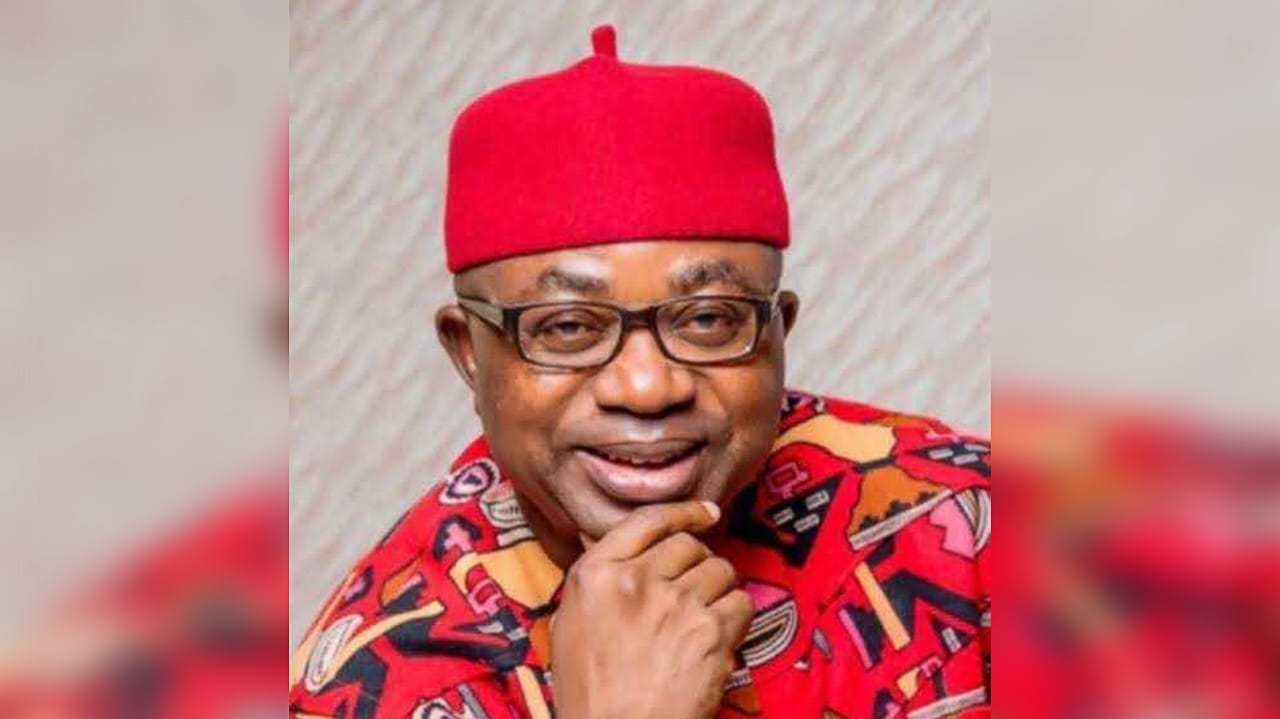
President of GLOBE Legislators International, Rt. Hon. Sam Onuigbo, has urged African leaders to take greater ownership of the continent’s climate agenda, stressing that Africa must move beyond participation in global climate negotiations to exercising genuine climate agency.
Onuigbo made the call while speaking at the 14th Conference on Climate Change and Development in Africa (CCDA-XIV), held at the United Nations Conference Centre in Addis Ababa, Ethiopia. The conference, which runs from September 7 to 9, 2026, is themed, “From Pledges to Implementation: The Belem-Antalya-Addis Roadmap.”
He said Africa’s climate challenge was no longer merely a question of vulnerability but also one of agency, noting that although the continent had contributed the least to historical greenhouse-gas emissions, it continued to suffer some of the most severe consequences of climate change.
According to him, Africa’s longstanding demands for climate justice, climate finance, technology transfer, adaptation support and loss-and-damage financing remain valid, but the continent must complement those demands by taking greater control of the institutions, financing mechanisms and policies that shape its climate future.
“Africa’s climate future will not be granted by pledges made elsewhere, nor rescued by interventions we wait for. It will be built, financed, governed and defended by Africans, on terms Africa itself has written,” Onuigbo said.
He argued that implementation had now become the real test of climate ambition, insisting that commitments must translate into laws, budgets, projects, accountable institutions and measurable outcomes for citizens.

“Implementation is now the real test of climate ambition — pledges must become laws, budgets, projects, accountable institutions/agencies, and measurable outcomes for African people,” he said.
Onuigbo identified Africa’s vast natural resources, including critical minerals, oceans and seas, as strategic assets that should enable the continent to play a greater role in determining the global climate and energy transition.
“Africa that is home to critical minerals and is surrounded by oceans and seas, must move from climate participation to climate agency by setting the tone and shaping the rules, institutions, agencies, finance, and implementation pathways that affect its future,” he said.
He commended the ClimDev-Africa Programme and the institutions supporting the conference, including the African Union Commission, United Nations Economic Commission for Africa, African Development Bank, Pan-African Climate Justice Alliance and Afreximbank, for creating a platform for dialogue, reflection and collective action.
The former federal lawmaker drew inspiration from Nigeria’s former Head of State, General Murtala Mohammed, who, at the Extraordinary Summit of the Organisation of African Unity in Addis Ababa on January 11, 1976, declared: “Africa has come of age … The fortunes of Africa are in our hands to make or mar.”
Onuigbo, who sponsored Nigeria’s Climate Change Act 2021, said the declaration remained relevant to Africa’s climate future.
“Fifty years on, that charge is the argument of this presentation, not its ornament,” he said, stressing that Africa must take responsibility for building the institutions and systems required to address the climate crisis.
He cited Nigeria’s Climate Change Act 2021 as an example of how climate priorities could be transformed into concrete legislation and institutional action.
According to him, the Act established a statutory framework for climate action and created the National Council on Climate Change, providing an institutional mechanism for coordinating climate policy at the highest level of government.
He said placing the Council under the Presidency, with the President as its chairman, was also intended to tackle inter-agency rivalry, which he described as “peer jealousy”, where ministries and agencies compete for visibility, budgets and authority instead of coordinating delivery.
Onuigbo said that after more than three decades of international climate diplomacy, the world had accumulated conventions, agreements, Nationally Determined Contributions and net-zero commitments, but the central issue facing Africa had changed.
“The central question before Africa today is different: it is no longer whether governments recognise the climate crisis, but whether the institutions, financing, technologies and political will needed to implement those commitments actually exist — and who controls them,” he said.
He explained that climate priorities describe what Africa needs, while climate agency determines what the continent decides, designs, builds, finances, governs and defends for itself.
He said participation merely meant that Africa was present at global climate negotiations, while representation meant African interests were reflected in declarations, boards, communiqués and negotiating texts.
“Agency is different. Agency means Africa sets terms rather than merely responding to terms set elsewhere. It means designing instruments rather than qualifying for instruments designed by others.
“It means deciding who assesses, who approves, who disburses, and who benefits. A continent can be well represented in a system it does not shape. Climate leadership means moving from being consulted to being the author,” he asserted.
The conference programme places African climate leadership and the transition from climate priorities to climate agency among its central discussions, alongside climate finance, resilience, critical minerals, adaptation and implementation.
Onuigbo urged African leaders and legislators to ensure that climate commitments were backed by legislation, financing, institutional capacity and effective oversight.
He also maintained that climate finance must strengthen Africa’s development rather than create new forms of dependence, arguing that African institutions and agencies should have greater authority over the design and implementation of climate programmes.
The GLOBE president said Africa should therefore approach global climate diplomacy not simply as a recipient of commitments made by others, but as a continent capable of providing ideas, institutions and practical solutions.
He urged African countries to seize the opportunity presented by the current climate transition to build stronger economies, protect vulnerable communities and ensure that the continent’s natural resources generate sustainable benefits for its people.
His message, he said, was ultimately about changing Africa’s position in global climate governance — from being a continent that waits for solutions to one that helps design, finance, implement and defend them.
“A continent can be well represented in a system it does not shape,” Onuigbo said. “African climate leadership must mean moving from being consulted to being the author.”

