
 Get Guardian on Google
• Oil prices retreat to $90 despite renewed U.S.-Iran hostilities
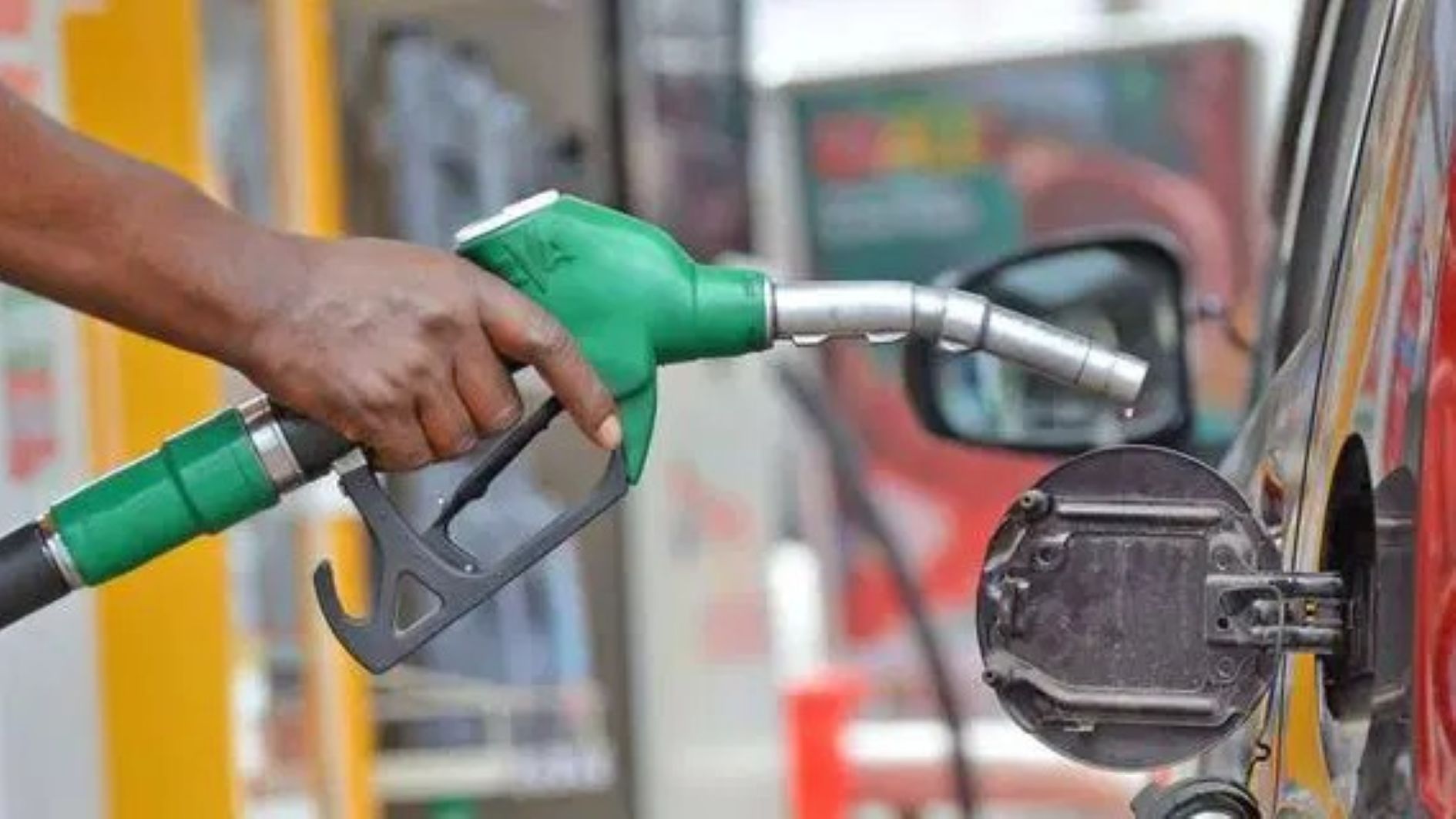
Despite a sharp decline in international gasoline prices and falling depot costs, motorists across Nigeria are yet to enjoy corresponding reductions at filling stations, raising concerns about delayed price transmission and the lack of transparency in the deregulated downstream petroleum market.
The development comes as gasoline prices supplied from Nigeria’s Dangote Petroleum Refinery have fallen to an eight-month low, while crude oil prices have also retreated despite renewed hostilities between the United States (U.S.) and Iran.
Checks by The Guardian showed significant reductions in depot prices between October and November, although pump prices remain relatively high across many states.
A comparison of Matrix product prices between October 15 and November 18 showed that its Premium Motor Spirit (PMS) price in Warri declined from N1,353 to N1,178 per litre, representing a reduction of N175 (12.9 per cent). Its Automotive Gas Oil (AGO) price also dropped from N1,890 to N1,718, a reduction of N172 (9.1 per cent).
The November 18 mid-day price report by Petroleumprice.ng showed further reductions across depots. In Lagos, Dangote reduced its PMS price by N13 to N1,150, while Pinnacle recorded a N15 decline to N1,160. In Warri, Matrix reduced its price by N7 to N1,178, while Parker and A.Y.M. Shafa reduced theirs by N8 and N4 to N1,177 and N1,176, respectively.
However, the reductions have not translated uniformly into lower pump prices.
A survey of filling stations across five states in the early hours of the day showed PMS selling at N1,280 and N1,299 at MRS and Olafat in Oyo State.
While prices in Osun ranged from N1,290 at Glofes to N1,295 at NIPCO.
In Kwara, Salibas Oil sold petrol at N1,275, while MM dispensed at N1,285. In Ogun, Oxfield and MRS sold at N1,269.50 and N1,285, respectively. Lagos recorded N1,289 at NNPCL stations and N1,250 at Wasdek.
In Abuja, however, prices remained higher. At about 4:27p.m., TotalEnergies adjusted its pump price to N1,325 per litre at its Central Business District (CBD) outlet opposite NNPCL Towers, from N1,390. But its Garki station near the Police Headquarters was still selling at N1,390 around 5pm.
At the time of filing this report, A.Y.M. Shafa was dispensing petrol at N1,380 per litre in Apo, while Conoil sold at N1,385 in the CBD.
Speaking on the uneven adjustments, downstream petroleum expert, Jide Pratt, attributed the differences partly to the absence of a structured pricing mechanism, noting that “Nigeria has no defined” price floor, ceiling or pricing window.
He explained that marketers adopt different approaches, including replacement cost, weighted average cost and batch-based pricing, depending on their procurement costs and existing inventory.
Under the weighted average approach, marketers calculate the cost of different batches purchased at varying prices before determining their selling prices. Consequently, a reduction in depot prices may not immediately translate into lower pump prices where retailers still have expensive inventory.
However, Pratt identified transparency as the industry’s bigger challenge, particularly the absence of publicly accessible ex-refinery prices and a comprehensive pricing template. He questioned why consumers and market participants could readily access gantry prices but lacked sufficient information about the actual costs at which products leave refineries.
According to him, the industry needs a transparent pricing document showing relevant input costs, including ex-refinery prices, vessel freight, financing and other charges, to enable participants and consumers to understand how prices are determined.
Pratt proposed a 14-day or 21-day pricing window, arguing that it would provide predictability for marketers and consumers by allowing existing stocks to be sold before new prices take effect.
Citing Ghana’s 15-day and Kenya’s 30-day pricing arrangements as examples of markets where consumers have greater certainty about prevailing prices, he, however, cautioned against automatically attributing delayed pump price reductions to profiteering, noting that the actual procurement costs of marketers and the prices at which they replenish stocks must be established.
Meanwhile, international market developments are reinforcing the downward pressure on petroleum product prices.