 Get Guardian on Google
• All 36 state assemblies endorse amendment as President consults AG
• Akpabio: New policing structure could address 70% of insecurity
• APC claims attacks, fatalities declined under Tinubu
• Obi questions intelligence failures after fresh Plateau killings
• Military defends talks with Kwara bandits, U.S. hails rescue of 125 abductees
President Bola Tinubu has received the constitutional amendment bill paving the way for the establishment of state police, following its endorsement by all 36 State Houses of Assembly, as the Senate urged him to transmit the proposed National Policing Bill to the National Assembly for speedy passage.
Lawmakers said the operational legislation would define the relationship between federal and state police formations and provide safeguards against political abuse and jurisdictional conflicts.
The development marks a major step towards decentralising Nigeria’s policing architecture amid persistent security challenges, including banditry, kidnapping, terrorism and communal violence.
However, senators have warned that the success of the proposed arrangement will depend on clear operational guidelines, accountability mechanisms and safeguards to prevent state governments from using police formations against political opponents.
While the President is expected to consult the Attorney-General of the Federation before signing the constitutional amendment, the Federal Government says work on the accompanying National Policing Bill is progressing.
Tinubu received the Constitution of the Federal Republic of Nigeria (Sixth Alteration) Bill, 2026, yesterday from his Special Advisers on Senate and House of Representatives Matters, Basheer Lado and Wasiu Olanrewaju-Smart.
According to a statement by the Chief of Staff to the President, Femi Gbajabiamila, all 36 State Houses of Assembly have endorsed the amendment, exceeding the constitutional requirement of approval by at least 24 states, representing two-thirds of the federation.
Gbajabiamila, who chairs the Presidential Working Group on State Police, said the President would review the amendment in consultation with the Attorney-General of the Federation before assenting to it at a formal signing ceremony.
The National Assembly had earlier completed its part of the constitutional amendment process, with the Senate passing the bill on June 24, 2026, and the House of Representatives approving it on July 23, 2026.
It was subsequently transmitted to the state legislatures for endorsement in accordance with Section 9(2) of the 1999 Constitution, as amended.
The proposed arrangement will allow state governments to establish and manage their police institutions to complement the existing Nigeria Police Force, bringing law enforcement closer to communities and improving intelligence gathering and responses to security threats.
Gbajabiamila disclosed that the Presidential Working Group, supported by the Policy Advisory Committee, had concluded extensive stakeholder engagements and nationwide consultations on the proposed reform.
He said the draft National Policing Bill had been forwarded to the Federal Ministry of Justice for legislative drafting validation. The working group would review the validated document upon its return and submit it, alongside its report, to the President for consideration.
He described the broad support for the amendment as evidence of a shared national commitment to strengthening the country’s security architecture.
Senate seeks safeguards against political abuse
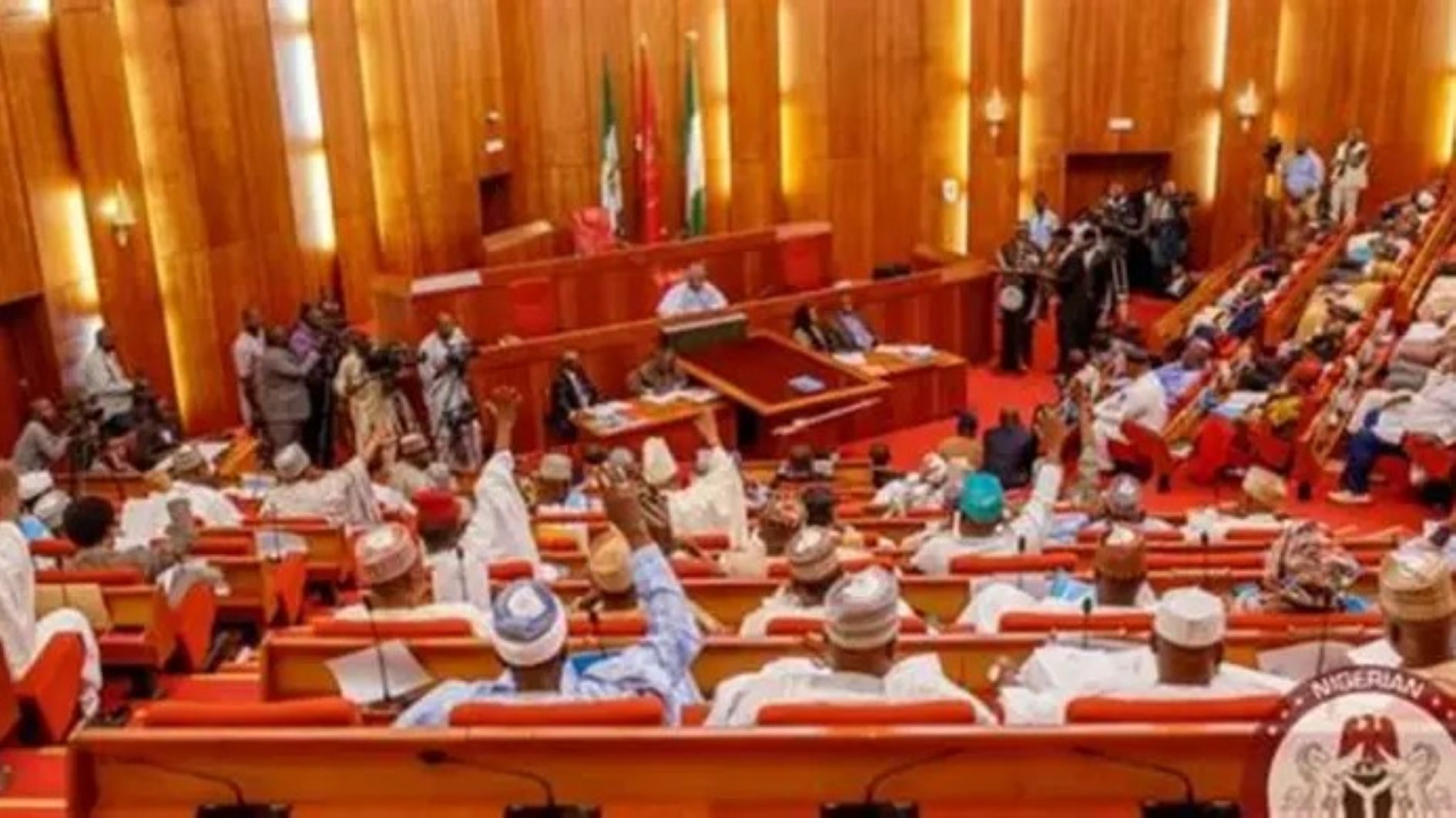
AT its plenary yesterday, the Senate approved a motion sponsored by Senate Leader Opeyemi Bamidele, directing the Clerk to the National Assembly, Kamoru Ogunlana, to transmit the constitutional amendment to Tinubu for assent in accordance with the Acts Authentication Act, 2004.
The lawmakers also urged the President to forward the National Policing Bill to the National Assembly without delay to enable legislative consideration and expeditious passage.
Leading the debate, Bamidele said the operational legislation was necessary to provide the framework for implementing the new policing arrangement.
He urged the Senate to commend Tinubu for supporting the constitutional amendment and taking ownership of the initiative.
Former Edo State Governor and Senator representing Edo North, Adams Oshiomhole, supported the proposal but cautioned against possible political interference in state police operations.
He acknowledged concerns that governors could use the proposed formations to intimidate political opponents, insisting that comprehensive operational guidelines and safeguards would be essential.
Oshiomhole called for a separate law to regulate relations between federal and state police formations, clearly defining their respective powers, responsibilities and operational boundaries.
He maintained that concerns about possible abuse should inform the legislative framework rather than frustrate the establishment of state police.
Similarly, Senator Ekong Samson, representing Akwa Ibom South, called for an independent and courageous judiciary capable of checking abuses and ensuring that the new policing structure operated within the law.
Contributing to the debate, Senate President Godswill Akpabio and his deputy, Barau Jibrin, commended Tinubu and members of the federal and state legislatures for advancing the reform.
Barau described the development as a collective achievement, stressing that state police would complement rather than replace the Nigeria Police Force.
Akpabio described the constitutional amendment as one of the major achievements of the 10th National Assembly, expressing optimism that the new arrangement could address about 70 per cent of Nigeria’s insecurity challenges.
He, however, identified the operational framework as the next major hurdle, warning that clear guidelines would be necessary to prevent jurisdictional disputes between state and federal police authorities.
He assured senators that if the Executive failed to forward the necessary legislation within a reasonable period, the National Assembly would initiate it.
The two prayers contained in Bamidele’s motion were unanimously adopted through a voice vote.
APC claims attacks, fatalities have declined
AMID the push for decentralised policing, the All Progressives Congress (APC) has defended Tinubu’s handling of insecurity, claiming that attacks and fatalities have declined since he assumed office in 2023.
The party’s National Publicity Secretary, Felix Morka, made the assertion yesterday during an appearance on Channels Television’s The Morning Brief, attributing the reported improvement to increased military capacity, better remuneration for soldiers and improved working conditions.
He also cited the creation of additional army divisions and improved accommodation for military personnel as evidence of the administration’s efforts to strengthen the armed forces.
Morka said the government had recorded a consistent decline in security incidents and fatalities over the past year, adding that more terrorists and bandits had surrendered to the military following sustained security interventions.
Addressing concerns over the recent abduction of National Youth Service Corps members and persistent bandit attacks in the North, he argued that insecurity could not be eliminated overnight, even by countries with sophisticated security systems.
He, however, acknowledged that Nigeria remained challenged by insecurity and urged the media to report government interventions and their outcomes in a balanced manner.
Obi questions intelligence failures after Plateau killings
MEANWHILE, presidential candidate of the Nigeria Democratic Congress (NDC), Peter Obi, has condemned recurring attacks in Plateau State, questioning intelligence failures that have left communities vulnerable to armed assailants.
In a statement yesterday, Obi expressed sadness over reports of fresh killings in Mangu, Riyom and Barkin Ladi local government areas, calling for stronger security deployments, thorough investigations and justice for victims.
Citing OpenWatch security incident records, he said 261 deaths were reported across Nigeria between November 2 and 15, including 24 in Plateau during the first week and 15 in the second week. He added that the state recorded further attacks on November 16.
Obi questioned why communities continued to face attacks despite intelligence reports and called for reliable early-warning and rapid-response systems to protect vulnerable settlements.
He also urged the government to support displaced families and ensure that those responsible for the killings were brought to justice.
According to the Berom Youth Moulders Association, suspected attackers killed three people in Zwagal community, Jipal District, Mangu, on Sunday, November 15, at about 9:00 p.m., while others were reported missing.
The association also reported the killings of Da Ishaku Pam Vwos, 79, in Sho village, Barkin Ladi, and Dauda John Davou, 42, in Sambak community, Riyom. It said attackers entered Jol community but encountered resistance from local vigilantes.
The group called on Tinubu, Plateau State Governor Caleb Mutfwang and security agencies to strengthen deployments in vulnerable communities, warning against leaving residents to defend themselves without sustained security support.
Military defends engagement with Kwara bandits
IN another security development, the military has defended its interaction with armed bandits in Kwara State after a video showing security personnel engaging members of the group went viral on social media.
The Joint Task Force, Operation Savannah Shield, said the engagement involving military personnel and operatives of the Department of State Services (DSS) was part of efforts to recover illegal weapons and secure the release of kidnapped victims.
It disclosed that the operation led to the recovery of 12 AK-47 rifles and the release of 10 people held captive by the armed group.
In a statement signed by the acting Deputy Director of Army Public Relations, 9 Division/Operation Savannah Shield, Lieutenant Colonel Ibrahim Shittu, the task force said the armed men had indicated their willingness to surrender their weapons and free their captives following sustained military pressure.
Shittu explained that the engagement was part of a broader strategy combining military offensives, intelligence-based operations and peaceful approaches to tackling banditry and terrorism.
He said anyone willing to surrender would undergo security screening and other necessary legal procedures, adding that accepting the surrender of armed groups was a recognised military practice governed by the Law of Armed Conflict and established rules of engagement.
The task force maintained that the interaction should not be interpreted as a compromise of national security or an attempt to associate with terrorists.
Minister cites military gains, U.S. commends rescue operations
ALSO defending the administration’s security approach, Minister of Defence, General Christopher Musa (rtd), said Super Tucano fighter aircraft and other military assets had significantly weakened the operational capacity of Boko Haram and other terrorist groups.
Musa, represented by retired Major General Garba Abdullahi at a Kano roundtable organised by the Presidential Initiative on CNG, said the deployment of the aircraft, helicopters and other newly acquired equipment had improved military operations in several areas.
He, however, stressed that addressing insecurity required more than military offensives, describing it as a collective responsibility involving government, security agencies and local communities.
The minister disclosed that 2,000 youths had been selected and trained for the Neighbourhood Watch Corps by the military, DSS and other security personnel. He said plans were underway to place them on the government payroll and provide operational facilities and equipment, including vehicles and more than 450 motorcycles.
He added that about 600 youths had been trained as anti-snatching operatives, while the training of 1,100 forest guards drawn from security flashpoint local government areas was nearing completion.
According to him, the government had also coordinated vigilante groups operating across more than 10,000 communities through a framework supported with logistics and operational structures.
Musa said improved collaboration among the armed forces, police, DSS, Civil Defence and other security agencies, alongside community participation, remained central to the government’s strategy.
Meanwhile, the United States has commended Nigerian troops for rescuing 125 kidnapped victims and dismantling terrorist camps during operations across the country this month.
The U.S. Bureau of African Affairs, in a statement posted on its X handle yesterday, praised the recovery of weapons and clearance of explosive devices, while expressing support for efforts to prevent kidnappings and hold perpetrators accountable.
The commendation followed military operations conducted between November 6 and 12, during which troops rescued 125 abducted people, killed eight terrorists, arrested 10 suspected collaborators and logistics suppliers, and recorded the surrender of 12 terrorist fighters and members of their families, according to the Defence Headquarters.
The largest rescue involved 119 travellers abducted on November 6 along the Dutsen Kura-Bulazarma-Kamuya Road in Buratai, Biu Local Government Area of Borno State. Troops pursued the attackers, forcing them to abandon the captives, comprising 69 men, 35 women and 15 children.
Five other kidnapped people were rescued in separate operations in Zamfara State.
The U.S. commendation comes amid growing security cooperation between Washington and Abuja.
Musa said on Monday that intelligence sharing, satellite imagery and training provided by the U.S. were helping Nigerian forces conduct operations against militants and bandits.