 Follow Us on Google News
 Follow Us on Google Discover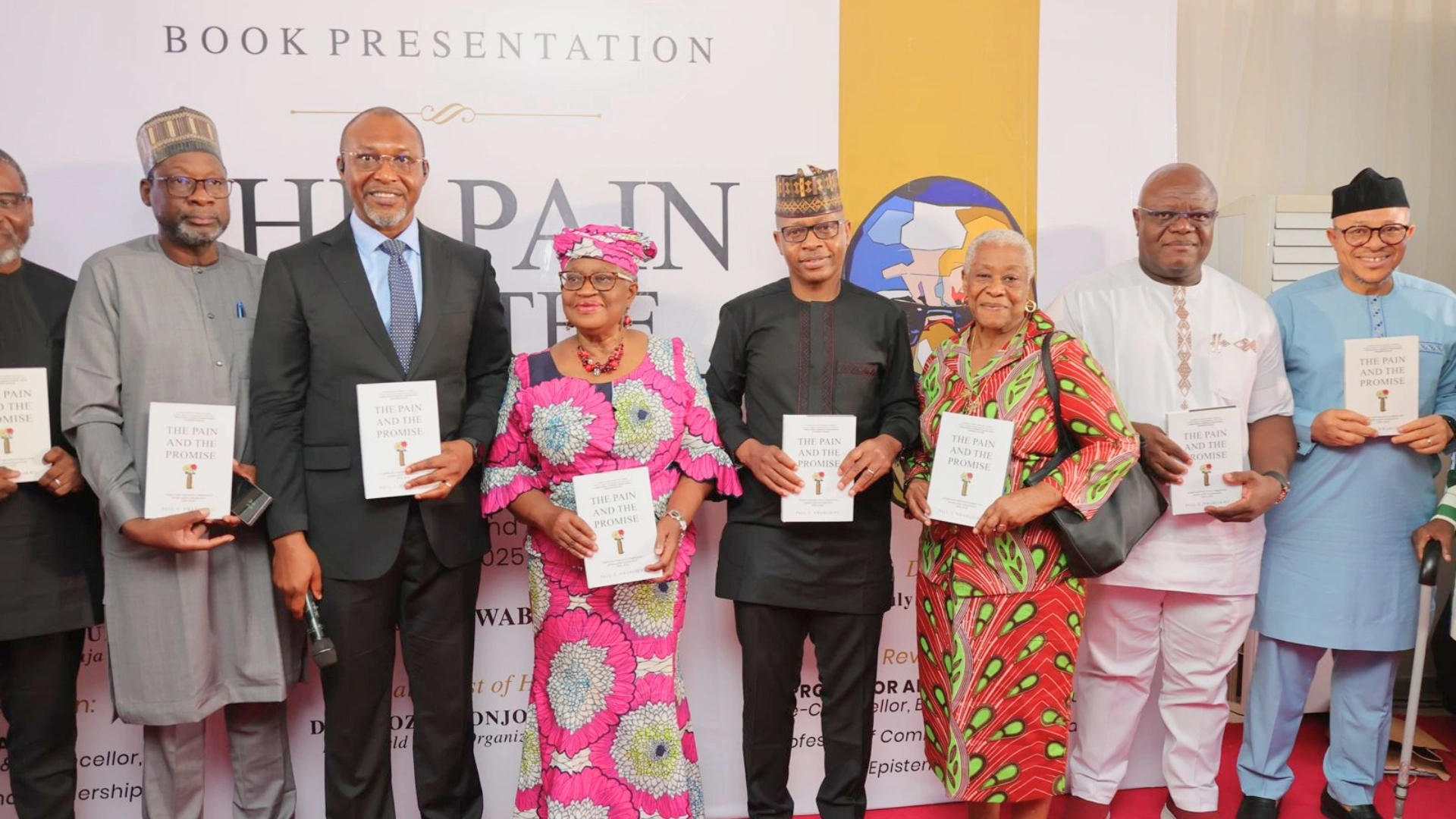
Director-General of the World Trade Organisation (WTO), Dr. Ngozi Okonjo-Iweala, former Minister of Aviation and Chairman of the Athena Centre, Osita Chidoka, and Vice Chancellor of Baze University, Prof. Abiodun Adeniyi, have described The Pain and the Promise: Insights and Fragments on Nigeria and People, Public and Personal (1990–2026) by public policy analyst and ThisDay Editorial Board member, Paul C. Nwabuikwu, as an important contribution to Nigeria’s intellectual and public policy discourse.
Speaking at the public presentation of the 300-page volume in Abuja, Okonjo-Iweala described the work as “a great achievement” that combines “decades of public commentary with vivid memories and incisive reflections” into “a portrait of a generation in the life of what I insist is the most interesting, if chaotic, country in the world.”
She praised Nwabuikwu’s literary style, noting that in “stylish prose, leavened with a mischievous sense of humour,” he captures major milestones in Nigeria’s evolution, from military rule and democratic transition to technological change, anti-corruption efforts and economic reforms.
She recommended the book particularly to young Nigerians seeking “to better understand our wonderful, complicated, often frustrating, but always exciting country” through an accessible and engaging narrative.
Recalling their years together in the Federal Ministry of Finance during Nigeria’s landmark economic reform programme, Okonjo-Iweala described Nwabuikwu as “one of the best parts of our economic team,” commending his ability to be “critical without being cynical, funny without being frivolous, and intellectual while still being accessible.”
She credited him with recognising that effective communication is indispensable to successful public policy, stressing that the reform programme benefited immensely from his strategic communications leadership.
Chairman of the occasion and former Aviation Minister, Osita Chidoka, also paid tribute to the author, describing Nwabuikwu as “one of my favourite columnists at The Guardian.” According to Chidoka, the author distinguishes himself through “analytical profundity with humanity and a gift for language,” qualities that have made his interventions on national issues consistently insightful and compelling over several decades.
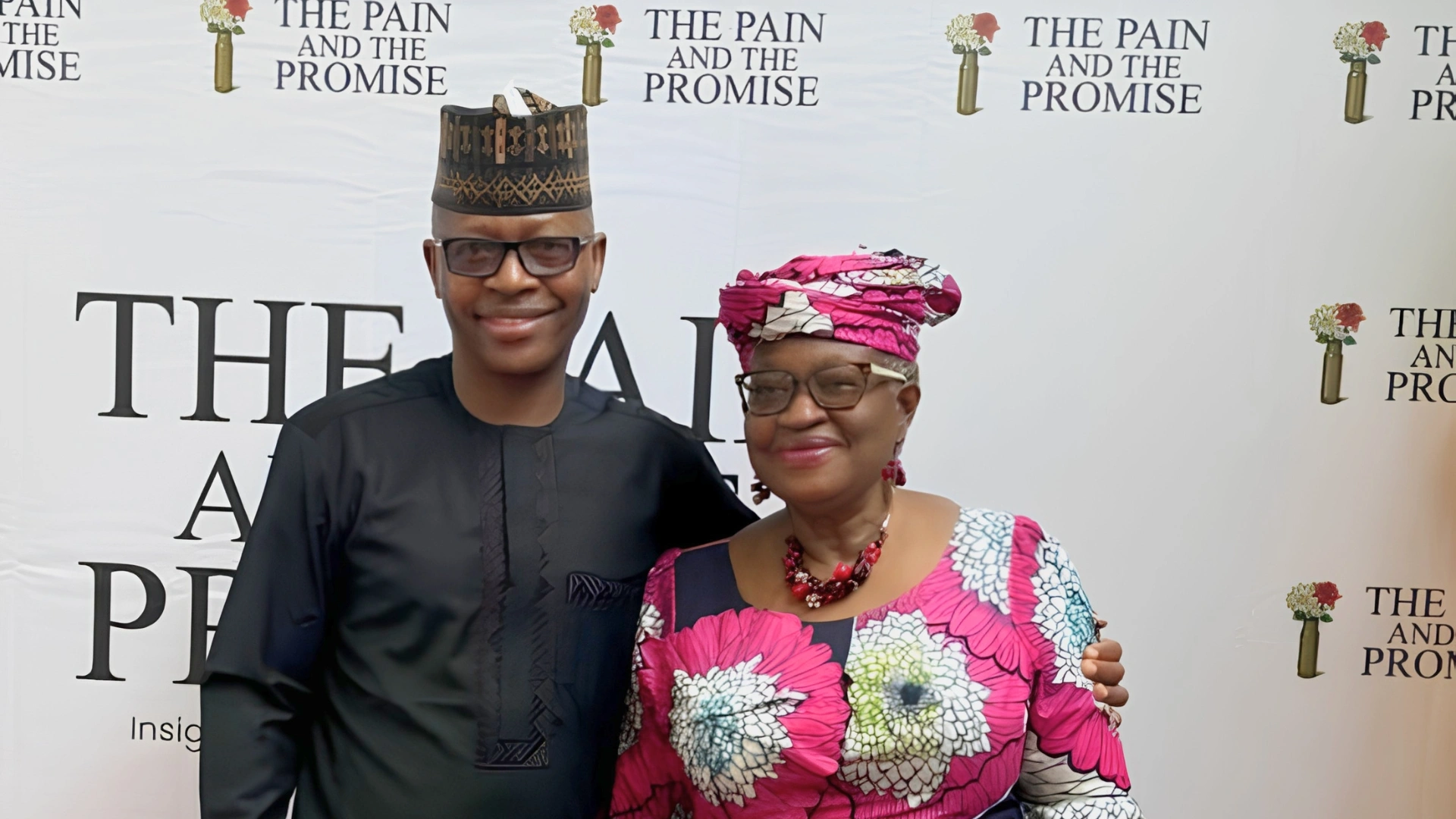
Reviewing the book, Prof. Abiodun Adeniyi described The Pain and the Promise as “a chronicle of Nigeria’s contemporary experience” and “an archive of conscience” assembled by “one of the country’s most thoughtful journalists.” He argued that the collection rises above the level of a compilation of newspaper essays to become a documentary record of a nation “in perpetual conversation with itself,” preserving not only the evolution of the author but also the anxieties, contradictions, triumphs and aspirations of modern Nigeria.
Drawing from his years as Nwabuikwu’s colleague at The Guardian, Adeniyi recalled the author as a journalist distinguished by “the quieter virtues of scholarship, reflection and measured judgment,” with “an enviable ability to separate noise from substance.” He said the essays demonstrate that journalism practised with “intellectual seriousness and literary grace” can transcend the news cycle to assume the permanence of literature.
According to the media scholar, the book’s central theme captures Nigeria’s enduring paradox by acknowledging the country’s deep wounds without surrendering faith in renewal. Spanning the years 1990 to 2025, he said, the essays constitute “an alternative history of modern Nigeria,” documenting not only major national events but also the subtle shifts in public consciousness through the discerning eyes of a thoughtful writer who consistently balanced critical judgement with empathy.

