 Follow Us on Google News



 Follow Us on Google Discover
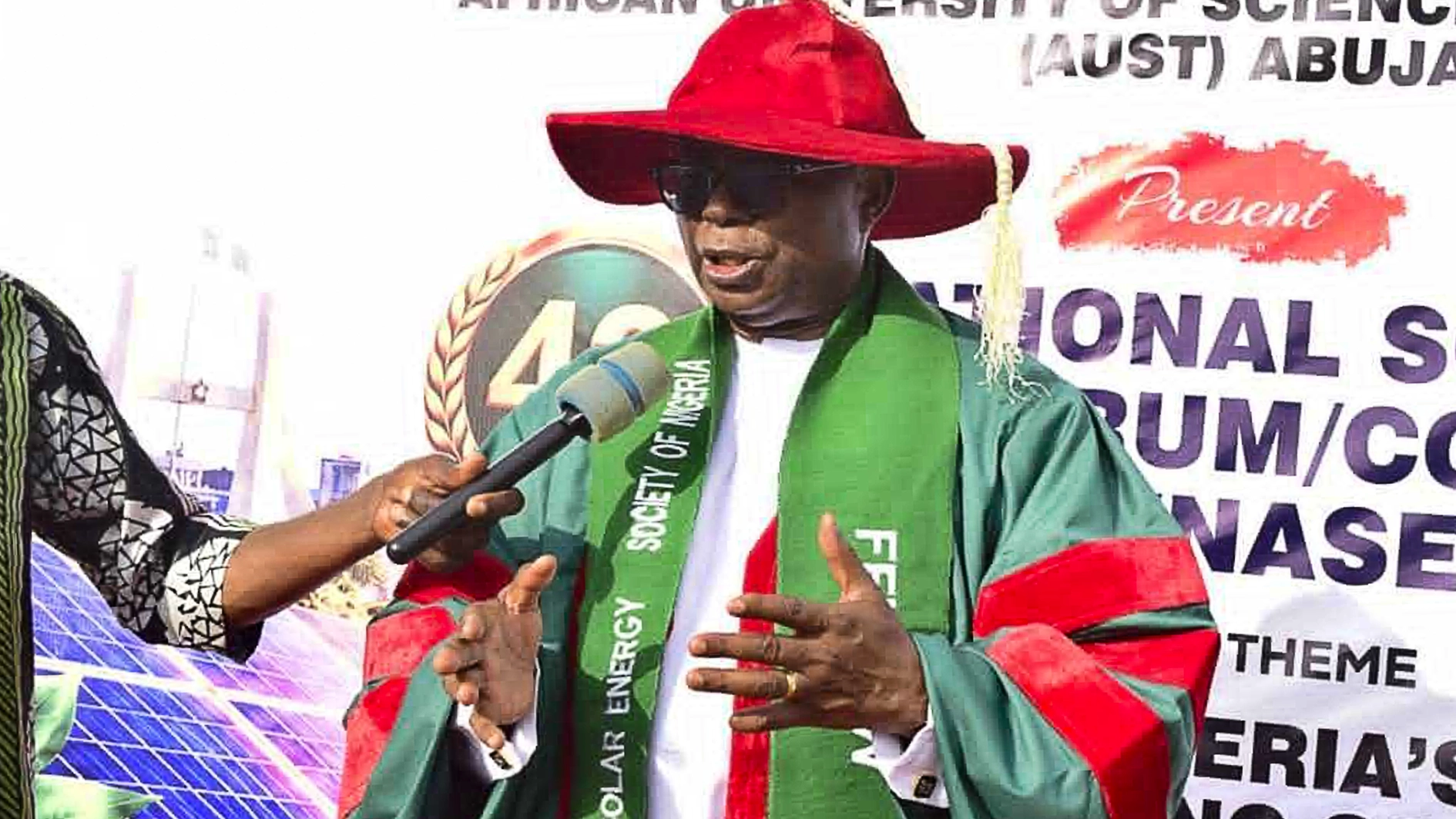
President of the Global Legislators Organisation for Better Environment (GLOBE) Legislators International, Rt. Hon. Sam Onuigbo, has said President Bola Tinubu deserves credit for advancing Nigeria’s renewable energy drive, citing the Electricity Act 2023 and the World Bank-funded Distributed Access through Renewable Energy Scale-up (DARES) programme as key initiatives expanding electricity access.
Onuigbo, who sponsored Nigeria’s Climate Change Act 2021, said the country had made significant progress in energy transition and climate sustainability under the Tinubu administration, urging state governments to complement federal efforts by investing in renewable energy and carbon market initiatives.
He spoke after being conferred with the Fellowship of the Solar Energy Society of Nigeria (FSESN) in recognition of his contributions to climate change advocacy and action at the 43rd National Solar Energy Forum and Conference, NASEF 2026, held at the African University of Science and Technology, Abuja.
The former two-term member of the National Assembly said the Electricity Act 2023 had opened up opportunities for subnational governments to participate more actively in electricity generation and distribution, creating room for states to develop energy markets suited to their needs.
He noted that 16 states had established their own electricity regulatory authorities, describing the development as an indication of growing subnational participation in the electricity sector.
Onuigbo also commended the governors of Nasarawa, Lagos, Kaduna, Katsina and Borno states for their attention to energy transition and carbon market initiatives, urging other states to follow their example.

He said stronger collaboration between federal and state governments would accelerate renewable energy adoption, improve electricity access and strengthen Nigeria’s position in environmental sustainability.
On the DARES programme, implemented by the Rural Electrification Agency with World Bank funding, Onuigbo said the initiative was expected to expand electricity access to millions of Nigerians through distributed renewable energy solutions.
“Indeed, President Tinubu deserves kudos because through this initiative, 17.5 million Nigerians will gain access to electricity by deploying thousands of mini-grids across the country,” he said.
The programme is designed to improve electricity access, particularly in underserved and unserved communities, through renewable energy systems, including solar-powered mini-grids and standalone solutions.
Onuigbo said solar energy remained central to Nigeria’s energy transition because of its potential to expand electricity access, stimulate green industrialisation, create jobs and reduce carbon emissions.
“The shift to clean energy should not be viewed only as an environmental necessity, but also as an economic opportunity and a responsibility to future generations.
“Solar energy is central to this transition. Its potential to expand energy access to underserved and unserved communities, drive green industrialisation, create jobs and reduce carbon emissions makes it indispensable to a sustainable future,” he said.
The GLOBE president also highlighted the importance of developing Nigeria’s critical minerals sector to support clean energy technologies, citing Nasarawa State’s efforts to attract lithium processing investments.
He commended Governor Abdullahi Sule for creating an enabling environment for the establishment of lithium processing plants, saying such investments could help the state harness its mineral resources and attract industries linked to the global energy transition.
According to him, converting Nigeria’s climate commitments and critical minerals potential into tangible economic benefits would require sustained investment, effective policies and stronger cooperation among governments and other stakeholders.
In his acceptance speech, Onuigbo described his fellowship award as both recognition of his past contributions and a call to greater responsibility in advancing climate action.
“I consider this Fellowship not only a recognition of past contributions but also a call to greater responsibility. Let me also affirm my commitment to deepening my engagement with the society and support initiatives that would expand solar energy adoption, strengthen climate governance and unlock the environmental, economic and social benefits of the clean energy transition,” he said.
He pledged to continue working towards translating climate legislation into practical action, accelerating Nigeria’s energy transition and advancing the country’s pathway to net-zero emissions.
President of the Solar Energy Society of Nigeria, Dr. Sunny Akpoyibo, commended Onuigbo for his contributions to climate action in Nigeria and beyond, particularly his role in the development of the Climate Change Act 2021.
Akpoyibo said the legislation established a legal and institutional framework for climate governance in Nigeria and provided a basis for strengthening climate resilience, low-carbon development and the transition to net-zero emissions.
“The Climate Change Act 2021 established a legal and institutional framework for climate governance in Nigeria.
“That legislation provides critical safeguards for climate action across various sectors of the economy, while advancing the country’s commitment to climate resilience, low-carbon development and the transition to net-zero emissions,” he said.
He added that the Act recognised the importance of clean, renewable energy in achieving these objectives and reinforced the need to increase investment in solar power to address Nigeria’s electricity challenges.

