 Follow Us on Google News
 Follow Us on Google Discover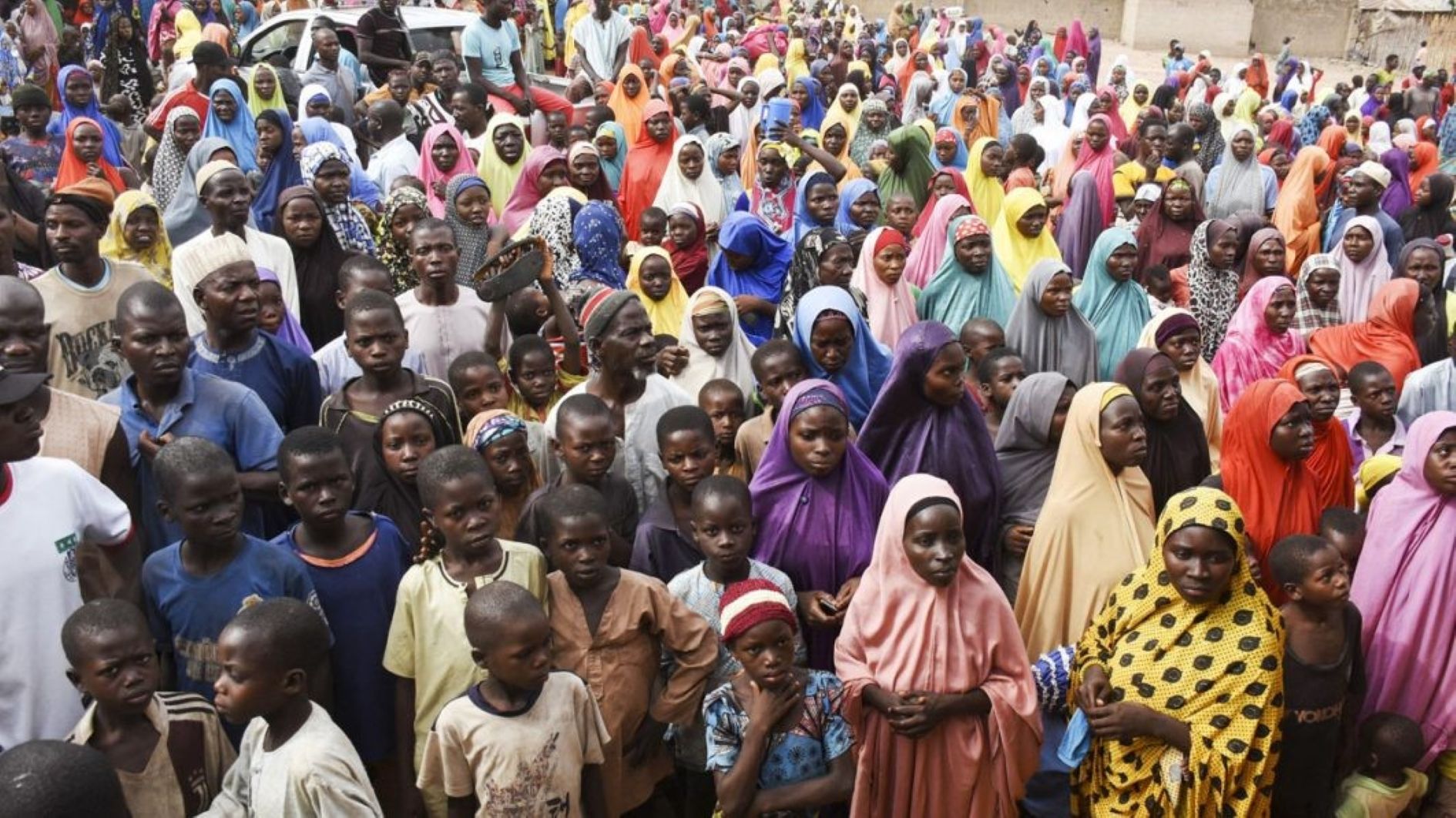
• Asylum seekers hit 140,927 • Sympathy for insecurity victims not enough, Nwawuba, CISLAC tell lawmakers
The United States (U.S.) believes coordination and partnership between the United Nations (UN) and African Union (AU) can help achieve peace, security and prosperity in Africa.
This was as the Federal Government disclosed that 3,679,757 internally displaced persons (IDPs) were living in various camps and host communities across the country as of September 1, 2026.
However, the Executive Secretary of the National Assembly Library Trust Fund (NALTF), Henry Nwawuba, said lawmakers can no longer respond to victims of insecurity with sympathy without taking concrete legislative action.
The position was echoed by the Civil Society Legislative Advocacy Centre (CISLAC), which called for urgent reforms to Nigeria’s policing system, including stronger safeguards if state police becomes a reality.
U.S. Representative for UN Management and Reform, Amb. Jeffrey Bartos, presented Washington’s position on Tuesday at a UN Security Council (UNSC) meeting on UN and AU cooperation.
The envoy said ongoing peace operations in some of the most fragile parts of Africa demanded doctrines, policies and directives to be of synergistic interaction.
Commending the political dialogue on Sudan by the UN, AU, European Union (EU), Intergovernmental Authority on Development (IGAD) and the Arab League, the U.S. called for an immediate end to the violence and a humanitarian truce.
“We continue to consider all ways to support these efforts, including through an expansion of the Darfur arms embargo to cover all of Sudan,” Bartos announced.
The U.S. condemned the terrorist attacks in Nigeria, Burkina Faso, Mali and Niger, stressing the necessity of AU-UN alliance to address “a multitude of challenges” in West Africa and the Sahel.
Bartos reminded the UN that the international community had a vested interest in countering terrorism and the threat it poses to the global community. He cited UNSCR 2719, which backs UN financing of Security Council-authorised AU-led peace operations, saying the framework could be a useful tool in ensuring security and stability in Africa.
Noting that deployments under the resolution will reinforce the AU-UN collaboration, Bartos said such peacekeeping missions “should be small, time-bound, and have clear objectives.”
Federal Commissioner/CEO of the National Commission for Refugees, Migrants and Internally Displaced Persons (NCRMIDP), Aliyu Ahmed, disclosed the refugee figure at the recent National Multi-Stakeholder Policy Dialogue in Abuja, organised by CISLAC/Transparency International Nigeria (TIN), with support from the Government of Ireland.
The dialogue was themed ‘Strengthening Human Rights-Centred and Gender-Responsive Approaches to SGBV in Defence and Security Operations in Nigeria’.
Aliyu, who was represented by his Special Adviser, Dahiru Bobbo, also disclosed that Nigeria was hosting 140,927 refugees and asylum seekers from Chad, Niger, Cameroon, Libya, Syria, Afghanistan, Lebanon, Congo and Sudan. He reiterated the government’s commitment to protecting all vulnerable groups within its jurisdiction.
Other stakeholders at the dialogue, including representatives of the Independent Corrupt Practices and Other Related Offences Commission (ICPC), Transparency International Defence and Security (TI-DS) and various security agencies, called for stronger institutional safeguards, reporting mechanisms and accountability systems to combat Sexual and Gender-Based Violence (SGBV) within Nigeria’s defence and security architecture.
In his keynote, CISLAC Executive Director, Auwal Ibrahim Rafsanjani, said defence and security institutions must be judged not only by their operational capacity but also by their ability to protect human rights, dignity, safety and equality, warning that SGBV affected security personnel, civilians, detainees and conflict-affected communities.
ICPC Chairman, Dr Musa Aliyu, represented by Mrs Peace Arocha, pledged the commission’s resolve to enforce extant laws and policies against SGBV, expressing concern that widespread underreporting continued to undermine efforts to identify perpetrators and secure justice for survivors.
First Secretary, Security and ECOWAS Relations at the Embassy of the Kingdom of the Netherlands in Abuja, Ms Dineke Traore, applauded CISLAC for convening the dialogue, stressing that the Netherlands viewed security, human rights, integrity and accountability as mutually reinforcing principles.
In his presentation, Executive Secretary of the National Human Rights Commission (NHRC), Dr Tony Ojukwu, said the commission had documented a disturbing pattern of SGBV through its field monitors, Human Rights Situation Room, IDP camp interventions, detention facilities and conflict-affected communities, warning that sexual violence was both a consequence of insecurity and, in some instances, a feature of security responses.
Nwawuba poke yesterday in Abuja at the 2nd Annual Distinguished Parliamentarian Lecture organised by the House of Representatives Press Corps.
The lecture focused on ‘The Imperative of State Police: Securing Communities, Strengthening Federalism’, with lawmakers and other stakeholders examining the need to reform Nigeria’s policing structure.
The former member of the House of Representatives said the proposed state police system offered parliament an opportunity to develop a more responsive approach to insecurity.
According to him, the changing nature of insecurity requires lawmakers to reassess existing laws and institutions.
Supporting the reform, CISLAC said Nigeria’s persistent insecurity exposed the limitations of the highly centralised policing structure.
In a speech delivered on behalf of its Executive Director, the organisation cited banditry, terrorism, kidnapping, communal conflicts and organised crime among the threats confronting communities.
CISLAC warned that decentralising policing without adequate safeguards could create fresh challenges.
Meanwhile, former Minority Leader of the House of Representatives, Ndudi Elumelu, also backed state police but stressed the need for safeguards against political interference.

