 Follow Us on Google News


 Follow Us on Google Discover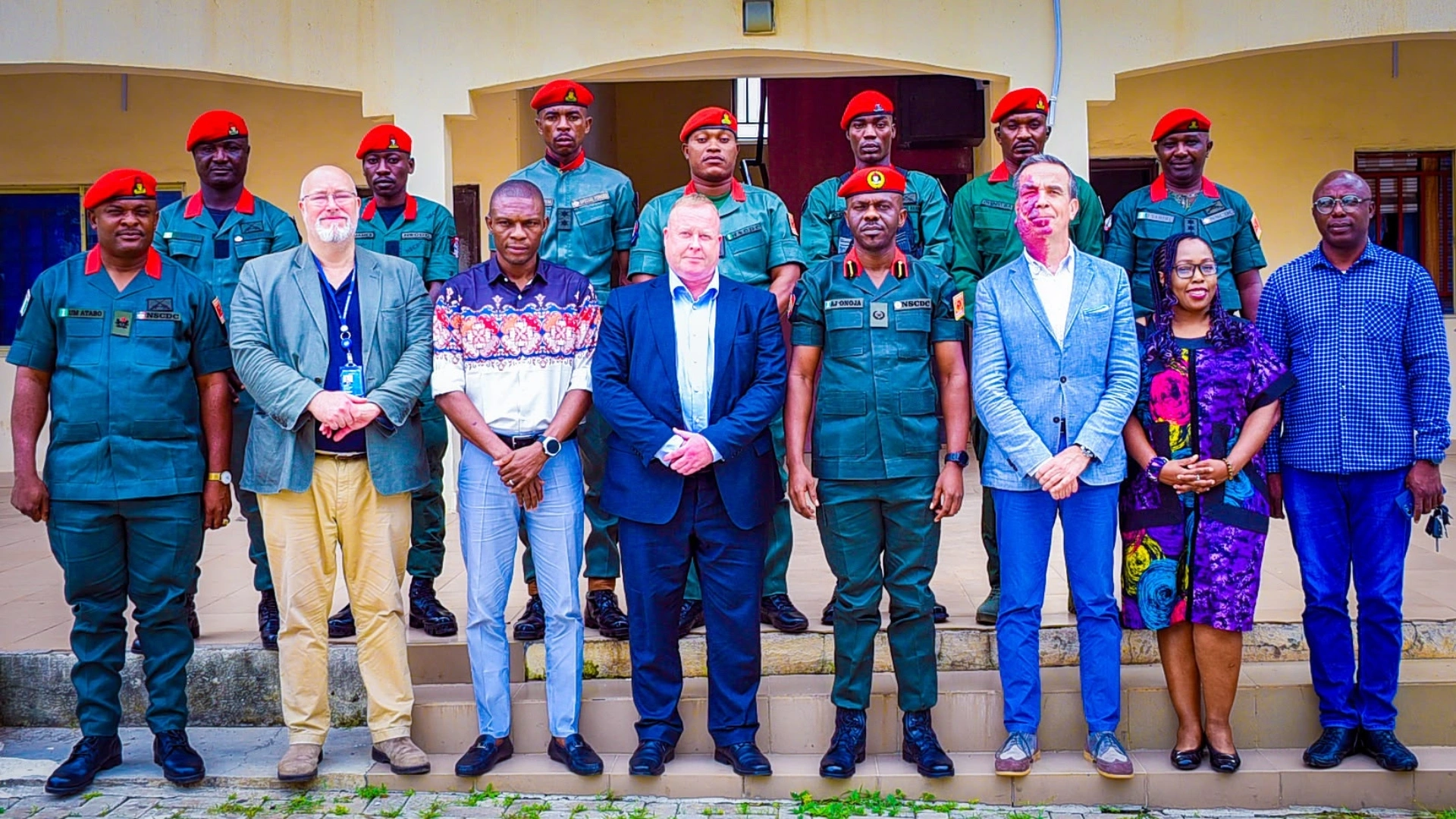
The United Nations Office on Drugs and Crime (UNODC) is seeking deeper cooperation with Nigeria’s Mining Marshals as concerns grow over the links between illegal mining, organised crime and terrorism in Nigeria and the wider West African region.
The move followed a strategic engagement between a UNODC delegation and the Mining Marshals Corps (MMC), a specialised unit of the Nigeria Security and Civil Defence Corps (NSCDC) responsible for combating illegal mining.
The UNODC delegation was led by Tullio Santini, Chief of the Africa Section of the Terrorism Prevention Branch, who commended the Mining Marshals for their expanding enforcement activities against illegal mining.
According to the organisation, the number of arrests and prosecutions linked to illegal mining demonstrated Nigeria’s efforts to tackle the illicit exploitation of mineral resources.
The engagement formed part of a wider UNODC mission in Nigeria involving discussions with partners and a review of ongoing field operations.
A major focus of the meeting was the Coordination through Operational Networks against the Crime-Terrorism Nexus (CONNECT) Initiative.

Robert Haslinger, a law enforcement expert from the Swedish Police, introduced the initiative during the engagement.
CONNECT is designed to improve cooperation among governments and law enforcement agencies in identifying and disrupting financial and operational links between organised criminal groups and terrorist organisations.
The initiative is scheduled for launch in November 2026, with Nigeria among the countries invited to participate.
The discussions in Abuja centred on the potential role of the Mining Marshals in the initiative, particularly given the growing attention being paid to the exploitation of natural resources as a potential source of financing for criminal and terrorist networks.
Representing the Commandant General of the NSCDC, Prof Ahmed Abubakar Audi, the Commander of the Mining Marshals, Assistant Commandant of Corps John Onoja Attah, welcomed the UNODC delegation.
Attah described UNODC as an important partner in strengthening the operational capabilities of the Mining Marshals.
He said previous UNODC-supported training had improved cooperation between the Mining Marshals and the Nigerian Financial Intelligence Unit (NFIU), particularly in investigations and intelligence-led operations targeting illegal mining activities.

According to him, the experience demonstrated the value of stronger institutional cooperation in tackling organised networks involved in illicit mining.
Attah also explained that the Mining Marshals occupy a specialised position within Nigeria’s security structure.
The unit operates under the NSCDC while working with the Ministry of Interior and the Ministry of Solid Minerals Development. Its primary responsibility is to suppress illegal mining, although its personnel can also support wider national security operations when required.
He called for the Mining Marshals to be formally included in the CONNECT Initiative.
Attah argued that efforts to disrupt terrorist financing should pay closer attention to illegal exploitation of mineral resources and the financial networks that may develop around such activities.
The Mining Marshals commander also requested additional capacity-building programmes covering terrorism-related concepts, regional intelligence cooperation and peer-learning opportunities.
He said such training would strengthen the unit’s ability to respond to threats associated with illegal mining and improve cooperation with security agencies and counterparts in other countries.
The request comes as Nigeria and other countries in West Africa and the Sahel continue to face concerns over the convergence of criminal activity, resource exploitation and terrorism.
The relationship between illegal mining and insecurity has received increasing attention from governments and international organisations, particularly in areas where valuable mineral resources can be exploited outside formal regulatory systems.
UNODC officials described the structure of the Mining Marshals as a notable feature of Nigeria’s law enforcement system.
They noted that the unit’s responsibilities extend from intelligence gathering and prevention to arrests, investigations and prosecutions. They also highlighted its use of non-kinetic measures, including engagement with stakeholders and communities affected by illegal mining.
The broader approach allows the Mining Marshals to combine enforcement with community engagement and other preventive measures.
The meeting ended with an exchange of publications and a commemorative photograph, while both sides expressed their intention to strengthen cooperation.
The proposed collaboration could give the Mining Marshals greater access to international expertise and regional intelligence networks as Nigeria intensifies efforts to tackle illegal mining.
For UNODC, closer engagement with specialised Nigerian enforcement agencies also forms part of its wider effort to address the intersection between organised crime and terrorism.

