 Follow Us on Google News



 Follow Us on Google Discover
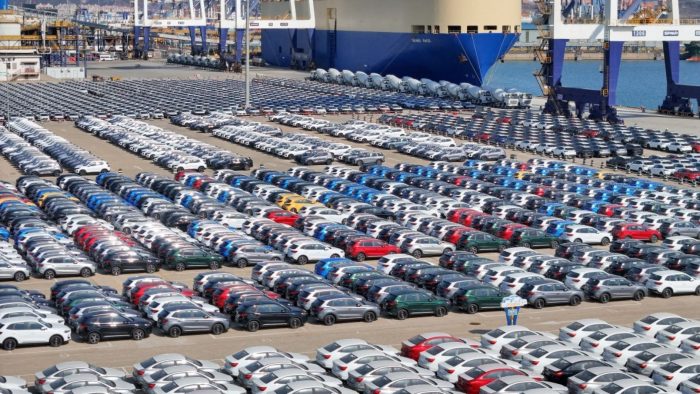
Nigeria’s vehicle import market is experiencing increased activity following the Federal Government’s reduction of import duties and other vehicle-related charges, but the policy has yet to translate into lower retail prices, raising concerns about its impact on motorists and the automotive industry.
Data from the Nigerian Ports Authority (NPA) showed that vehicle traffic through the nation’s ports increased by 42.5 per cent to 103,375 units in the first half of 2026, from 72,568 units recorded in the corresponding period of 2025.
The development points to renewed activity in vehicle imports amid changes in the government’s fiscal policy, although consumers in Lagos continue to contend with high prices for both foreign-used passenger cars and sport utility vehicles (SUVs).
Findings by Shipping Position Daily at major car marts and the Berger vehicle market in Lagos showed that some popular models have recorded fresh price increases, despite the reduction in import-related charges introduced by the government.
Under the 2026 Fiscal Policy Measures, contained in a circular dated April 1, the Federal Government reduced the total effective tariff on fully built passenger vehicles, four-wheel-drive vehicles and station wagons from 70 per cent to 40 per cent.
A further adjustment took effect on July 1, reducing the import levy on new vehicles from 20 per cent to 10 per cent and that on used vehicles from 15 per cent to five per cent.

The measures were designed to ease the cost of vehicle importation, potentially improve market supply and make vehicles more affordable to Nigerian consumers.
However, the persistence of high prices suggests that tariff reductions alone may not be sufficient to reverse the pressures driving vehicle prices in the domestic market.
For instance, a foreign-used 2009 Toyota Corolla, which sold for about N9.2 million four months ago, was quoted at N9.6 million during recent market checks.
Similarly, a foreign-used 2015 Toyota Highlander XLE with a 3.5-litre, six-cylinder engine, previously sold for between N21 million and N22 million, was being offered for N23.5 million.
Online listings also showed significant price variations, with some foreign-used Toyota Corolla models approaching N10 million and 2015 Toyota Highlander models advertised between N22 million and N25 million, depending on condition, specifications and usage history.
The development has raised questions about how quickly changes in import costs are being reflected in retail prices and whether the benefits of the new tariff regime will eventually reach consumers.
The Managing Director of the NPA, Dr Abubakar Dantsoho, disclosed the increase in vehicle traffic during a recent industry event in Lagos. He was represented by the Principal Manager, Statistics, Mrs Okenwa Igwebuike.
According to the agency, the growth was driven largely by transhipment activities at the PTML Terminal on Tin Can Island Port, which contributed significantly to the increase in vehicle handling during the period.
The figures, however, do not necessarily mean that all the additional vehicles were imported for immediate sale in the Nigerian domestic market, as transhipment activities also contributed to the recorded volume.
Speaking on the price situation, the General Secretary of the Car Dealers Association, Theo Olaniran, said dealers had yet to experience any significant impact from the government’s intervention.
“We have not seen any impact. The prices of vehicles still remain the same because the exchange rate is still the same,” he said.
Olaniran explained that the exchange rate remained a major determinant of vehicle prices, noting that import duties represented only one component of the total cost of bringing vehicles into Nigeria.
Other expenses, he said, included the purchase price abroad, freight, insurance, port and terminal charges, customs clearance, transportation, storage and dealers’ operating costs.
The cost of existing inventory has also complicated the pricing outlook. Dealers who imported vehicles when exchange rates and landing costs were higher may be unwilling to reduce their prices until they sell off their current stock.
Reducing prices to reflect the new tariff regime before recovering the cost of previously acquired vehicles could expose some dealers to losses.
For the automotive industry, the situation highlights the difference between reducing the cost of importation and achieving sustained price reductions at the retail end of the market.
The extent to which consumers benefit will depend on several factors, including exchange-rate movements, shipping costs, inventory turnover, competition among dealers and the consistency of government policy.
Meanwhile, freight forwarders said the changes in vehicle duty assessment had also altered importers’ preferences, particularly regarding accidented vehicles.
The Public Relations Officer of the Association of Professional Freight Forwarders of Nigeria (APFLON), Tin Can Chapter, Clinton Okoro, said the importation of accidented vehicles had declined because importers no longer enjoyed the previous duty advantage associated with damaged units.
According to him, accidented and roadworthy vehicles are now subject to the same customs duty, making damaged vehicles less attractive when the additional cost of repairs is considered.
“If you import a Corolla vehicle 2022 or 2020, you pay the same duty whether it is ‘accidented’ or not,” he said.
Okoro noted that accidented vehicles were still entering the country, although he could not establish their proportion in the overall increase in vehicle traffic recorded by the NPA.
He added that the availability of auctioned vehicles overseas had historically encouraged their importation into Nigeria, as owners in other markets sometimes replaced vehicles after a few years.
Also speaking, the PTML Chapter Chieftain of the Association of Registered Freight Forwarders of Nigeria (AREFFN), Musa Gbadamosi, said importers were increasingly shifting towards standard vehicles because the financial incentive previously associated with accidented units had disappeared.
He explained that although individuals could still import damaged vehicles for personal use and repair, the additional expenses on spare parts, labour and restoration had made the option less attractive.
“People are no more going for accidented trucks. It was in those days, about six years ago, when there was a discount on it, but now, be it accidented or not, you will still pay the same duty. So, people are no longer interested in it unlike before. They now bring in normal vehicles; accidented vehicles have reduced,” he said.
Gbadamosi attributed the broader increase in vehicle imports partly to the government’s green tax policy and adjustments to vehicle-related charges, saying the lower duty burden had encouraged importers to bring in more standard vehicles.
“Yes, more vehicles are coming in because of the green tax policy and implementation, and the duty has also reduced. People now bring in normal vehicles,” he added.
The changing import pattern could have implications for vehicle safety, repair costs and the composition of Nigeria’s used-car market, as importers reassess the financial benefits of purchasing damaged vehicles overseas.
However, the continued rise in retail prices presents a challenge for consumers who expected the reduction in import charges to improve affordability.
For motorists, the key issue is whether the policy changes will eventually lead to lower acquisition costs or whether exchange-rate pressures and other expenses will continue to offset the savings from reduced duties.

