 Follow Us on Google News
 Follow Us on Google Discover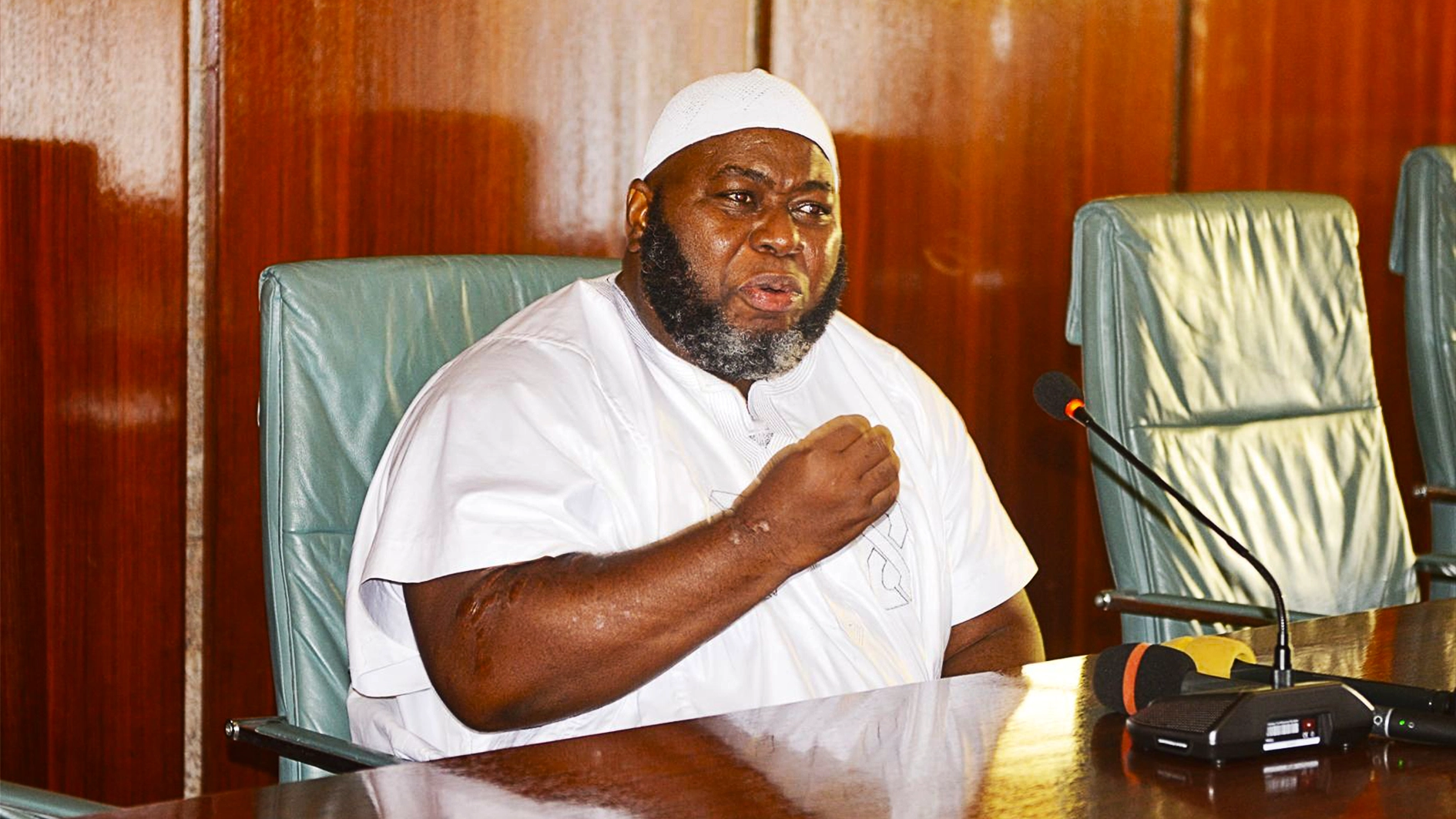
By Ayoola Ajanaku
There is a legitimate national conversation to be had about the cost, structure, transparency and effectiveness of Nigeria’s pipeline surveillance architecture. There is also a legitimate argument about whether communities in the Niger Delta should derive greater economic value from the protection of the natural resources extracted from their environment.
When that conversation is reduced to ethnic insinuations, unverified figures and an apparent attempt to justify one contractor by attacking another, the country risks losing sight of the bigger issue: energy security is a national security matter, not a tribal entitlement.
That is where Asari Dokubo appears to have missed the point. In a video circulating this week, the Niger Delta activist questioned why Government Ekpemupolo, popularly known as Tompolo, has faced criticism over pipeline surveillance while, according to him, the Olu of Warri, Ogiame Atuwatse III, and Dr. Osahon Okunbo were receiving as much as ₦2.7 trillion annually for protecting pipelines.
Dokubo initially referred to the amount as monthly before correcting himself to annual. Importantly, however, no documentary evidence was presented in the video to substantiate the ₦2.7 trillion figure, and reports carrying the allegation have expressly treated it as unverified.
That distinction is not cosmetic. It is fundamental. A claim of ₦2.7 trillion annually for pipeline surveillance is so extraordinary, that it demands concrete documentary evidence. Contracts, procurement records, payment schedules, scope of work, contracting entities and government approvals would have to be placed before the public.

Without such evidence, the figure remains an allegation – Not a fact. That is perhaps the first thing Dokubo missed.
The mathematics of the allegation in public domain – Therein is another problem where Dokubo’s allegation appears to collapse different entities, individuals and contractual relationships into one giant financial arrangement.
Osahon Okunbo is associated with Pipeline Infrastructure Nigeria Limited (PINL), where he has served in senior executive capacity. The Olu of Warri has also been publicly associated with PINL’s leadership structure. The relationship between a monarch, a company and a pipeline surveillance contract cannot simply be translated into a claim that the monarch personally receives the entire value of a corporate contract.
Indeed, this is not a new controversy. In 2022, reporting on the pipeline surveillance arrangement specifically recorded a denial that the Olu of Warri personally owned PINL, while identifying PINL alongside Tantita Security Services Nigeria Limited and Maton Engineering Nigeria Limited among companies awarded pipeline surveillance contracts.
More recent reporting identifies Osahon Okunbo as a key executive of PINL, with the company operating on critical pipeline infrastructure.
The distinction matters because corporate contract value is not automatically personal income.
What Dokubo gets right
To be fair, there is a legitimate question beneath Dokubo’s provocative presentation. If several companies are receiving public money to protect critical national infrastructure, Nigerians are entitled to know how much each contractor receives, what kilometres of infrastructure each is responsible for, what performance indicators apply and what results have been achieved.
That is a serious governance question – So too is Dokubo’s broader argument that the Niger Delta should benefit economically from the protection and development of its natural resources.
That argument should lead to a conversation about transparent procurement, community participation, local employment, measurable security outcomes and accountability – Not ethnic arithmetic(s).
Pipeline security cannot become a competition over whether an Ijaw, Itsekiri, Bini or any other Nigerian is entitled to a particular contract.
Nigeria’s oil infrastructure belongs to Nigeria. The responsibility to protect it is therefore national priority – This is where Osahon Okunbo becomes relevant.
Perhaps the greatest irony in Dokubo’s intervention is that he appears to have overlooked what the emerging pipeline-security model represented by PINL is actually trying to do.
Okunbo has publicly argued that sustainable infrastructure security cannot depend on force alone. At the World Economic Forum in Davos, he emphasised inclusion, community engagement and indigenous partnerships as critical to securing energy infrastructure. He has also spoken about the importance of patient capital and community buy-in to Nigeria’s energy future.
In a public account of PINL’s operations, Okunbo described an approach built around traditional institutions, youths, local leadership, surveillance technology and continuous stakeholder engagement.
That is a materially different proposition from simply putting men on boats and around pipelines. Modern energy security involves intelligence, technology, community relations, rapid response, environmental protection, infrastructure maintenance and the creation of incentives for communities to protect – Not destroy the assets around them.
Indeed, host-community groups have publicly credited PINL’s engagement model with improved pipeline security and community relations, although such claims should themselves be assessed against independently verifiable production and security data.
The Tompolo question is legitimate to an extent, but the comparison is wrong. Tantita’s role in pipeline surveillance is itself an important part of Nigeria’s evolving security architecture. Reports have put the company’s annual contract value at about ₦48 billion, following a federal government award reported in 2023.
The appropriate question, therefore, is not whether Tompolo deserves a contract, while somebody else does not. The appropriate question is whether every contractor is delivering value commensurate with public expenditure.
That standard should apply equally to Tantita, PINL and every other contractor. If Dokubo believes the Federal Government is paying too much for pipeline security, let the contracts be published.
If he believes one company is receiving preferential treatment, let procurement records establish it. If he believes Niger Delta communities are being short-changed, let the data demonstrate it.
If he believes there is corruption, the appropriate institutions can investigate, but once the argument moves from evidence to ethnicity, the substance begins to disappear.
Energy security is bigger than Dokubo’s quarrel, as Nigeria has spent decades paying the price for oil theft, pipeline vandalism, illegal refining and production disruptions. Every barrel prevented from reaching the market affects government revenue, foreign exchange, investment confidence and the capacity of the country to finance development.
Pipeline security is therefore not merely about who gets a contract. It is about whether Nigeria can secure the infrastructure through which its economic lifeblood flows.
That is the point Asari Dokubo appears to have missed. His intervention could have opened a valuable national debate about procurement transparency and the economics of Niger Delta security.
Instead, by advancing an extraordinary ₦2.7 trillion allegation without documentary proof and framing the matter partly through ethnic identity, he risks turning a serious national-security conversation into another quarrel over who owns the Niger Delta.
Nigeria needs more accountability, not more suspicion; more evidence, not more allegations; more collaboration, not more ethnic polarisation. The pipelines do not know the ethnicity of the men protecting them.
In a nutshell, the Nigerian economy does not either need such distraction(s) – What matters is whether the infrastructure is secure, whether oil production is protected, whether communities benefit, whether public money is properly spent and whether every contractor, regardless of name or origin, can account for the value delivered.
That is the conversation worth having and that is precisely why energy security should never be twisted on its head.
Ayoola Ajanaku is a Communications and Advocacy Specialist based in Lagos, Nigeria….

