 Follow Us on Google News
 Follow Us on Google Discover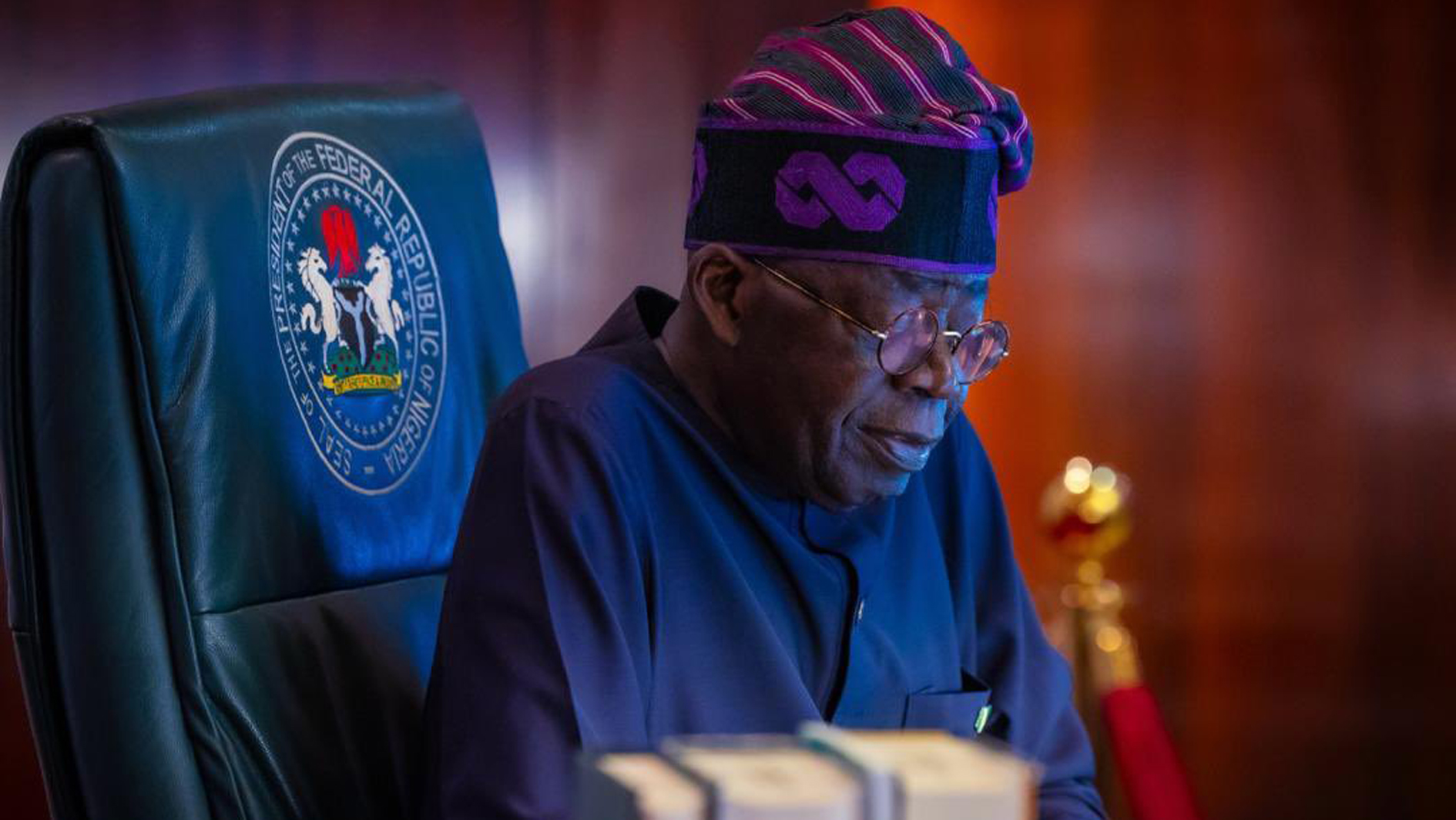
Good governance is enhanced by honest and sincere conversation between leaders and the people. When a government is sincere, the efforts would be appreciated across board. When an economy is struggling, citizens have capacity to know and are always willing to make sacrifices.
Nigerians don’t ask for too much. But lies and propaganda turn the people away. They know when a government is unfaithful and undeserving of their trust. It’s worse that in a democracy when a leadership refuses to be transparent and accountable. It widens the trust gap between people and the government.
When President Bola Tinubu arrived from his one-month vacation last Tuesday, rather than apologise for staying longer than the Constitution permitted, he decided to be boastful as usual. Asked about his health, which got citizens worried in his absence, he said: “I’m ready to kick, ready to work. There’s nothing wrong with my health. Rumours will always emanate from politics. But the fact remains, I’m here, healthy, sound and ready to go.”
Well and good. But rather than blame rumour mongers, President Tinubu should blame the Presidency for not leveling with citizens regarding his trips. It is their shady operations that got people speculating about the President’s health and other matters. In a democracy, the health of a president is the responsibility of taxpayers. Sometimes, the concerns are genuine. But with this government, the trust deficit is massive on either side.
Presidential spokesperson, Bayo Onanuga, on August 30, 2026, grudgingly announced that the president was travelling to Europe for a working vacation to last three weeks. The first stop will be London, Bayo said. Then, the president is expected to return home after the working vacation. Nothing was said of the second stop or third. In communicating with citizens, the Presidency accords itself ample room to manoeuvre while leaving Nigerians to guess and resort to rumours.
After three weeks, Nigerians began to worry and demand the whereabouts of their beloved president. The opposition declared him wanted as there was a glaring vacancy in Aso Villa. The President was away. His Vice, Kashim Shettima, was away in UNGA. The Constitution envisaged that such could happen, and had provided how to quietly take care of it.
However, the President of the Senate, Godswill Akpabio, decided to play politics with a constitutional matter. He said he was unfit to become acting president, and that there was no vacancy in the Villa. So, the Secretary to the Government of the Federation (SGF), George Akume, was handpicked by the presidential spokesperson to act on behalf of Mr. President, after the initial three weeks working vacation had expired. An extension was announced without a constitutional explanation for the breach.
Matters needn’t get to the level trampling on the rule of law. With a simple and honest conversation with citizens, nobody needed to rely on the rumour mill to know where President Tinubu was. Even the choregraphed photographs from France fueled the rumour mill. Citizens wondered if they were AI generated. The rumour was orchestrated by the Presidency’s predilection to hide things.
What’s worse is that a precedent has been set. By the time the 2027 elections are fought and lost, it’s concerning to imagine the amount of recklessness and impunity that would be at play. It is undemocratic to violate the Constitution and put up a straight face. It is dangerous to get away with it.
The other time, when it was the turn of the late President Umaru Yar’Adua in 2010, Tinubu, as leader of opposition vehemently denounced the leadership vacuum that was created. It was to avert a reoccurrence of the Yar’Adua episode that the Constitution was amended. President Tinubu and those supporting the illegality should take responsibility and apologise.
Another matter that fueled the rumour mill was President Tinubu’s failure to attend the 81st UNGA. The impression all along had been that President Tinubu would sit next to President Trump. He was going to sign solid minerals deal with the United States’ government. Nigeria’s Permanent Representative to the United Nations, Jimoh Ibrahim, stressed that point. When the President failed to show up, Nigerians were legitimately worried and many were forced to speculate what could have caused the change of heart. Nigerians deserved an explanation.
President Tinubu did not tell Nigerians why he stayed back in France while his host, Emmanuel Macron, left for New York. What held him back in France? It’s hard to contemplate what could have stopped the President from going to UNGA. President Tinubu attended UNGA in 2023, during the presidency of Joe Biden. His speech was applauded.
Nigerians would love to see Mr President hobnob with Trump and straighten pending matters, including the designation of Nigeria as a Country of Particular Concern (CPC) by the United States. Trump still has two more years on the saddle and Nigerians look forward to President Tinubu meeting him at the 82nd. May God keep the two leaders.
Last week, President Tinubu’s address to commemorate Nigeria’s 66th Independence Day Anniversary left some gaps. There are exaggerations in the address that do not conform with the socio-economic realities of millions of Nigerians. In a campaign season, it was more like an address to his party loyalists. He refused to carry along the population that is distressed by his policies.
Since inauguration in May 2023, one of the recurring promises of Mr President is his desire to implement shared prosperity. He rhymes it like a singsong. But the promise has refused to trickle down. Some say that members of the political class, their families and appointers have indeed prospered massively in three years, while the generality gets poorer by the hour.
The President is correct when he said: “By 2023, poverty was rising, and hope was nearly gone. The country’s situation was darker than ever. We had no choice but to act.” Indeed, according to the World Bank and the UN Conference on Trade and Development (UNCTAD) reports, between 115 and 126 million Nigerians (about 56 per cent) lived below the poverty line in 2023.
The National Bureau of Statistics (NBS) estimated that 133 million Nigerians (63 per cent) suffered from multidimensional poverty, with around 71–87 million being extremely poor. Yes, 2023 was grim.
But Nigerians are wondering why President Tinubu conveniently refuses to take responsibility for the darkness and forlorn hope Nigerians were plunged by the All Progressives Congress (APC), of which he is the principal partner. By 2023, Nigerians had experienced eight years of hardship under President Buhari. Whereas by 2015, an estimated 60-65 million Nigerians were reported to live in poverty (around 35 to 38 per cent), relative to the population at the time.
The APC, in 2015 promised to take 40 million Nigerians out of poverty. It inaugurated the most outlandish poverty reduction scheme since 1999. Borrowed heavily from the World Bank and other foreign lenders to make that campaign promise a reality, but failed colossally to deliver. Nearly half of the funds meant to exterminate poverty were stolen.
President Tinubu should begin to apologise for the sins of the APC years, which to him must constitute vicarious liability. Instead, Tinubu has tried to denounce Buhari when it is convenient, and at other occasions claim the two of them are one and the same, just to inherit the Buhari’s electoral heritage. That’s one thing Nigerians are not comfortable with in Mr. President. He does not own up to anything.
After the fuel subsidy was removed in 2023, the cost of living and production/manufacturing costs went haywire, because petrol and also diesel power the economy. The President promised to use subsidy savings to balance the losses in the formal and informal sectors, including transportation, health and living costs. Nigerians waited patiently. Revenues accruing to government grew substantially.
In 2023 between June and December 2023, the Federation Account Allocation Committee (FAAC), reported a surge in what was distributed among states, councils and the Federal Government. It had surpassed N1 trillion monthly. In 2024, revenues increased to N20.98 trillion, representing 68.11 per cent over that of 2023.
For 2025, President Tinubu confessed in August of that year that revenues had surpassed the expectations of government. But Nigerians are getting poorer. Approximately 141 million Nigerians (62 per cent) are projected by the World Bank and PricewaterhouseCoopers (PwC) to live in poverty in 2026.
All the monies set aside in three years to alleviate poverty have failed to work. In 2024, former Finance Minister, Wale Edun, announced that N330 billion was disbursed to 8.5 million households. In August 2026, N600 billion was claimed to have been shared to 10 million households. But the Minister of Humanitarian Affairs and Poverty Reduction, Dr. Bernard Doro, confessed recently that the ministry could not trace those who benefited because they had no bank accounts and phone numbers.
Government’s enhanced budgets since 2023 have also failed to deliver. In addition to Buhari’s 21.83 trillion 2023 budget, President Tinubu signed a N2.176 trillion supplementary budget with N400 billion embedded for vulnerable households. Budget 2024 amounted to N28.78 trillion. That of 2025 was N54.99 trillion. That of 2026 is N68.32 trillion.
The essence of big budgets is prosperity for the country and citizens. But since 2024, this government has struggled with fiscal discipline. Capital budgets are delayed and rolled over but recurrent budgets for welfare of politicians and their families don’t get delayed. Nigerians are asking: where are the subsidy savings?
When President Tinubu asks citizens to be patient, only the political class takes him seriously. When he claims to see the light at the end of the tunnel, Nigerians are wiser not to trust the vision of politicians.
Since the austerity measure introduced by the administration of Shehu Shagari in the second Republic (1979-83), generations of Nigerians have not seen the light at the end of the tunnel of poverty. Nigerians are getting poorer as well as the economy. Chinese traders have taken over.
Shared prosperity that is domiciled among the political class is forgery. Let shared prosperity be democratised.

