 Follow Us on Google News


 Follow Us on Google Discover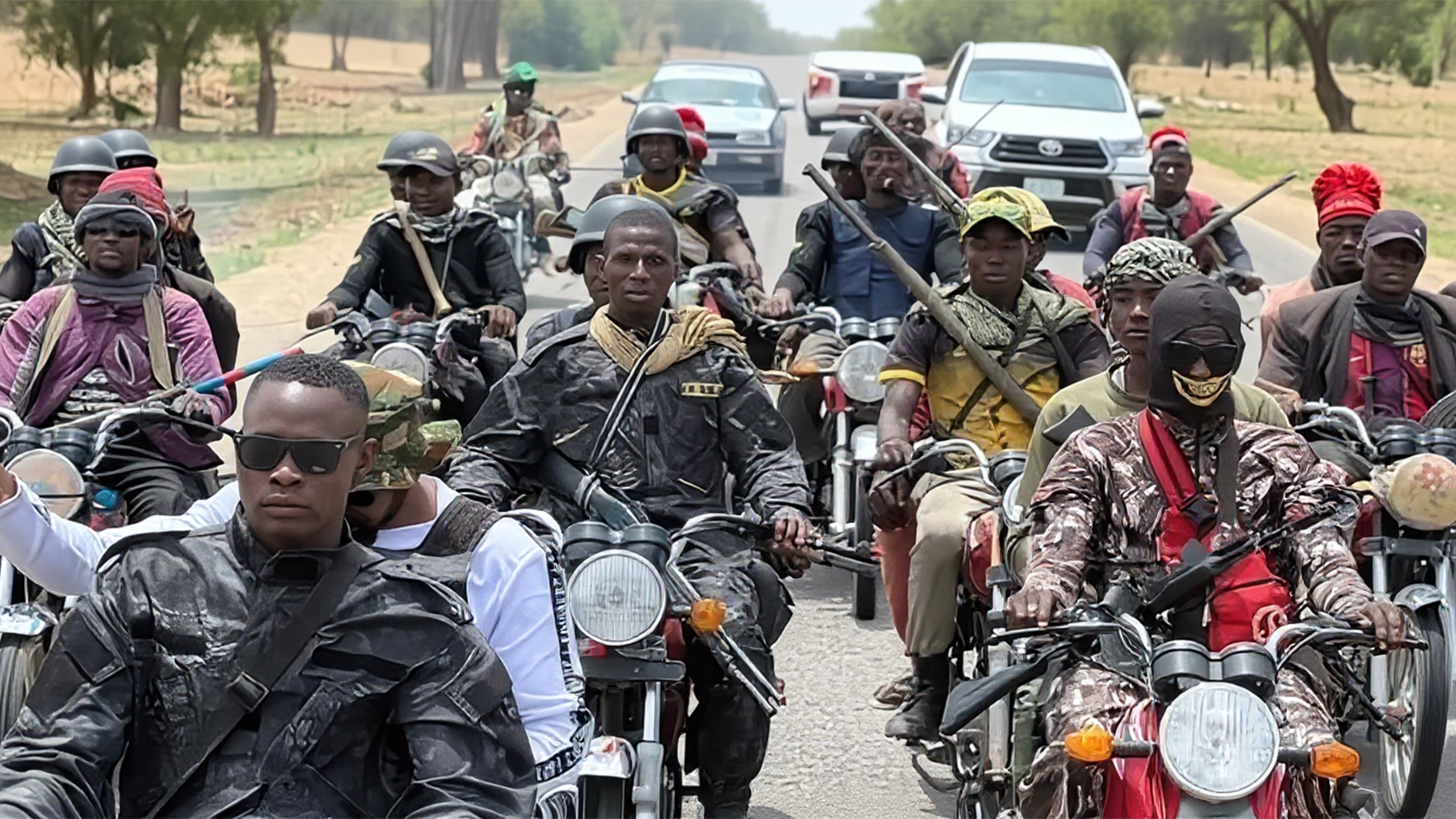
By Sylvester Odion Akhaine
Good morning, Mr President. Today, I complete the four-part serial on terrorism and the state, focusing mainly on the role of illegal mining in the insecurity nexus in the country. Let me say, Mr President, that Nigeria has no business with poverty if we had a leadership that can put public service before the self. Come to think about it: the self is vain. It is vanity of vanities and equal to vanity. Public-spirited leadership is required.
Benue, Katsina, Kwara, Nasarawa, Plateau, Zamfara have featured in the nexus of insecurity linked to illegal mineral mining. That this is the case speaks to the absence of the state. Let us showcase the minerals in these states, as we do in every other state in the country. Benue has limestone, coal, clay, and gypsum. Katsina: gold, geophyte, marble, kaolin, and silica. Kwara: ore, marble, limestone, clay, gold, feldspar, dolomite, and potash.
Nasarawa: lithium, baryte, and coal. Plateau: Tin, iron ore, gemstone, coal berytire, kaolin, Salt and zircon. Zamfara: gold, lithium, copper, iron ore, and limestone among others distributed across the state. The listed states have more than what I have credited them with, drawn from private research, university-based research, and government homepages. These form a layer of insecurity that is perpetrated by locals and in collaboration with external forces.
In the areas where terrorism has been on the upsurge, especially Zamfara, Katsina, Benue, Plateau, Nasarawa, and lately Kwara, the presence of mineral resources listed above plays a great deal of role.
In Plateau and Benue, the framing of the killings has always been a herders-farmers crisis cloaking the ambition of the fugitive Fulanis who want to claim the area from the indigenous ethnic groups as their new abode. Dachung Musa Bagos, a former member of the Plateau State House of Representatives representing Jos South/Jos East, has called into question the framing of the crisis in this regard. He noted that the ongoing killings and insecurity in Plateau State are caused by land grabbers who use these communities for illegal mining and agricultural purposes.

According to him, “All the communities that have been wiped out on the Plateau, all of them today, go back to those communities, you will see that some people are mining in those communities that you cannot even access those communities.
Go to some of these communities, you will see that these communities are highly vegetational that you can farm there, you can rear cows there, they have streams. So, all these communities are for a certain target.”
The land grab issue has now played into the recovery of lands for mineral extraction by foreign buccaneers in collaboration with security forces and local players. The former commander of Operation Safe Haven, Retired General Nicholas Rogers, averred that foreigners are involved in illegal/legal mining. Often they come with organised criminals to lay claims to land for their illegal activities.
BusinessDay, crediting a report by SBM Intelligence, noted that “across Plateau’s mineral-rich communities, violence is no longer only forcing residents from their homes; it is also redrawing ownership and access to lucrative mining pits, agricultural land and commercial corridors that sustain local economies worth millions of naira.” Ibrahim Nafiu, a retired Assistant Inspector General of Police, acknowledged a pattern to the crisis and reported that the crisis goes beyond an ethnic framing.
In his words: “You see communities emptied, strategic locations occupied and economic activity emerging around abandoned areas…When that begins to happen repeatedly around mineral-rich zones, you must ask whether this is simply communal violence or a struggle over access and control.”
Farmland is appropriated for mining by means of banditry. In Plateau alone, where mining activities date back to 1902, several people have been killed. As early as February this year alone, 37 people died in a mine-related mishap, and 12 others were slaughtered in Barkin Ladi.
Governor of Plateau State Caleb Mutfwang, has affirmed that over 60 communities across Riyom, Barkin Ladi, Bassa, Bokkos, Mangu and Wase local government areas have been sacked, with many subjected to repeated deadly attacks. The arrow-head of these attacks is the Fulani, whose agenda of land grab coincides with that of the miners, whether legal or illegal.
Zamfara, ethnic conflict between the Fulani and indigenous Hausa people has also played out brutally between the two ethnic groups. Between Birnin Gwari in Kaduna State and Gusau in Zamfara State. This self-defence inter-ethnic conflict has proliferated, resulting in the formation of self-defence contraptions. This has dovetailed into illegal mining of gold and lithium by foreign expatriates.
The state government and some Chinese ‘Nationals are implicated in the mineral heist in Zamfara. There is an allegation of an airstrip in the state where planes took off at times with mineral harvest from the state with the connivance of the government and powerful individuals in the mining sector. Much of the slaughter we witness daily is to pave the way for gold mining, legal and illegal.
Mineral resources are supposed to be under the exclusive list of the central government. Item 39 of Part I of the Second Schedule (Exclusive Legislative List), 1999 Constitution as amended, provides: “Mines and minerals, including oil fields, oil mining, geological surveys and natural gas” and are under the exclusive legislative list.
The proliferation of mining activities in states without recourse to the federal government amounts to a violation of the Constitution. The central government needs to exert itself in this regard, or amend the Constitution to allow for a derivation principle which would vest this authority on the federating units. Mr President, the ball is in your court.
Akhaine is a professor of political science at the Lagos State University.

