 Follow Us on Google News



 Follow Us on Google Discover
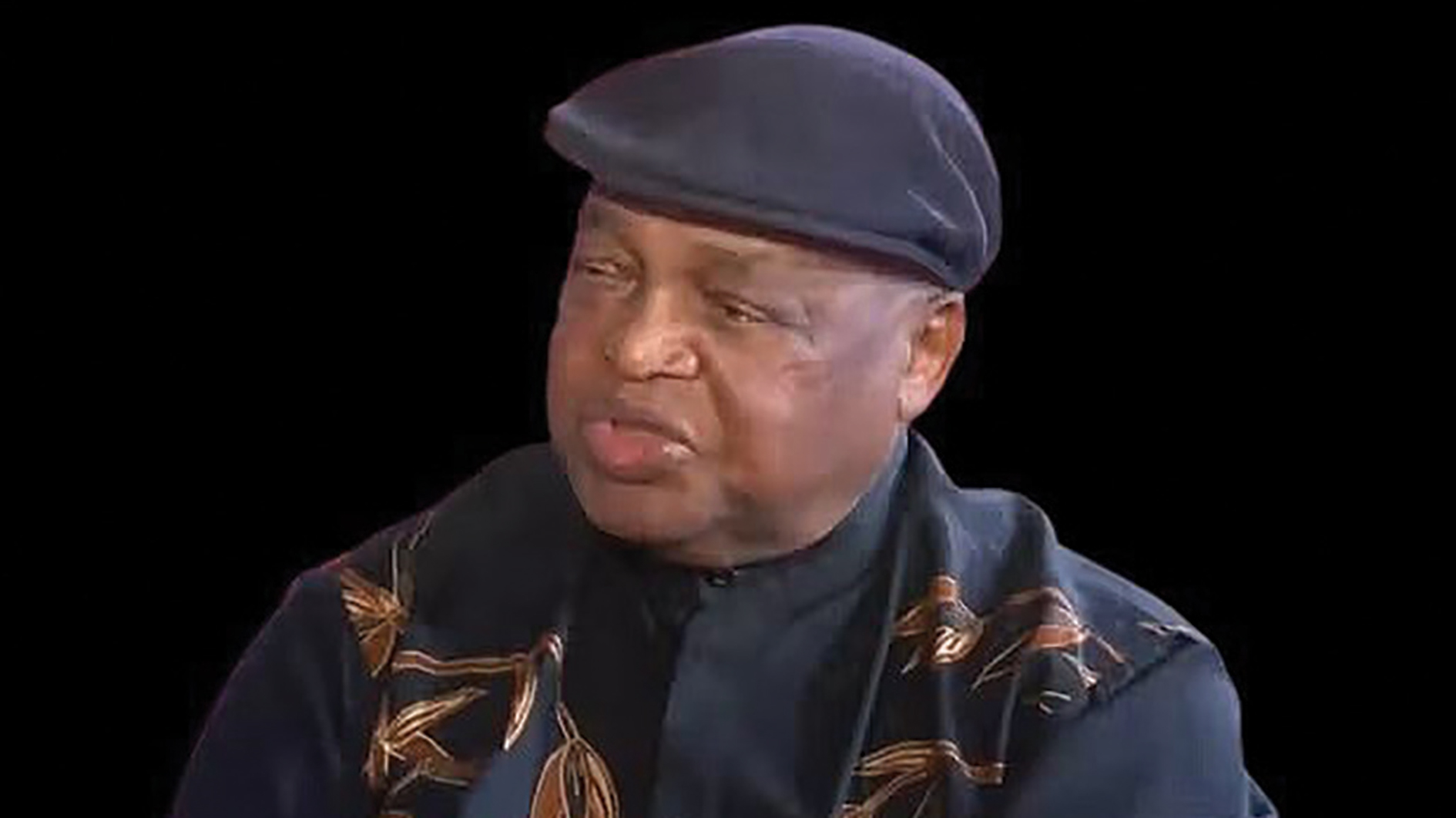
The passing of renowned politician, journalist, historian, diplomat and member of The Guardian Editorial Board, Ambassador Patrick Dele Cole, in London on October 17, 2026, at the age of 86, added to the list of patriotic Nigerians who have fought tirelessly for the country and left the unfinished work of nation-building to a generation still grappling with the same challenges the revered elders spent their lives helping the nation to overcome.
Given his decades-long advocacy that the country’s future depended on leaders who understood public office as a responsibility rather than a personal entitlement, Cole’s passing should elicit more than tributes from political leaders and professional colleagues. It invites a national reckoning. And it is time to turn admiration for the late elder statesman into a renewed commitment to the principles he represented.
Born in Abonnema, in the Kalabari Kingdom of present-day Rivers State, on August 4, 1940, Cole received an education that underscored the importance of knowledge in public leadership. From Nigerian schools, he proceeded to the University of Otago in New Zealand, where he earned a first-class honours degree, and to the University of Cambridge, where he earned a doctorate. He was a fellow of King’s College, Cambridge, and a visiting professor at the University of Pennsylvania from 1969 to 1973, before returning to Nigeria and entering public service. From 1973 to 1976, Cole worked as an administrative officer in the Political Department of the Cabinet Office in Lagos. In 1976, he was appointed Managing Director of Daily Times. It is to his credit that he restored the newspaper’s former influence, making it one of the largest in Africa at the time, and recruited influential journalists. In 1977, Cole served as a member of the Presidential Panel on the History of Nigeria since Independence. He also participated in the Nigeria-China Forum in 1979. Cole was appointed Nigerian ambassador to Brazil and served in that capacity from 1987 to 1990. He also served as ambassador to Argentina.
Ambassador Cole later became the People’s Democratic Party (PDP) deputy national chairman for the South-South geo-political zone. He served as Special Adviser to the President on International Relations from 1999 to 2001. Ambassador Cole ably represented Nigeria at different international fora, including the United Nations and the Organisation of African Unity (OAU).
The late Cole, author of Modern Traditional Elites in the Politics of Lagos, held the national honour of the Order of the Federal Republic (OFR).
While academic distinction, by itself, is no guarantee of wisdom or integrity, Cole combined intellectual preparation with practical engagement, demonstrating the power of knowledge whenever the occasion demanded that convention be questioned, historical mistakes be recognised, or the institutions entrusted to him be improved. Across journalism, diplomacy and government, he skilfully interpreted the country’s political and institutional development and offered prescriptions.
The consummate newspaper man left a legacy of editorial independence rooted in his personal convictions and democratic principles. He believed a newspaper’s editorial judgement should never extend the proprietor’s preferences, a political patron’s expectations, or a government’s communication strategy. He believed that a free press must remain capable of challenging power precisely because the public needs an independent account of how authority is exercised.
As Managing Director of Daily Times, Cole introduced an editorial board modelled on the American system, separating the formulation of institutional opinion from the conventional arrangement in which editors and features writers worked together on editorials. His subsequent association with The Guardian, including his role as consultant and a member of its Editorial Board, reflected the same concern for editorial independence. He also encouraged the recruitment of Dr Stanley Macebuh, whose leadership helped in establishing the newspaper’s intellectual tradition.
For Cole, truth-telling is a professional obligation rather than an act of disloyalty. That means an employee must be able to disagree with the employer whenever accountability beckons. This position exposes a fundamental weakness in Nigerian politics, where loyalty to individuals is often valued above fidelity to the public interest.
In a 2025 interview with The Guardian, Cole argued that journalists must confront leaders with the gap between promises and performance. He stressed that saying no to an employer who is wrong should not be conceived as a moral offence. Cole’s death should indeed spur urgent conversations about preserving an institutional culture in which members can identify mistakes without being punished for doing so, and leaders can accept scrutiny without confusing it with betrayal and can correct their course.
During President Olusegun Obasanjo’s administration, when Nigeria sought to rebuild its diplomatic relationships and recover its international standing after years of isolation, Cole demonstrated what expertise can achieve when it is given precedence in the national interest, above electoral prominence and political patronage. His contribution to the economic diplomacy that culminated in Nigeria’s Paris Club debt-relief agreement, which saw the cancellation of approximately $18 billion, illustrates why the nation’s leaders should prioritise the recruitment and empowerment of competent advisers.
Coming at a time when Nigeria is yet to achieve true federalism, Cole’s departure should reinvigorate the debate on a federation that embraces negotiation and fairness, one in which national cohesion rests on a credible balance of interests rather than the persistent frustration of constituent communities.
Former Delta State governor James Ibori attested in his tribute that even while serving as a special adviser in Obasanjo’s administration, Cole remained committed to the “legitimate aspirations” of his people, navigating the competing interests of his kinsfolk and the Federal Government. The late Cole should serve as a case study in how a diverse federation can strike a delicate balance in the distribution of political authority, economic resources and development responsibilities in ways that command public confidence across its constituent communities.
In another interview, Cole reminisced about a Nigeria where graduates obtained invitations for job interviews before completing national service and contrasted that experience with the frustrations of younger Nigerians, some of whom even lose their lives seeking employment. He recalled benefiting from education across different regions and receiving opportunities that helped him progress. His recollections of a lost country wailing to be rediscovered raise questions about what must change urgently for talent and effort to translate, once again, into opportunity. Young Nigerians need quality education as well as accessible routes into employment without the so-called connections. There once was a Nigeria that worked. It worked for Cole. It should be made to work again.
Ironically, Cole did not despair. Until his final hours, he remained confident that Nigeria still had a bright future. Such optimism, in the face of so much political charade, deserves commendation and emulation.
The death of this patriot, who strode across scholarship, journalism, diplomacy and government, should not close the windows of hope. Rather, it should strengthen the conviction that national renewal remains possible when citizens refuse to accept poor leadership and insist that public authority must serve the common good.
Eminent Nigerians from across the country, including President Bola Tinubu and former President Obasanjo, have paid tributes to the late Cole, extolling his virtues. The way to also pay tribute to him will be to ensure that political office holders and colleagues allow the principles that Cole lived by to shape public decisions. That way, a Nigeria in which those principles become the ordinary expectations of public life can emerge. That is the unfinished work Patrick Dele Cole’s passing leaves behind.

