 Follow Us on Google News


 Follow Us on Google Discover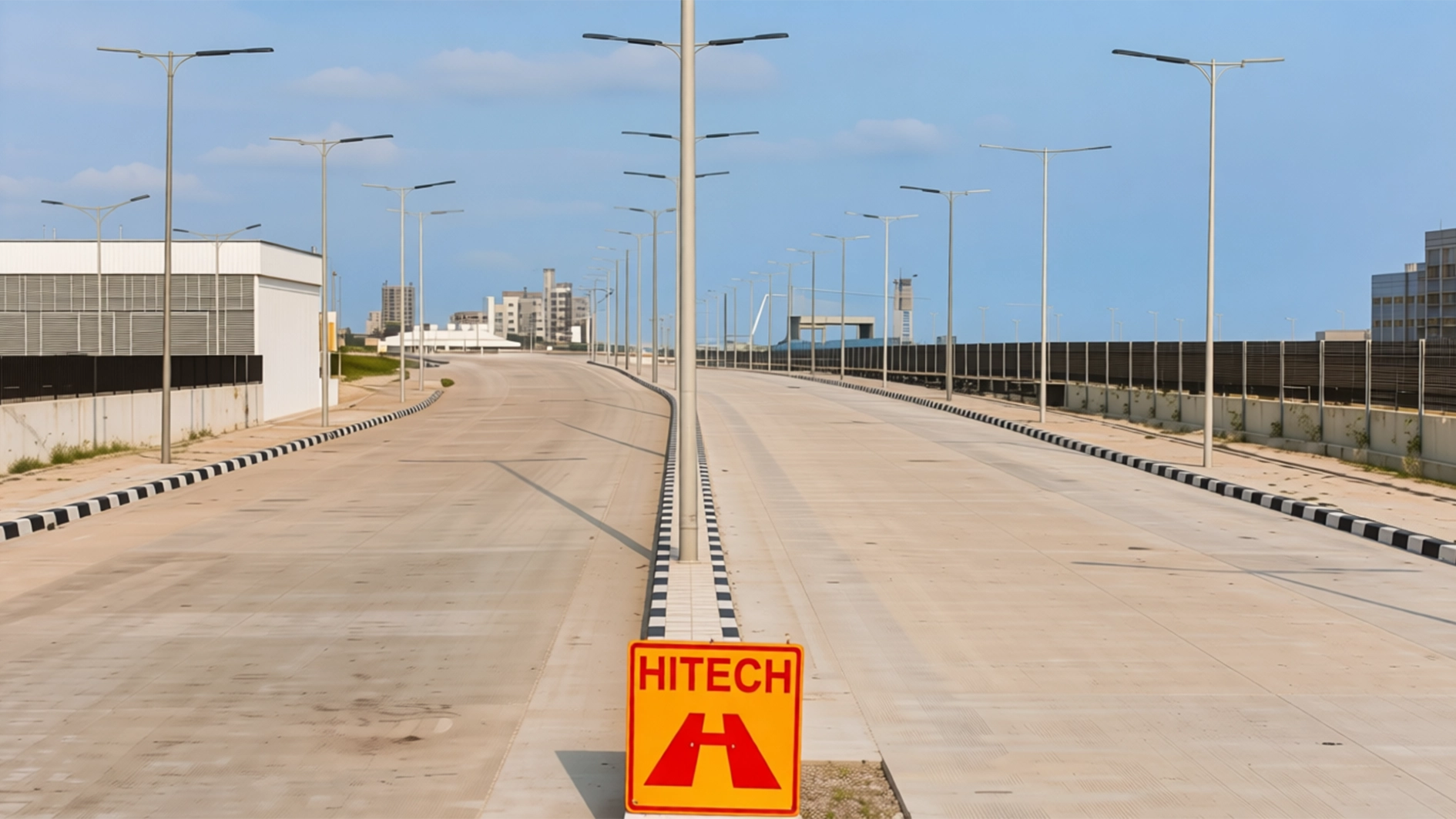
The Federal Government’s deployment of 40 Coastal Road Guards to protect the multi-billion-naira Lagos-Calabar Coastal Highway from vandals is an extraordinary measure that speaks volumes about the state of the nation. No country should have to assign security personnel to guard newly installed road signs, manhole covers and other highway facilities against theft by its own citizens. Yet that has become Nigeria’s reality. It is a reality that reveals not merely a security challenge but a profound moral, social and economic crisis.
The Federal Controller of Works in Lagos State, Mr Olufemi Dare, explained that the initiative became necessary because newly installed manhole covers, directional signs and other facilities along the highway had repeatedly been stolen or vandalised shortly after installation. Consequently, the newly inaugurated guards have been mandated to protect the infrastructure, prevent motorcycles and tricycles from using the expressway, stop illegal U-turns, discourage indiscriminate parking of heavy-duty vehicles, check illegal grazing, prevent street trading and encroachment on the highway corridor, and curb the indiscriminate dumping of refuse.
These are responsibilities that should ordinarily not require extraordinary intervention. The very fact that they do illustrates how dangerously Nigeria’s civic consciousness has deteriorated.
Public infrastructure is the collective property of the people. Roads, bridges, drainage systems, traffic signs and public utilities are constructed with taxpayers’ money to improve transportation, facilitate commerce, enhance public safety and stimulate economic development. When citizens vandalise these facilities, they are not attacking an abstract government. They are attacking themselves. Every stolen manhole cover, every uprooted traffic sign, every damaged bridge railing and every vandalised public utility ultimately imposes additional costs on the same society from which the perpetrators seek to survive.
The tragedy is that the Lagos-Calabar Coastal Highway is only the latest victim in a long catalogue of assaults on public infrastructure. Across Nigeria, thieves routinely remove steel railings from bridges and highways for sale as scrap metal. In Lagos, protective barriers on major bridges, including the Eko Bridge, have repeatedly been cut away despite expensive government replacements. On roads across the country, manhole covers disappear overnight, leaving dangerous craters capable of causing fatal accidents. Drainage grilles designed to prevent flooding are also regularly stolen, thereby obstructing the free flow of stormwater and exposing entire communities to avoidable floods and the destruction of public roads.
What makes these acts particularly tragic is their self-destructive nature. Those who steal drainage grilles often become victims of the flooding they help create. Those who vandalise highways also travel on the same deteriorating roads. Those who destroy public facilities deprive their own communities of the benefits those facilities were designed to provide.
This raises an uncomfortable but unavoidable question: what has happened to our sense of collective responsibility? The answer cannot simply be that Nigerians have become more criminal. Such an explanation is too simplistic. The epidemic of vandalism reflects a deeper crisis involving the erosion of values, weak law enforcement, declining respect for public property and worsening economic hardship.
Nigeria is presently enduring one of its most difficult economic periods in decades. More than 40 per cent of the population lives below the poverty line. Inflation has sharply increased the prices of food, transportation and other essential commodities. Youth unemployment remains disturbingly high, while the depreciation of the naira has significantly weakened purchasing power. Millions of citizens now struggle daily to provide necessities for their families.
Poverty does not justify criminality, nor should economic hardship become an excuse for destroying public assets. Nevertheless, no serious government can ignore the relationship between widespread deprivation and rising social disorder. Desperation frequently fuels crimes of opportunity. Therefore, any lasting solution must combine effective law enforcement with deliberate economic policies that restore hope and expand legitimate opportunities for citizens.
The deployment of Coastal Road Guards is therefore a necessary but insufficient response. Government must embrace technology as an integral part of infrastructure protection. Across the world, intelligent surveillance systems, high-definition CCTV cameras, drones, motion sensors and artificial intelligence now provide continuous monitoring of critical public infrastructure. Nigeria should deploy such technologies not only on the Lagos-Calabar Coastal Highway but also on bridges, rail corridors, airports, electricity installations and other strategic national assets. The cost of prevention will almost certainly be lower than the recurring cost of replacing stolen infrastructure.
Equally important is the certainty of punishment. Vandalism must cease to be viewed as a minor offence. Those arrested should be speedily prosecuted, while scrap-metal dealers who knowingly purchase stolen public property should face severe criminal sanctions. Without a ready market for stolen materials, infrastructure vandalism would diminish considerably.
Yet legislation and surveillance alone cannot solve what is fundamentally a crisis of national values. Nigeria urgently requires a civic and moral rebirth. Families must once again teach honesty and respect for public property. Schools should deliberately cultivate civic responsibility alongside academic excellence. Religious institutions, traditional rulers, community leaders and civil society organisations should consistently promote patriotism, integrity and social responsibility. Education that produces brilliant graduates without character merely equips society with more sophisticated offenders.
Government also has an obligation beyond enforcement. It must govern in a manner that inspires public confidence. Citizens are generally more inclined to protect public property when they believe that government serves the common good with transparency, fairness and accountability. Conversely, where corruption appears entrenched and public trust is weak, respect for public assets inevitably declines.
Above all, poverty should be confronted with renewed determination. Democracy derives its legitimacy not merely from elections but from its capacity to improve the quality of human life. Sustainable economic growth, job creation, affordable education, quality healthcare, reliable infrastructure and effective social protection remain the most enduring investments against crime and vandalism.

The Tinubu administration should therefore regard the deployment of Coastal Road Guards not as a permanent solution but as a warning signal. A nation that must guard every manhole cover, every traffic sign and every bridge railing from its own citizens has deeper problems than vandalism. It has a crisis of national character.
The Lagos-Calabar Coastal Highway should become more than a symbol of engineering ambition. It should become a symbol of a new national ethic—one in which public property is respected, civic responsibility is embraced, and every Nigerian recognises that to destroy the nation’s infrastructure is ultimately to destroy the nation’s future.
Until that ethic takes firm root, Nigeria will continue to spend billions constructing public assets, only to spend billions more protecting them from its own people.

