 Follow Us on Google News


 Follow Us on Google Discover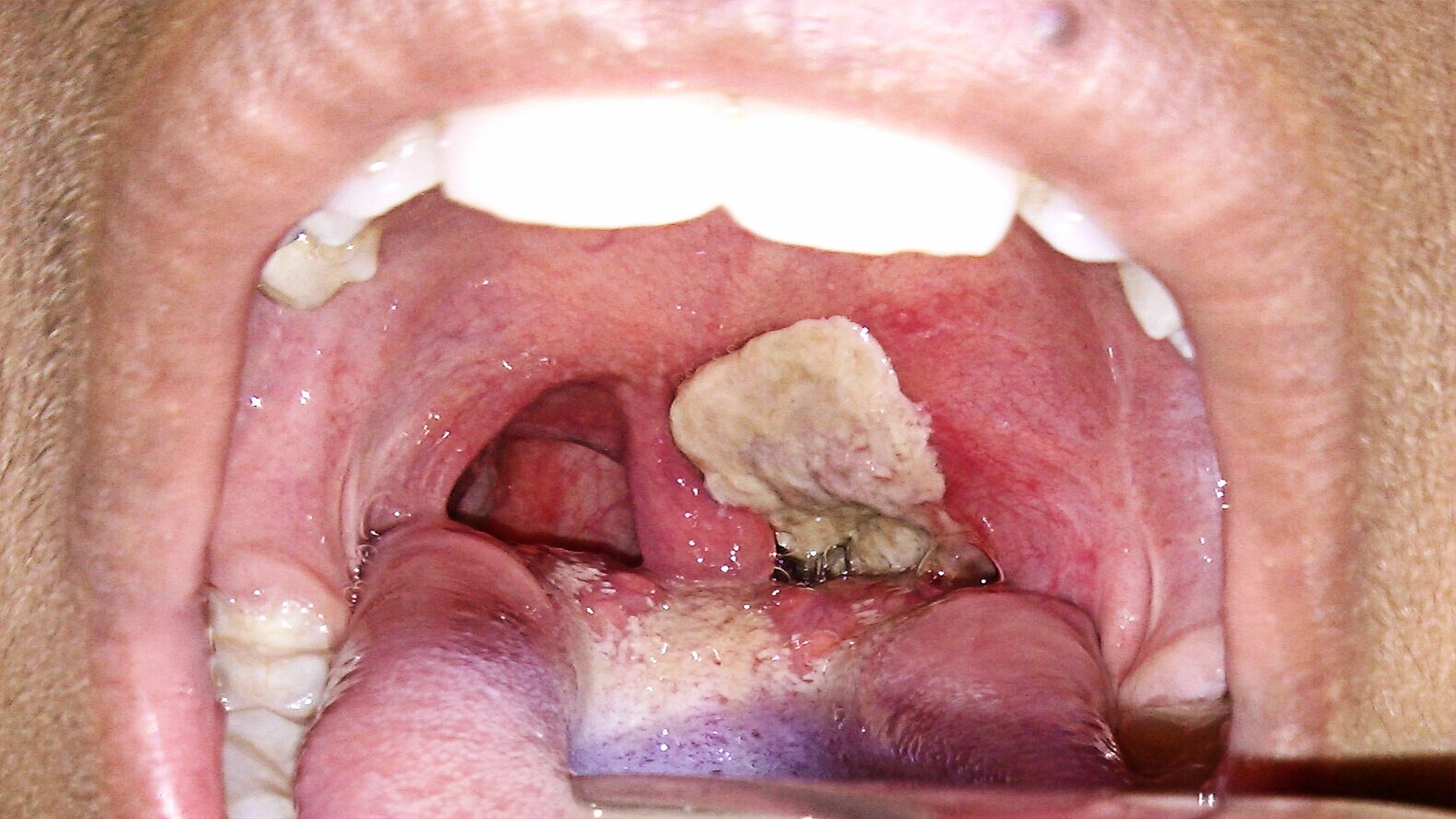
All relevant stakeholders in the health sector in the country should ensure that no more life is lost to the outbreak of Diphtheria by doing the needful to contain the scourge. Nigerians can’t continue to be victims of avoidable death. They deserve to survive even emergency health situation like their counterparts in other parts of the world. And this is possible if priority is actually given to citizens welfare as dictated by the nation’s constitution.
For the challenge at hand, a way to go is to consciously and urgently improve vaccination coverage, particularly among unvaccinated and incompletely vaccinated children, and to provide the infrastructure for treatment of those entangled.
Diphtheria, a highly contagious bacterial infection caused by the bacterium Corynebacterium diphtheriae, primarily affects the nose, throat, respiratory tract, and skin. The bacterium releases a powerful toxin that destroys human respiratory cells, after which dead tissue accumulates and forms a signature thick grey membrane over the throat and air passages.
The disease is easily and swiftly spread through air droplets (coughing, sneezing) or direct contact with secretions or personal items of an infected person. Symptoms typically develop between two and five days after exposure, and they include the presence of a tough, greyish pseudomembrane coating the tonsils, throat, or nose that makes breathing and swallowing difficult. It also includes a marked swelling of the neck glands and soft tissue due to inflammation, in addition to sore throat, low-grade fever, hoarseness, barking cough, and progressive fatigue. It was learnt that If the toxin finds its way into the bloodstream, it can cause heart muscle inflammation (myocarditis), nerve paralysis, or kidney failure, leading to fatalities. It is, therefore, a dangerous health condition.
Only recently, the Nigeria Centre for Disease Prevention and Control (NCDC) revealed that over 10,000 confirmed cases of diphtheria have been recorded in the country this year. The outbreak of the disease, which is more manifest across northern states, including Kano, Yobe, Katsina, and Bauchi, is driven largely by historical gaps in routine immunisation.
The Director General of NCDC, Dr Jide Idris, while giving an update on the disease, emphasised that diphtheria is vaccine-preventable, adding that bringing transmission under control requires improved vaccination coverage and reaching every eligible child who has missed a vaccine dose. According to him, reactive vaccination is ongoing in affected areas, and essential treatment and laboratory commodities are being provided. Idris urged state and local councils to identify communities with low vaccination coverage and ensure that children who missed routine doses are reached and fully vaccinated.

He said the NCDC would continue to coordinate the public health response with state governments and partners, providing technical support where it is most needed. “Surveillance and laboratory capacity are being strengthened, healthcare workers are being supported on case management and infection prevention and control, and affected communities are being engaged with the information they need to protect themselves and seek care early,” he said. But grandmothers, like the Jos, Plateau State-based Fatimatu Abdullahi who recently lost two of her grandchildren to the deadly disease within one week, are saying the government must not speak poetry at this time, but move at great speed to contain the menace.
Abdullahi, who lives on Bauchi Road, lamented that the death of 14-year-old Umar Muktar and 17-year-old Hauwa Shafi’u remained unforgettable. The family did not initially know what was wrong with them. “All of them were living with me before they died. Umar was the first to develop the illness. Within three to four days, he gave up, and we did not know what was wrong because he was not taken to a specialised hospital. “Two days after he died, Hauwa also developed an illness with the same symptoms. She was later taken to Jos University Teaching Hospital (JUTH), where she was moved to the isolation centre and confirmed to have diphtheria. “But by then, it was too late to save her. That was when we realised that Umar might also have died from the same disease because they had experienced the same symptoms and condition,” the grandmother said.
There should be more serious concern about the growing number of deaths, particularly in the North, The public health issue should not be treated with kid gloves. Though the disease is not a new one. but the rate of infestation and growing number of deaths this time should compel the government and other stakeholders to spread awareness, with a view to bringing it under control.. The need for greater awareness creation is further amplified by the recent death of 11 people in Chanchaga and Katcha local councils of Niger State, which brought to 17 the total number of lives lost so far to the disease since January. A new and worrisome dimension to the problem of unvaccinated and incompletely vaccinated victims swelling the ranks of sufferers is that many parents are refusing to vaccinate their children..The Executive Director, Niger State Primary Health Care Development Agency, Dr Junaidu Inuwa, who raised the alarm blamed the spread of the disease on the refusal by parents and guardians to vaccinate their children and wards.
We urge states to emulate the Katsina government that is intensifying measures to contain the disease,, with more than 150,000 people already vaccinated within the first five days of its emergency vaccination campaign.
It is heartwarming that the combined emergency vaccination is accompanied by active case detection, treatment, contact tracing, isolation facilities, infection prevention, and community mobilisation. All of these became necessary following the increase in suspected cases of diphtheria across 29 local councils, with Funtua recording the highest burden, followed by Kankia, Bakori, Katsina, Mashi, and Daura. We state that while vaccination remains the primary method of preventing diphtheria, booster doses are critical for older children and adults to maintain protective immunity. Also, the suspected cases of the disease require rapid administration of Diphtheria Antitoxin (DAT), which neutralises circulating toxins, along with targeted antibiotics.
The recent activation of an emergency multi-agency task force by the Federal Government to contain the diphtheria outbreak affecting children in parts of Katsina and Kano states, and the deployment of 500,000 doses of diphtheria vaccines to the two states to support intensified immunisation of unvaccinated children are commendable, but the intervention is simply not enough. There is need to practically do more to strengthen disease surveillance and close immunisation gaps, especially in the communities. Stronger effort should be made to equip hospitals in affected states with the right personnel and appropriate medication to attend to patients who are already down with the disease. Battling this scourge is beyond just setting up a task force comprising the Federal Ministry of Health and Social Welfare in collaboration with the NCDC, NPHCDA, affected state governments, WHO and UNICEF to coordinate outbreak investigations, vaccination, and treatment efforts.
States that are not yet affected but are at risk in the North must do well to take all precautionary steps in case they are eventually affected. It is only by doing so that fatalities associated with the disease can be significantly contained.
While it is important to isolate infected individuals to prevent spread, it is also consequential that family members and caregivers, among others, are made to take preventive antibiotics and booster shots regardless of vaccination status. Community members must also avoid overcrowded environments and gatherings, especially during active local outbreak. They should enforce hand hygiene and promptly report unusual sore throat cases accompanied by neck swelling to local health authorities.
Also crucial is awareness creation about the disease for people to be vigilant.

