 Follow Us on Google News


 Follow Us on Google Discover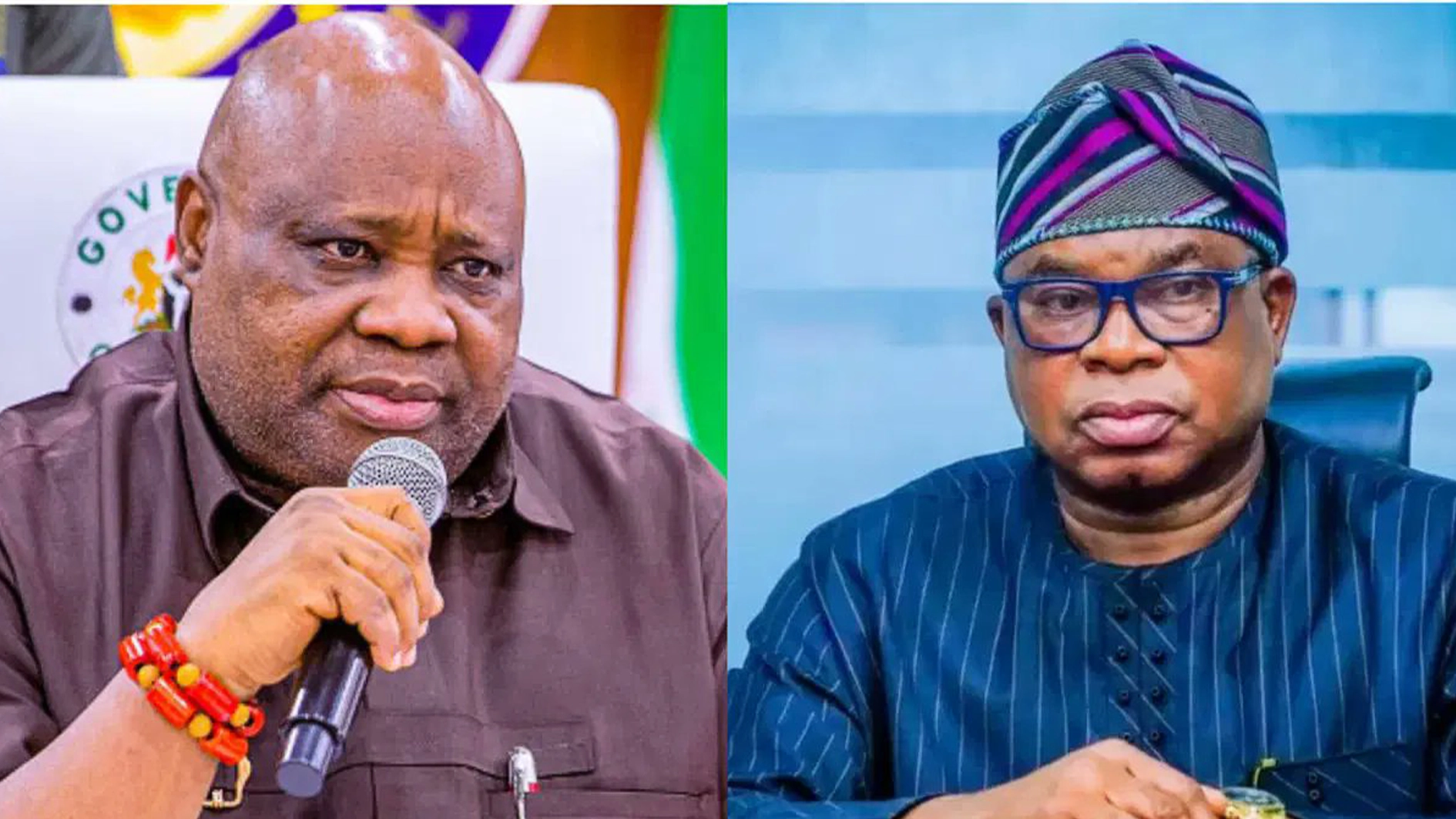
Given the tensions, violence and controversies that preceded the off-cycle governorship election in Osun State, it was a welcome relief that the polls ended on a positive note for the people of the state. It was a victory for the electorate. Indeed, the mood in the state, since the election and the pronouncement of incumbent Governor, Senator Ademola Adeleke, as the winner, has been one of satisfaction and thankfulness. The Osun election certainly offers useful lessons for all stakeholders ahead of the forthcoming general elections in the country next year.
Elections are a festival of the citizens, and politics is the arena. Fundamentally, in democracies, it is a process for renewing the social contract, and in the process, unworthy custodians of the social pact are weeded out. Since 1999, Nigeria’s general elections have partly evolved into off-cycle. Some states of the federation hold their elections outside the general elections. Osun State, one of the 36 states, held its election to elect a new governor on August 15. The pre-election process was characterised by tension, unmannered campaign approaches and hate speech. Indeed, a serving senator calling for the killing of other parties’ partisans was captured on camera, prompting calls for his arrest.
Understandably, the electoral prize took on additional significance for two reasons. One, the President of the Federal Republic of Nigeria hails from the state. Two, the President is poised for re-election in January next year. Therefore, control of the state will add value to the electoral fortune of the President if his party, the All Progressives Congress (APC), wins the election.
However, in the build-up to the election, the incumbent governor, hitherto a member of the People’s Democratic Party (PDP), had to defect to the Accord Party, a lesser-known party, to run. At the last count, an estimated 29 people lost their lives in the pre-election violence. The state became a beehive of party stalwarts; 16 governors of the ruling APC moved into the state, boasting of capturing the state electorally.
Mr Ibrahim Gotan, the state’s Commissioner of Police, was accused of being partisan in favour of the APC, whose opponents were harassed and hounded, prompting Governor Adeleke to frantically call on the Inspector General of Police to redeploy the commissioner. Also noticeable was the belated listing of some political parties for the election as a result of court judgments that somewhat engendered a logistical nightmare for INEC.
A state institution, the Economic and Financial Crimes Commission (EFCC), moved to freeze the state account through a judicial process on suspicion that the incumbent governor was fiddling with state funds for electoral purposes. This precipitate action further aggravated the tense electoral atmosphere. The action was perceived as overly meddlesome and partisan. Occurring in the full glare of global scrutiny of the electoral process, it compelled the president to wield his executive power to mend the situation.

However, the incumbent Governor Adeleke won the election with 511,069 votes, gleaning victory in 19 local government areas out of 30 in the state. Mr Bola Oyebamiji, the APC candidate, secured 444,815 votes in 11 council areas. The African Democratic Congress (ADC) candidate, Najeem Salaam, received 17,180 votes. A further breakdown of the figures revealed that 2,399,233 were on the electoral roll as registered voters. Accredited voters stood at 1,010,684, out of which 1,005,800 voted. Valid votes cast stood at 985,079, while 20,721 votes were voided. Although the turnout was about 40 per cent, higher than the national average and was acclaimed to be an improvement, some observers still read it as signalling voter apathy in the state. The elated governor dedicated his victory to the people of Osun State and said he would govern in the interest of all citizens. He went further to thank President Bola Tinubu for ensuring a level playing field for all contestants in the election.
Voter turnout was impressive. Even the percentage would have shot up if the electoral roll was purged of the dead and absentee voters were factored into the election equation. Globally, the average voter turnout has barely exceeded the 50 per cent mark. In this respect, the Osun voter turnout was overall impressive. The voters of Osun State deserve commendation for rising to their civic responsibility of voting and exhibiting readiness to defend their votes. Their determination was so obvious to the least interested observers.
Equally, the Independent National Electoral Commission’s (INEC) performance was impressive, with fewer logistical problems, which observers attributed to the compact nature of the state. INEC Result viewing portal, IReV, was under surveillance by the viewing public and ultimately proved credible.
The election proper also brought forward some discontent. There were allegations of vote-buying, spawning the Yoruba slogan of owo wogbo, implying “money misplaced.” Figures such as N30,000 and N50,000 were allegedly traded in the vote-buying transactions at different polling units in the state. It is important to note that the inducement of voters monetarily is increasingly being institutionalised, and it is bad for the country’s democracy and hobbles rational and informed choice in the election of state actors. Other electoral infractions, such as campaigning at polling booths and intimidation, were reported.
Going forward, it is recommended that state institutions should always remain neutral in the electoral process for fairness and integrity of the process. Ultimately, it will lead to the consolidation of Nigeria’s democracy. The election umpire, INEC, deserves to be commended for the fair conduct of the election despite being heavily pressured. The body proved the pessimists wrong, given the controversy of the last general election and the consequent public distrust. Now that the country is in the season of campaigns, parties and civic bodies that proliferate across the land should rise to the need to persuade the broader electorate to rise to its civic duty by coming out en masse to vote in the 2027 election.
Notably, the seeming success of the Osun election was possible because it was an off-cycle election and all national resources were concentrated in the state to ensure a hitch-free process. The president deserves commendation for his statesmanship when overzealous state institutions were trying to throw a spanner in the wheel. The broader electorate needs to be wary of a mindset of a rigged process. In real-world electoral processes, there are situations in which opposition candidates lose elections, fair and square, and the incumbent or dominant party triumphs.
Nevertheless, the general election next year will be more tedious given that the election covers the entire country. Predictably, resources will be spread thin while the widespread insecurity in the country will also test state institutions’ resilience. Preparation ahead is better than a knee-jerk approach to important national issues. Therefore, the electoral umpire should harness what works in Osun and improve on it in the forthcoming general elections.

