 Follow Us on Google News
 Follow Us on Google Discover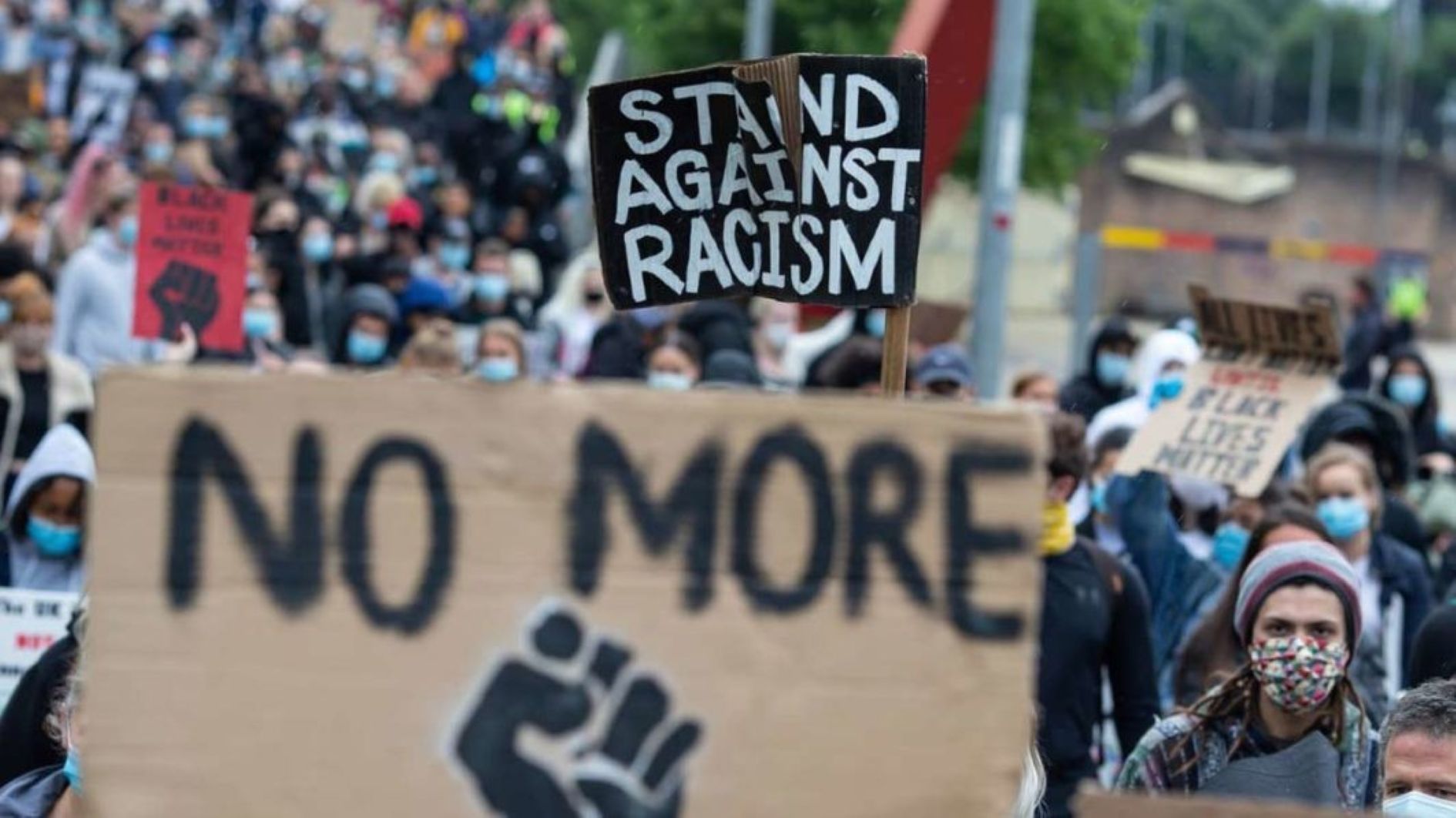
By Tunji Olaopa
What is the existential status of blackness in a world of extreme racism? More concretely, how does a black scholar, as a minority, navigate her way through a systemic racial configuration of the academy? Racism has become a systemic and systematic phenomenon that inflects so many dimensions and ways of lives of the West, especially in Europe and North America.
The academy is one of those institutions that racism has paradoxically affected. And this is paradoxical in my reckoning because the academy is supposed to be the bastion of enlightenment and critical thinking that possesses the capacity to stem the tide of racism and keep rolling it back systematically. The university, for example, is meant to be a space for the manifestation of the universe of ideas and thoughts that allows for contestation because of its very plurality.
Unfortunately, the academy in its American and European incarnations have become polluted by the virus of racism.
Black scholars are now the subject of the most pernicious racial profiling, baiting, hounding, underrepresentation, exclusion, policing and institutional limitation. Over decades, there has been an outcry over the invisibility of black professors in the North American academy. Black academics face distinct structural obstacles in terms of research, publication and mobility.
The pressure is even more stacked against female black faculty whose gender location must take double the need to overcompensate in a context that undermines capacity and competence on the basis of skin color. Black academics are less than ten percent of the total faculty across North America. The critical challenge does not only come from making tenure, but the constraints to academic leadership and intellectual progression.

The very figure of the black scholar is a subject of ridicule and discrimination. Martin Luther King, Jr. puts his hand on the issue most aptly. According to him, “Discrimination is a hellhound that gnaws at Negroes in every waking moment of their lives to remind them that the lie of their inferiority is accepted as truth in the society dominating them.”
The real trauma derives either from a black academic interiorising the inferiority or spending quality lifetime gingerly sidestepping racial landmines in order to make some landmarks. Every significant effort is scrutinized. Every human flaw is lynched. Every appearance of excellence is diminished. Blackness becomes a blackhole of insignificance. Under the Trump administration, the next frontier of dismantling every vestige of black excellence is the abolishment of the Diversity, Equity and Inclusion (DEI) framework that was established to deal with historical and systemic manifestation of marginalisation and discrimination founded mostly on identity.
All of this reflection crystalises most recently around the now late Jason Arday, erstwhile professor of sociology at University of Cambridge, and when he joined the faculty in 2023 and became the youngest professor in Cambridge’s history. Jason Arday’s death by suicide in August 2026 spotlights the existential and systemic vagaries of institutional racism in the United Kingdom.
Arday’s life, professional experiences and ultimate and untimely death bore the imprint of systematic and systemic racism that seemed to stage-manage the essence of his person and personality to deliberate acts over which he had no responses.
A few examples will illustrate my argument that Arday was a pawn in a racist danse macabre. The fact of being born black was Arday’s entrée into a context of racial struggle for excellence. It would seem that many of the embellishments of his birth, childhood and upbringing—being non-verbal till age 11 and not being able to read or write till age 18, apart from autism, dyslexia and dyscalculia—were necessary to make him larger-than-life in a society where blackness was at best ordinary, or at worst nothingness.
And when he was barely ready for an academic world whose toxic racism he had no idea of, Jason Arday was thrown headlong into charged context of racism in higher education, equality, diversity and inclusion (EDI), and minority activism. He published essays, joined advocacy groups, appeared on talk shows, gave lectures and articulated projects that were all meant to champion the cause of blackness and black academic life.
From 2022 to early 2023, Jason Arday, born to Ghanaian parents in London, was at the height of his steady academic rise. He was already a professor of the sociology of education at the University of Glasgow, had co-edited a volume on the dynamics of racism in higher education with Palgrave, a monograph on ethnicity in Britain with Routledge, and had gone the rounds in a highly visible spree of activism.
By the time he was appointed as the University of Cambridge’s youngest black professor in 2023, the die was already cast, and the curtain was about to close on the life of a brilliant poster boy. At the time of his appointment, the University of Cambridge already had a reputation for being a bastion of racism; had as at 2025 only 75 black academics in its 6,180-strong institution, and Jason Arday was just the sixth black professor in the university. His appointment was celebrated and excoriated.
Finally, he was now in the spotlight for the toughest scrutiny of his years of research, activism, publication and academic experiences generally. Cambridge had an objective: Jason Arday’s meteoric rise as an outstanding and outspoken black scholar—with fantastic claims of what has been called “improbable triumphs”—fits perfectly into Cambridge’s institutional rehabilitation of his racist reputation. The University appointed Arday with a flurry of high praises.
And then the scrutinies and accusations began dropping like bombs! First, there were private murmurs of concerns from academics about his claims and reputations, then followed by series of innocuous investigations of his articles and existential and experiential claims.
Then the accusation of plagiarism surfaced and became public. The culture war became rekindled, and the “racist feeding frenzy” was underway. It was only a matter of time before Jason Arday resigned his appointment and paid the ultimate price.
But why is his death in a race-charged environment important? The Jason Arday’s traumatic muddled the water of the black academic experience with racism in a toxic environment. In other words, his high-profile saga has become a broad stroke that would affect the fate of black scholarship in the West.
Now, there will be a renewed call to investigate the very essence of DEI or EDI, and the framework of excellence that has attended black scholarship or the black academic establishment for decades.
Now the progressives and the counter-progressives are at each other’s throats in the ideological interpretation of what had gone wrong with the academy. Unfortunately, the disproportionate punishment for whatever the academic sins of Arday are considered to be—from plagiarism to misrepresentation—stands in stark contrast to how the plagiarism audits are gatekept when it comes to white academics. And this should not be any real surprise as racism is founded on a power asymmetry that reinforces the institutional privileges of a few while trumpeting the inferiority of the many.
Jason Arday’s death raises afresh the fundamental question of what constitutes academic merit within the context of racism.
If a group of people had been discriminated against for centuries, and structural impediments have been put in place to make the discrimination systemic, how then should academic merit be understood given that those discriminated against have to overcome gigantic obstacles in order to excel? How does the DEI or EDI framework feed into the balancing of the inequality?
Do diversity programs exclude scholarly, intellectual and academic excellence? When white and black scholars are held up to different sets of assessments, then something has gone outrightly wrong. When an academic space that is decidedly white makes the rules by which the academic merit of non-white academic must be judged, then the game has been rigged.
One of the most pertinent concerns that Arday’s death raised is the swift manner in which the situation has been cast in collective terms. In other words, Arday’s situation supposedly reflects the ills of black scholarship and its supposed progresses and excellences.
When a single black scholar, no matter the extent of her failings, is picked up by the racial establishment, attention is drawn to the scholar’s identity and collective space of belonging. Thus, since Jason Arday failed, the entire community of black scholars has failed. If Jason Arday had been white, the academic establishment and the western media would have demurely characterised it as an individual incidence.
With Arday’s fall from grace, the right-wing culture warriors have been justified: the black academic community lacks excellence! The DEI or EDI framework must be destroyed. And the entire community of black scholars must pay a very high toll for its transgressions!
To paraphrase the panel of distinguished academics that recently x-rayed this terrible incidence on the Toyin Falola Interview, what Jason Arday’s rise and fall has signaled, again, is the power of structural racism to kill. With an onslaught of media frenzy that surpasses over three hundred articles in the media, there was no way Arday could have survived the siege against his humanity and reputation. Structural racism pathologises whatever the black scholars have to bring to the table of academic merit.
Thus, rather than focusing unduly on the tragedy that is Arday’s untimely demise, the terrible incident should galvanise a widespread engagement with how structural racism can be undermined. And the responsibility belongs not only to the progressive Left, but to the entire black academic community that must use Jason Arday’s death as the rallying moment for a renewed onslaught against a systemic discrimination that might signal soon the death of the next black scholar.
The Jason Arday incidence mirrors a similar abnegation of academic excellence in postcolonial academy. And in this context, the issue is that of the continuing prominence of the coloniality of power manifesting in the curricula of many African universities that still pay homage to Western realities and pedagogies. Within this curriculum war, for instance, indigenous modes of knowledge and being are marginalised as being “unscientific.” Many of Africa’s higher education structural and institutional templates now mirror western frameworks.
African universities are mainly sites for the production of raw materials while North American and European universities generate theories. And then, if an academic essay has not been published in American or European journals, it does not possess academic merit that will be recognised by the academic institution processing an African scholar for promotion. The Eurocentric imagination, that produced structural racism in North America and Europe, has a long reach into the African postcolonial higher education context too.
The tragic death of Professor Jason Arday reverberated across the world in ways that demonstrate that a lot is still wrong with our world. Now the world has moved on to the next mediatised event. And the discourse around racism, academic excellence and existential finality has thinned to the minimum. But then, the question remains who will be the next victim of structural racism? When will the next Jason Arday die?
Prof. Olaopa is Chairman, Federal Civil Service Commission and Professor of Public Administration.

