 Follow Us on Google News


 Follow Us on Google Discover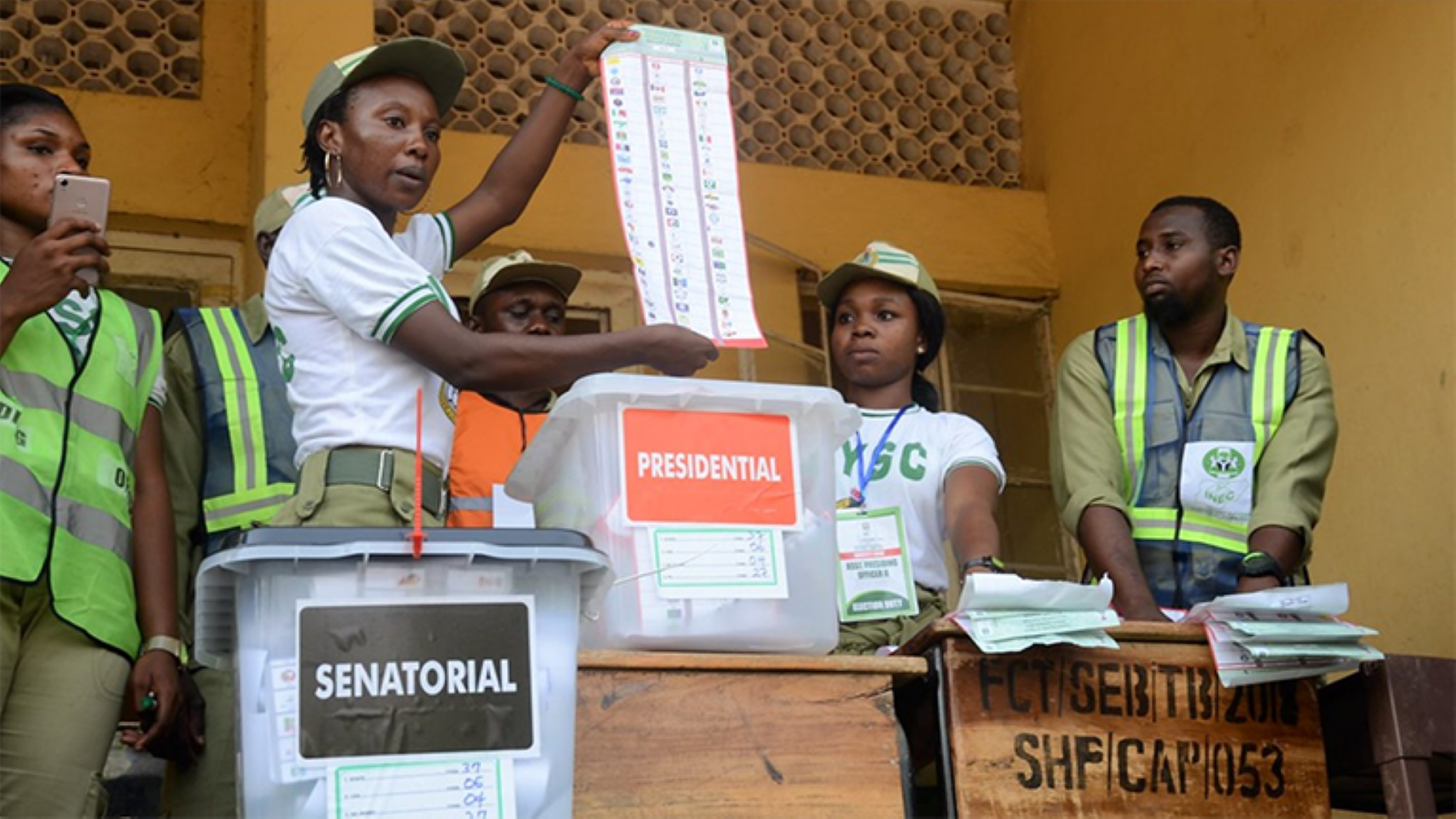
By Hilary Njoegbu
Sir: Have you wondered why President Bola Ahmed Tinubu appears so confident about the 2027 presidential election? Have you watched the body language of Mr President? He travels without transmitting power, remains largely silent on issues that ordinarily demand a presidential address, and has stayed away from the United Nations General Assembly for three consecutive years, even after promising to attend this time.
Then there is the emerging conversation about INEC and the use of artificial intelligence in the electoral process. What, exactly, is fuelling this president’s uncanny confidence? Trust me, it is not because he has performed exceptionally well. It is because Tinubu is going to win the 2027 election in a landslide, and international observers will adjudge the process peaceful and credible.
And when the results are announced, the confusion will be palpable: “But the people don’t like this government. How did they get the votes? They must have rigged it.” Here is my contention: the 2027 presidential election may not be rigged—at least not in the conventional sense—but Tinubu will still win. I do not make this claim because I like this government. Far from it. In fact, I hate it with every fibre of my being.
Before I begin, let me say this: I am a follower of Mr Peter Gregory Obi. You can call me an Obidient, if you like. I am also a staunch supporter of VeryDarkMan (VDM). I respect Mr Omoyele Sowore; I admire his imagination, his ideas about how to run a country, and, above all, his fighting spirit.
I like the intelligence of Mr Donald Duke. Sometimes, I imagine him addressing the United Nations General Assembly as President of Nigeria. How differently would the world look at Nigeria and Nigerians? We have an abundance of intellectuals, yet semi-literate politicians continue to lead us.

There are also many Nigerians whose opinions about the country I deeply value: Peter for Nigeria, Mr Zakeri Junior, Professor Usman Yusuf, Mallam Buba Galadima, Mr Rufai Oseni, one of my favourite television anchors, and Aisha Yesufu. Dele Farotimi was once my role model, until, in my view, he chose to keep quiet and allow this government to do whatever it wants. Justice Crack and many others also deserve mention.
I have an immeasurable respect for anyone who holds government accountable and speaks truth to power without fear. But today, just like Achebe, I have to speak—straight from the heart. Tinubu will win the 2027 general election without conventional rigging. But there is still time to stop him.
It is important to begin by clarifying what I mean by conventional rigging. Conventional rigging has to do with electoral malpractice such as the snatching of ballot boxes, the late arrival of election materials in opponents’ strongholds, the alteration and mutilation of Form EC8A, as alleged in the controversies surrounding the 2023 general election in Rivers State, the changing of figures at collation centres, open and brazen vote-buying, coercion, and violence at voting centres, among others.
My argument is that the 2027 election may not witness, at least not on a large scale, many of these familiar forms of electoral malpractice for Mr Tinubu to win the presidential election.
So, how will Tinubu win the 2027 election? How has he planned to win it from day one?
The first thing, in my view, was the strategic effort to bring the 774 local government chairmen and grassroots political structures closer to the centre through the local government autonomy victory at the Supreme Court.
When Mr. President, through the Attorney-General of the Federation, took the 36 state Attorneys-General to court in May 2024, secured an accelerated hearing in June, and obtained a landmark judgment in July granting financial autonomy to local governments, many Nigerians welcomed the development, believing it would strengthen grassroots governance. But there is another way of looking at it: control of local government structures also means influence at the grassroots, and it is at the grassroots that elections are often won. As the saying goes, he who pays the piper dictates the tune.
Another unconventional strategy, in my view, is the effort to bring a large number of governors into the APC fold. Why, for instance, do you think governors are receiving unprecedented amounts of money while questions remain about how much eventually reaches the people? Why have some long-standing PDP politicians severed their ties with the party despite their history within it?
Senator Ifeanyi Okowa, for instance, had been in the PDP for decades and was even Atiku Abubakar’s running mate in the 2023 presidential election. Did he join the APC simply for the fun of it? What about Kaduna State Governor Uba Sani and his highly publicised political differences with his former ally and political godfather, Nasir El-Rufai? Even governors outside the APC have, at different times, expressed support for President Tinubu. In Anambra State, for example, Governor Chukwuma Soludo, a former ally of Peter Obi, has maintained a working relationship with the Tinubu administration.
Another dangerous unconventional strategy is the alleged intimidation; harassment and suffocation of opposition supporters. We have heard reports of political intimidation in different states. In Edo State, for instance, there were reports surrounding an incident involving Mr Obi during the 2024 governorship election campaign, including claims about his access to political spaces. We also remember Monday Okpebholo’s controversial warning during the Edo campaign: “Don’t enter Edo without telling me.”
In Ebonyi State, there have also been political threats and warnings directed at opposition supporters. More recently, reports had it that Peter Obi and some of his supporters were stopped from entering Benue State raised questions about the political environment surrounding opposition activities. If an opposition presidential candidate and his supporters can encounter such resistance while visiting a state for charitable or humanitarian purposes, one can only imagine the political atmosphere that could emerge during a full presidential campaign.
Every ward and community has its influential figures. Every voting ward has political actors who can influence what happens on Election Day. These are the community leaders, development leaders and political organisers—not necessarily thugs—who often have considerable influence over the people. When elections come, their voices can matter.
My argument is that many of these grassroots influencers have increasingly been drawn into the orbit of the ruling party. Even in the midst of severe economic hardship, some openly declare their support for Tinubu because they have benefited from political patronage and government-linked programmes. They distribute rice, occasionally share money, and sometimes facilitate empowerment opportunities for young people in their communities.
To a poor Nigerian struggling to survive, such gestures can mean a great deal. When Election Day arrives, therefore, these voters may look to the same community leaders who have been helping them for direction.
If there is one political skill for which Tinubu has demonstrated considerable experience, it is the ability to build political alliances across opposing camps. His political network extends far beyond traditional party boundaries, and figures who were once critics or opponents have, at different times, moved closer to his political camp.
The rural community, therefore, may prove to be a crucial part of his electoral strategy. He has also begun paying attention to independent voters and social-media influencers. Why, for instance, was the City Boy Movement created? Why have celebrities and prominent public figures increasingly become part of political mobilisation?
Is the involvement of figures such as Mercy Johnson in political structures entirely unrelated to electoral calculations? What does it mean when a political figure such as Monday Okpebholo appoints a celebrity to his administration while simultaneously making strong political commitments to the President?
These relationships inevitably raise questions about where such influential personalities will stand during a presidential election.The same applies to prominent businessmen and celebrities such as Obi Cubana, Cubana Chief Priest and others whose political associations can potentially influence independent voters. Their influence may not be decisive by itself, but the ruling party appears determined to leave no segment of the electorate untouched.
When the 2027 presidential election results are eventually announced, many Nigerians may therefore find themselves asking how a government they believe is unpopular could have obtained such a large number of votes. They may conclude that the election was rigged. My argument is that the explanation may be more complicated.
Another important strategy, in my view, concerns voter registration and the collection of Permanent Voter Cards. While independent voters—workers, bankers, teachers, professionals and others—may have to struggle to find time to register or collect their PVCs, political structures at the grassroots are often better organised and more capable of mobilising supporters.
If one side is working systematically to ensure that its supporters are registered, collect their cards and turn out on Election Day while the other side assumes that public dissatisfaction will automatically translate into votes, the difference could be significant. The margin, therefore, may not be as close as many people expect.
Finally, the timing of the presidential election deserves attention. The election is scheduled for January, only weeks after the Christmas and New Year celebrations, a period when political actors traditionally distribute gifts and provide various forms of assistance to their communities.
Imagine a politician visiting a community shortly before the election with rice, money, chicken or other gifts. The message is rarely difficult to understand: “I am helping you; remember me on Election Day.”
Two weeks later, the memory of that gesture may still be fresh when the beneficiaries arrive at the polling unit. As Euripides observed, “Gifts tempt the gods, let alone human beings.”
When it comes to Nigerian voters, I believe three broad categories can be identified: independent voters, dependent voters and undecided or nonchalant voters. The independent voters are those
Hilary Njoegbu is a Ph.D student at the University of Port Harcourt and teaches English Language at Greenoak International School.

